| 1. |
Check the clutch release cylinder for fluid
leakage. |
| 2. |
Check the clutch release cylinder boot for
damage.
|
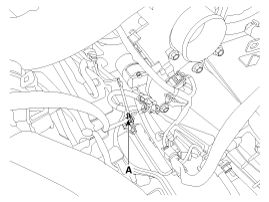
| 1. |
Drain the brake fluid through the bleed plug
(A).
| •
|
Do not spill brake fluid on the
vehicle; it may damage the paint if brake fluid does
contact the paint, wash it off immediately with water.
| |
|
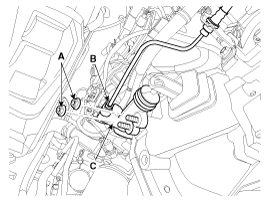
| 2. |
Remove the clutch release cylinder assembly
(C) after removing thd tube (B) and nuts (A-2ea).
Tightening
torque:
14.7 ~ 21.6 N.m (1.5 ~ 2.2 kgf.m,10.8 ~
15.9 lb-ft)
|
|
| 1. |
Installation is the reverse of
removal.
|
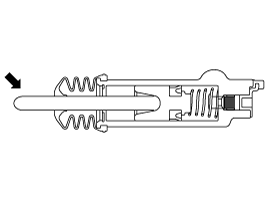
Apply the specified grease to the
pushrod end. |
Specified
grease: CASMOLY L9508
Quantity: 0.4 ~ 0.8
g
|
|
| Clutch Release
Cylinder Air Bleeding Procedure |
| •
|
Use the specified fluid. Avoid mixing
different brands of fluid.
| |
| 1. |
After disconnecting a cap from the clutch
release cylinder air bleeder, insert a vinyl hose in the plug.
|
| 2. |
Refill the clutch master cylinder with the
specified fluid.
Specified
fluid: SAE J1703 (DOT 3 or DOT 4)
| |
| 3. |
Loosening the plug screw, press and release
the clutch pedal about 10 times. |
| 4. |
Tighten the plug (A) during the clutch pedal
pressed. Afterwards, raise the pedal with a hand.
|
| 5. |
After pressing the clutch pedal 3 times more,
loosen the plug (A) and re-tighten it with the pedal pressed. Raise
it again, then. |
| 6. |
Repeat the step 4 two or three times.
(until there is no bubble in the fluid)
Tightening
torque:
6.8 ~ 9.8 N.m (0.7 ~ 1.0 kgf.m, 5.0 ~
7.2 lb-ft)
|
|
| 7. |
Refill the clutch master cylinder with the
specified fluid.
Specified
fluid: SAE J1703 (DOT 3 or DOT 4)
| | |
