| On-vehicle Inspection |
|

Check
Battery Voltage
| 1. |
If 20 minutes have not passed since the
engine was stopped, turn the ignition switch ON and turn on the
electrical system (headlamp, blower motor, rear defogger etc.) for
60 seconds to remove the surface
charge. |
| 2. |
Turn the ignition switch OFF and turn off
the electrical systems. |
| 3. |
Measure the battery voltage between the
negative (-) and positive (+) terminals of the battery.
If the voltage is less than specification,
charge the battery. |
Check
The Battery Terminals And Fuses
| 1. |
Check that the battery terminals are not
loose or corroded. |
| 2. |
Check the fuses for
continuity. |
Inspect
Drive Belt
Visually check the
belt for excessive wear, frayed cords etc.
If any defect has been
found, replace the drive belt.
Cracks on the rib side of a belt are
considered acceptable. If the belt has chunks missing from the ribs,
it should be replaced. |

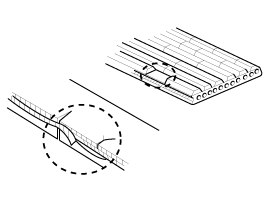
Visually
Check Alternator Wiring And Listen For Abnormal Noises
| 1. |
Check that the wiring is in good
condition. |
| 2. |
Check that there is no abnormal noise from
the alternator while the engine is
running. |
Check
Discharge Warning Light Circuit
| 1. |
Warm up the engine and then turn it
off. |
| 2. |
Turn off all
accessories. |
| 3. |
Turn the ignition switch "ON". Check that
the discharge warning light is lit. |
| 4. |
Start the engine. Check that the light is
lit.
If the light does not go off as specified,
troubleshoot the discharge light
circuit. |