| Description |
Evaporative Emission
Control System prevents fuel vapor stored in fuel tank from vaporizing
into the atmosphere. When the fuel evaporates in the fuel tank, the vapor
passes through vent hoses or tubes to canister filled with charcoal. The
canister temporarily holds the vapor in the charcoal. If ECM determines to
draw the gathered vapor into the combustion chambers during certain
operating conditions, it will vacuum into intake manifold.
| Operation |
Evaporative System Monitoring
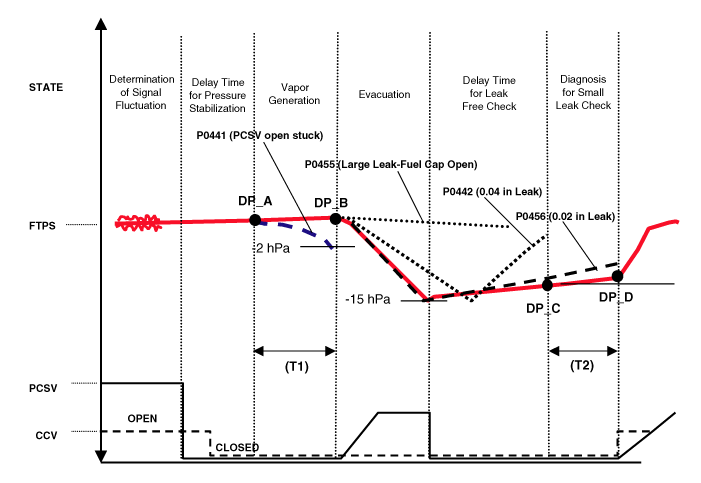
Evaporative And ORVR Emission Control
System
This system consists of
below items;
| - |
Fill vent
valve |
| - |
Fuel shut-off
valve |
| - |
Fuel cut valve (for roll
over) |
| - |
Two way valve (pressure/vacuum
relief) |
| - |
Fuel liquid/vapor separator which is installed
beside the filler pipe |
| - |
Charcoal canister which is mounted under the
rear floor LH side member and
protector |
| - |
Tubes and miscellaneous
connections |
While refueling, ambient
air is drawn into the filler pipe so as not to emit fuel vapors in the
air. The fuel vapor in the tank is then forced to flow into the canister
via the fill vent valve. The fuel liquid/vapor separator isolates liquid
fuel and passes the pure vapor to the charcoal canister.
While the engine is
operating, the trapped vapor in the canister is drawn into the intake
manifold and then into the engine combustion chamber. According to this
purge process, the charcoal canister is purged and recovers its absorbing
capability.
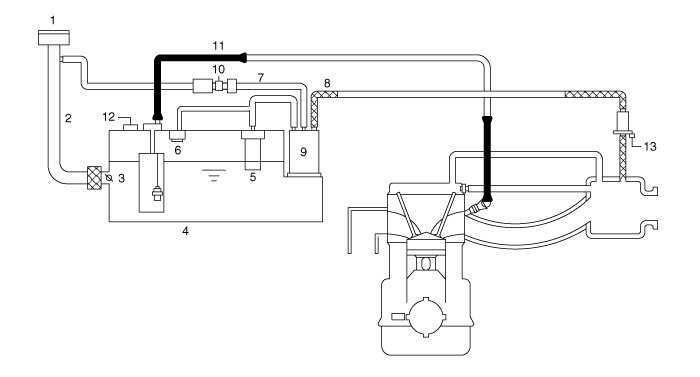
| 1. Fuel Filler
Cap 2. Fuel Filler Pipe 3. Fuel Shut-OFF Valve 4. Fuel Tank 5. ORVR Valve 6. 2-Way & Cut Valve 7. Evaporative Hose |
8. Evaporative
Hose 9. Canister 10. Canister Close Valve (CCV) 11. Fuel Feed Line 12. Fuel Tank Pressure Sensor (FTPS) 13. Purge Control Solenoid Valve (PCSV) |