| GENERAL |
The electronic power
steering (EPS) system includes the same components of conventional power
steering system. In addition, it has a solenoid valve on power steering
gear box, and a control unit underneath the audio of the center facia. To
control the oil flow of steering gear box, a solenoid is provided and it
functions by the current from control module which receivessignals from
VSS (Vehicle Speed Sensor).
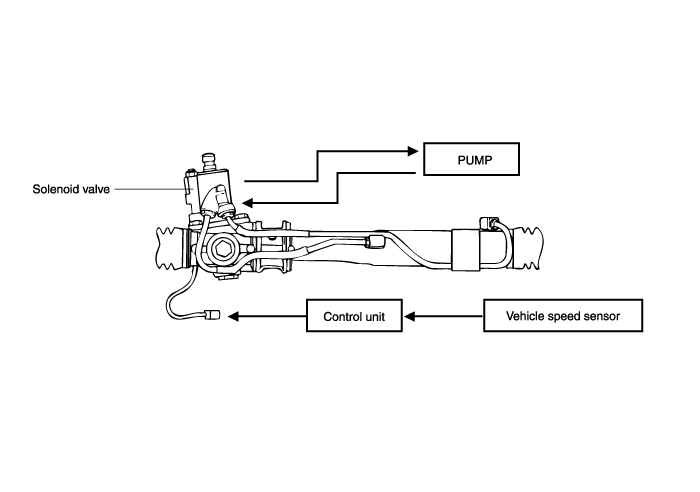
EPS performs the
conventional power steering function in case a failure has occurred in the
system. EPS electronically controls the current to the solenoid of the
by-pass valve by inputting sensor's signals to control the hydraulic
amount in cylinder chamber and thereby varying the steering effortby the
hydraulic pressure according to vehicle speed.
| EPS SOLENOID |
SOLENOID
VALVE
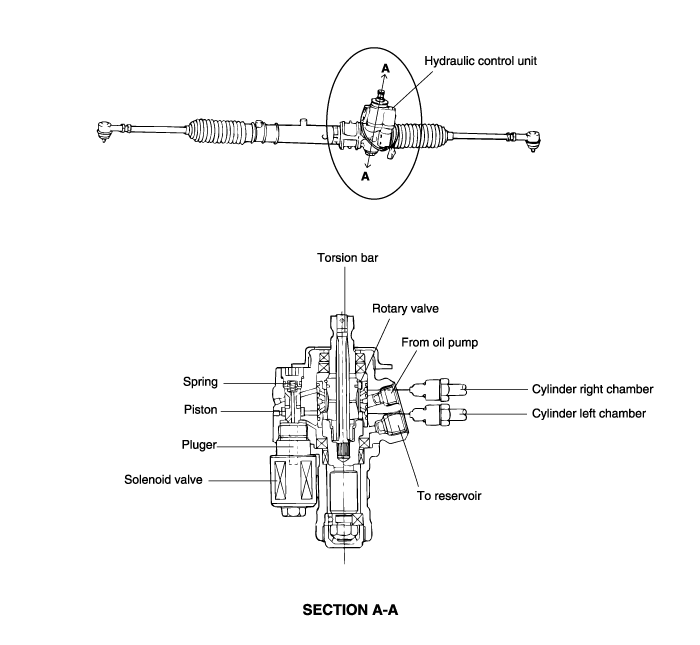
A solenoid
valve is provided in the gear box to control the flow of power steering
oil. The solenoid valve is composed of a releasing spring, a piston and a
plunger. The input current is varying from 0A to 1A according to the
vehicle speed and is controlled by EPS control module. When the ignition
switch is turned on, current is sent to the solenoid valve to push up the
plunger and accordingly the piston contacting the plunger is pushed up
while overcoming the spring force. As the vehicle speed increases, the
current flow going into the solenoid decreases and the piston is pushed
down by the spring force. When the piston is pushed up, it closes the oil
passing hole, and the power steering oil pressure is transferred into the
cylinder without any interruption. But when the hole is opened as the
piston is going down, some of the oil coming from the rotary valve is
drained into the reservoirvia the hole inside the rotary valve.
When it is necessary to remove the EPS gear
box, be sure to disconnect the connector to prevent
damage. |

OPERATION
LEFT TURN
(COUNTERCLOCKWISE)
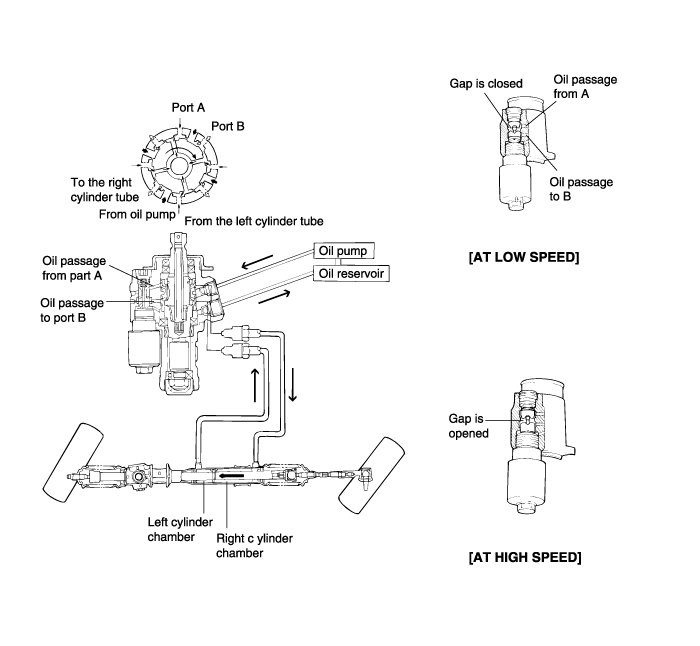
The power
steering oil pump generates the oil pressure and the oil enters into the
rotary valve. And the torsion bar is twisted by the force between the
steering wheel rotation and the resistance of the tire to the ground. At a
high speed of vehicle, the oil passing the rotary valve comes into the
solenoid valve through the lower hole and goes out through the upper hole
flowing the connecting space of piston. At this time the piston is pushed
back away due to the spring force overcoming the solenoid plunger. The oil
flows through the space between the piston and side wall. And then the oil
flows again into the rotary valve and finally is drained into the
reservoir through the drain hole between the rotary valve and the torsion
bar. Therefore,the oil pump pressure does not affect the steering
effort.
As the vehicle speed
decreases, the hole of piston connecting the left chamber and right
chamber is gradually closed while the oil pressure produced by oil pump is
being transferred to the left chamber. Therefore, the steeringeffort is
reduced.
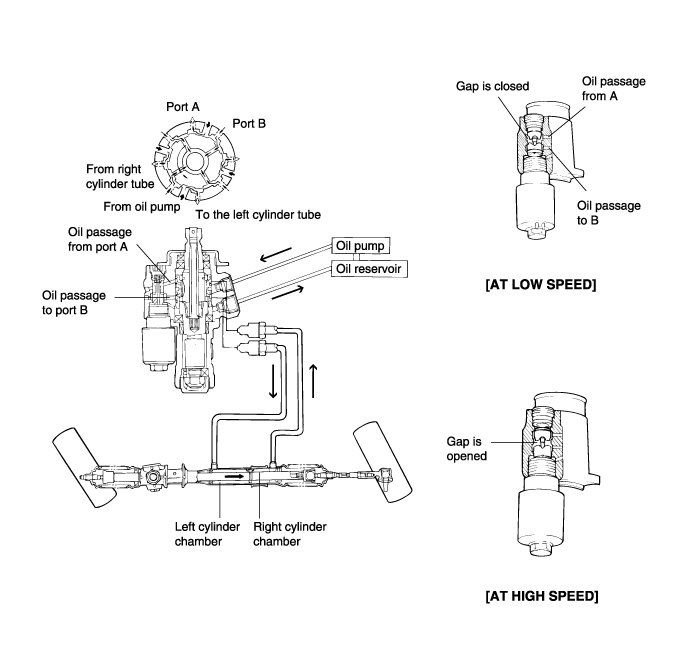
RIGHT TURN
(CLOCKWISE)
The operation
procedure of right turn is the reverse of left turn.