| p |
|
DTC |
Diagnostic
item |
|
P0300 |
Random Misfire
Detected |
DESCRIPTION
With the
ignition switch ON or START, voltage is applied to the ignition coil.High
tension leads go to each cylinder from the ignition coil. The ignitioncoil
fires two spark plugs every power stroke (the cylinder under
compressionand the cylinder on the exhaust stroke). Coil number one fires
cylinders 1and 4. Coil number two fires cylinders 2 and 3, (give order for
5 & 6). The ignition power transistor, controlled by the Power-train
Control Module(PCM), provides a switching circuit to ground for energizing
the primary ignitioncoils. When a primary ignition coil is energized and
deenergized, the secondarycoil produces a high voltage spike across the
attached spark plugs. At thesame time, the tachometer interface (part of
the ignition power transistor)provides the PCM with an RPM signal.
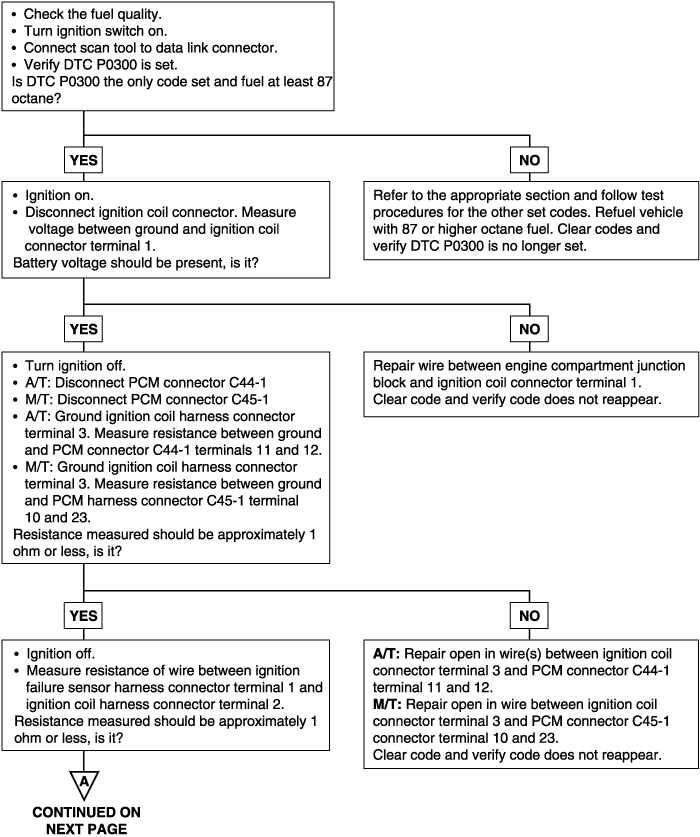
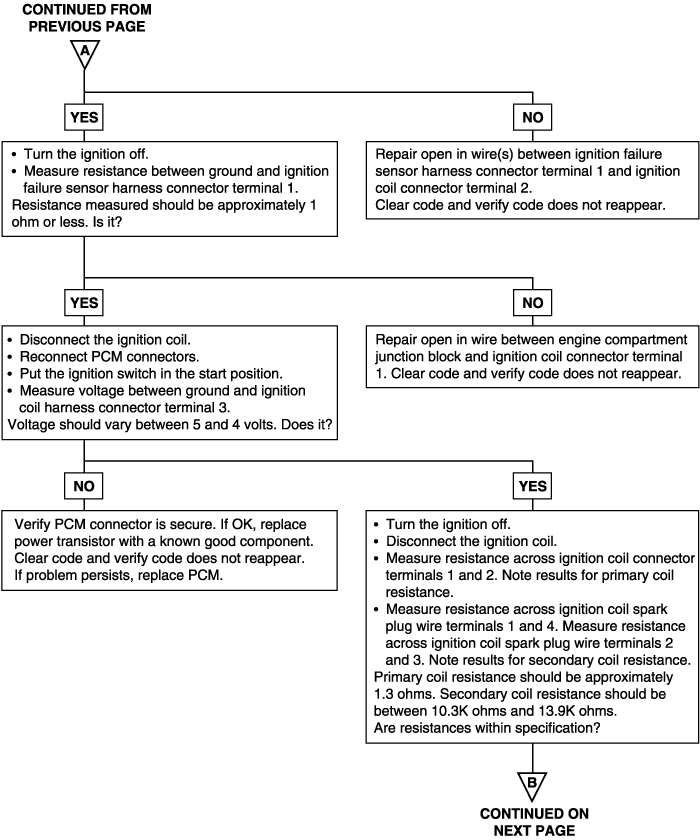
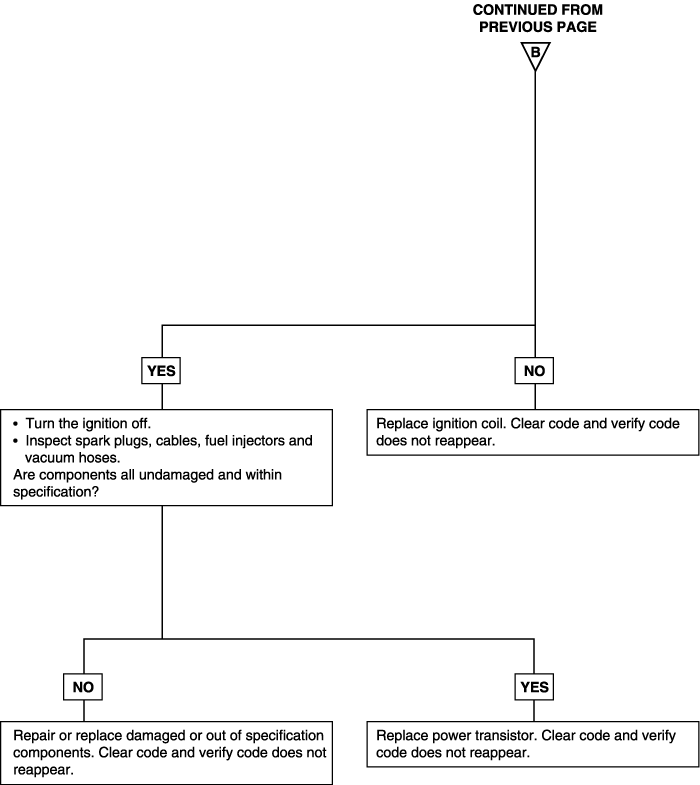
TROUBLESHOOTING GUIDE
|
DTC detection
condition |
Probable
cause |
|
Background
If a misfire occurs while the engine is
running, the engine speed suddenlychanges.
The Powertrain Control Module checks for
changes in the engine speed by monitoringthe CKP
signal.
Normal Operation
Five seconds or more have passed after the
engine has started.
The engine speed is between 500 and 6,000
rpm.
The engine Coolant Temperature is higher than
-10°C(14°F).
The intake air temperature is higher than
-10°C (14°F).
There is no sudden acceleration/deceleration
such as during a shift change.
Abnormal Operation (a change in the rate of
angular acceleration by the crankshaftis monitored for misfire
detection.)
A misfire has occurred more frequently than
allowed during the last 200 revolutions[when the catalyst
temperature is higher than 950°C (1,742°F)].
A misfire has occurred more frequently than
the allowed number of times (2%)during 1,000 motor
revolutions. |
Failed ignition system part(s)
Poor crankshaft position sensor
signal
Incorrect air/fuel ratio
Low compression
Failed engine coolant temperature
sensor
Timing belt missing teeth
Failed injector
Failed powertrain control module
|
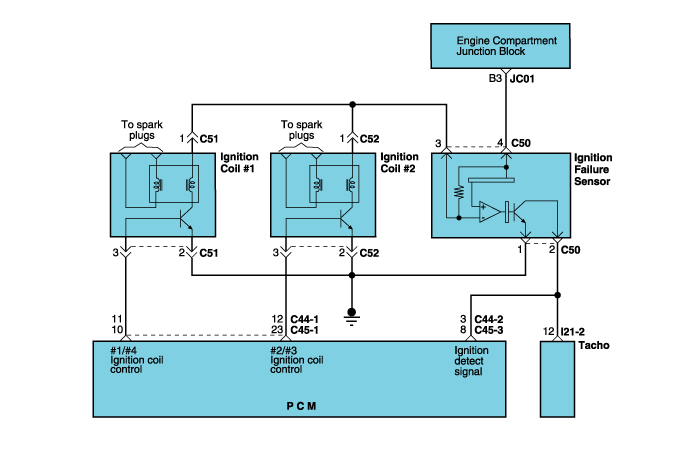
CIRCUIT DIAGRAM
TEST PROCEDURE