| TROUBLESHOOTING |
INSTRUMENTS AND WARNING
SYSTEM
|
Symptom |
Possible
cause |
Remedy |
|
Tachometer does not operate |
No.18 fuse (10A) blown
Tachometer faulty
Wiring faulty |
Check for short and replace fuse
Check tachometer
Repair if necessary |
|
Fuel gauge does not operate |
No.18 fuse (10A) blown
Fuel gauge faulty
Fuel sender faulty
Wiring faulty |
Check for short and replace fuse
Check gauge
Check fuel sender
Repair if necessary |
|
Low fuel warning lamp does not
light |
No.18 fuse (10A) blown
Bulb burned out
Fuel level sensor faulty
Wiring or ground faulty |
Check for short and replace fuse
Replace bulb
Check sensor
Repair if necessary |
|
Water temperature gauge does not
operate |
No.18 fuse (10A) blown
Water temperature gauge faulty
Water temperature sender faulty
Wiring or ground faulty |
Check for short and replace fuse
Check gauge
Check sender
Repair if necessary |
|
Oil pressure warning lamp does not
light |
No.18 fuse (10A) blown
Bulb burned out
Oil pressure sender faulty
Wiring or ground faulty |
Check for short and replace fuse
Replace bulb
Check sender
Repair if necessary |
|
Low brake fluid warning lamp does not
light |
No.18 fuse (10A) blown
Bulb burned out
Brake fluid level warning switch
faulty
Parking brake switch faulty
Wiring or ground faulty |
Check for short and replace fuse
Replace bulb
Check switch
Check switch
Repair if necessary |
|
Open door warning lamp does not
light |
No.18 fuse (10A) blown
Bulb burned out
Door switch faulty
Wiring or ground faulty |
Check for short and replace fuse
Repair bulb
Check switch
Repair if necessary |
|
Seat belt warning lamp does not
light |
No.18 fuse (10A) blown
Bulb burned out
Buckle switch faulty
Wiring or ground faulty |
Check for short and replace fuse
Replace bulb
Check switch
Repair if
necessary |
LIGHTING SYSTEM
|
Symptom |
Possible
cause |
Remedy |
|
One lamp does not light
(all exterior) |
Bulb burned out
Socket, wiring or ground
faulty |
Replace bulb
Repair if necessary |
|
Head lamps do not light |
Bulb burned out
Head lamp fuse (15A) blown
Head lamp relay faulty
Lighting switch faulty
Wiring or ground faulty |
Replace bulb
Replace fuse and check for short
Check relay
Check switch
Repair if necessary |
|
Tail lamps do not light |
Tail lamp fuse blown (20A)
Fusible link blown
Tail lamp relay faulty
Lighting switch faulty
Wiring or ground faulty |
Replace fuse and check for short
Replace fusible link
Check relay
Check switch
Repair if necessary |
|
Stop lamps do not light |
No.9 fuse (15A) blown
Stop lamp switch faulty
Wiring or ground faulty
Stop lamp relay faulty |
Replace fuse and check for short
Adjust or replace switch
Repair if necessary
Replace relay |
|
Stop lamps stay on |
Stop lamp switch faulty
Stop lamp relay faulty |
Adjust or replace switch
Replace relay |
|
Instrument lamps do not light
(Tail lamps light) |
Rheostat fulty
Wiring or ground faulty |
Check rheostat
Repair if necessary |
|
Turn signal lamp does not flash on one
side |
Bulb burned out
Turn signal switch faulty
Wiring or ground faulty |
Replace bulb
Check switch
Repair if necessary |
|
Turn signal lamps do not
operate |
No.12 fuse (10A) blown
Flasher faulty
Turn signal switch faulty
Wiring or ground faulty |
Replace fuse and check for short
Check flasher
Check switch
Repair if necessary |
|
Hazard warning lamps do not
operate |
No.2 fuse (10A) blown
Flasher fulty
Hazard switch faulty
Wiring or ground faulty |
Replace fuse and check for short
Check flasher
Check switch
Repair if necessary |
|
Flasher rate too slow or too
fast |
Lamps' wattages are smaller or larger than
specified
Defective flasher |
Replace lamps
Replace flasher |
|
Back up lamps do not light up |
No.17 fuse (10A) blown
Back up lamp switch faulty
Wiring or ground faulty |
Replace fuse and check for short
Check switch
Repair if necessary |
|
Overhead console lamp does not light
up |
No.28 fuse (10A) blown
Wiring or ground faulty |
Replace fuse and check for short
Repair if
necessary |
AUDIO
There are six
areas where a problem can occur: wiring harness, the radio, the cassette
tape deck, the CD player, the speaker, and antenna.Troubleshooting enables
you to confine the problem to a particular area.
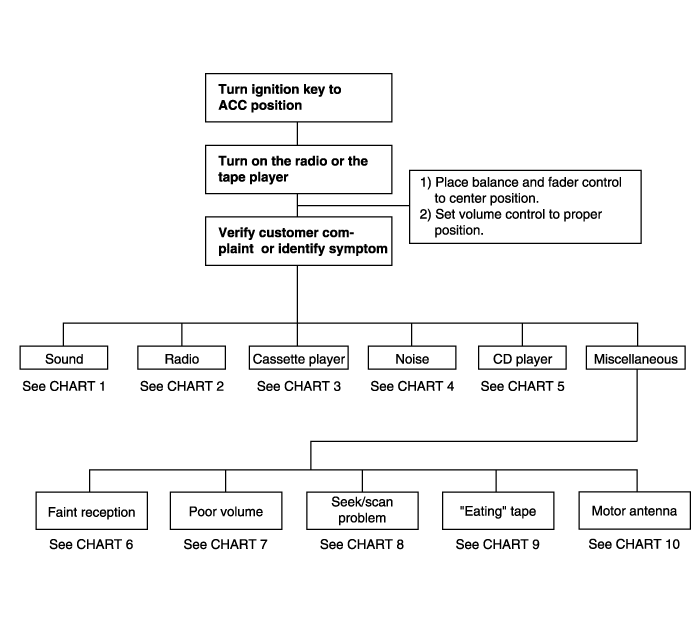
CHART 1
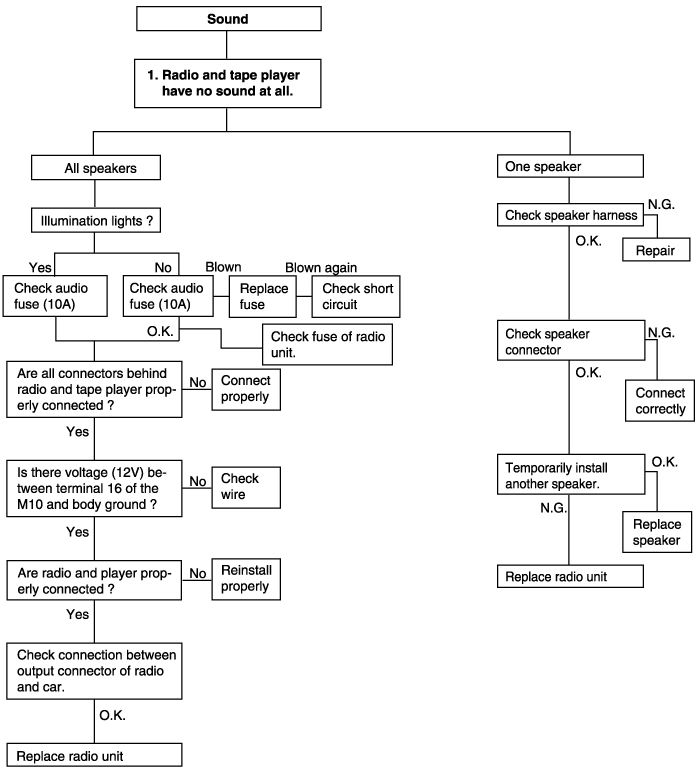
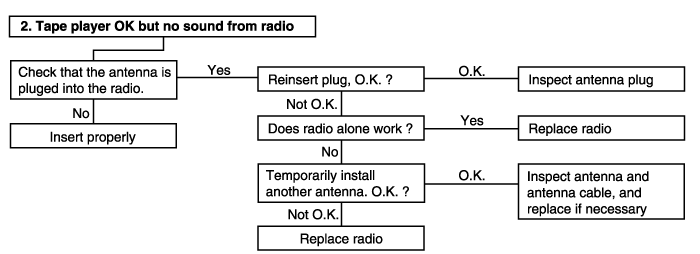
CHART 2
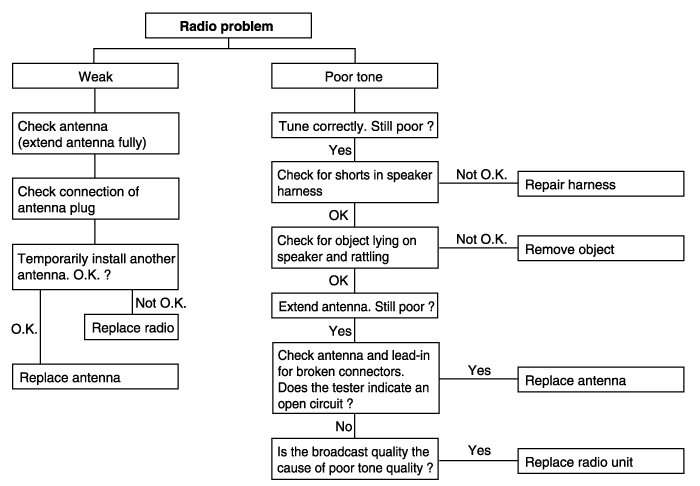
CHART 3
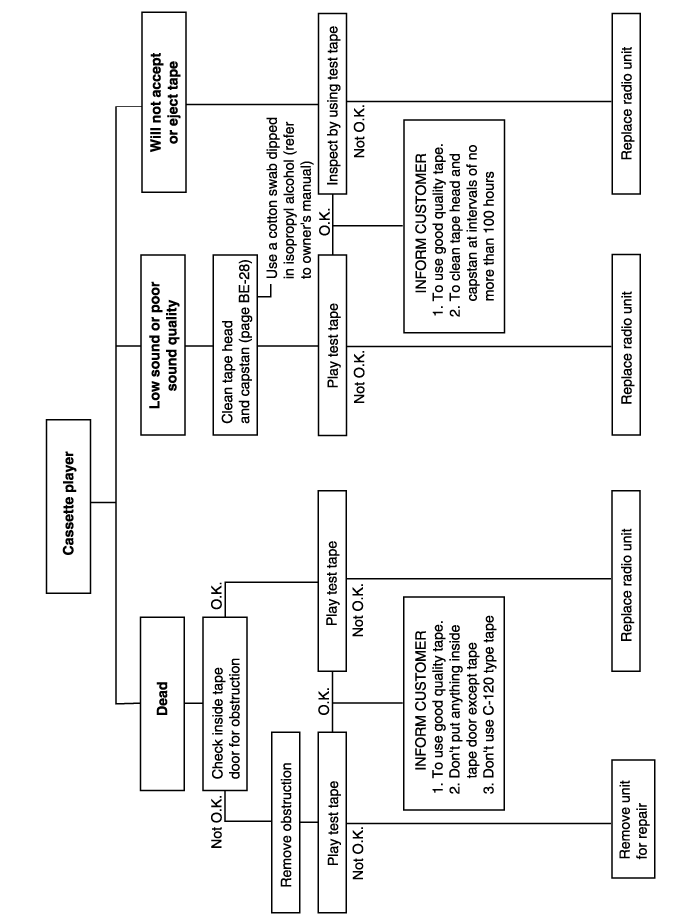
CHART 4
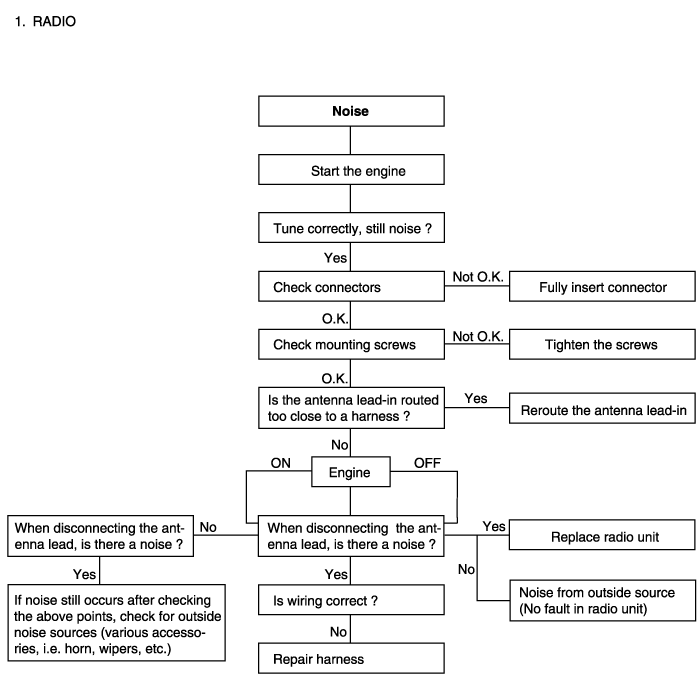
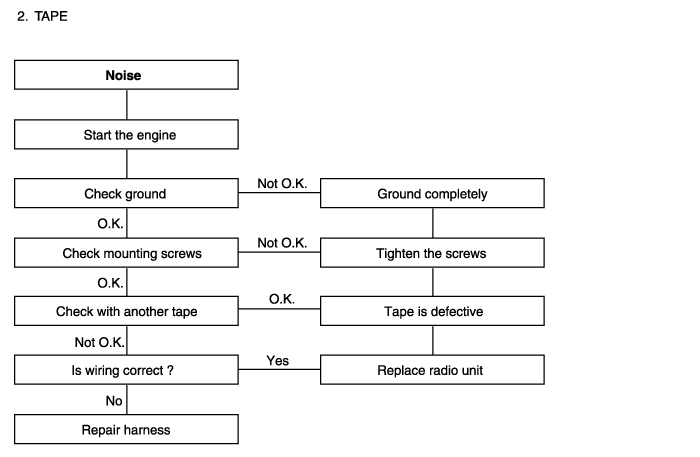
CHART 5
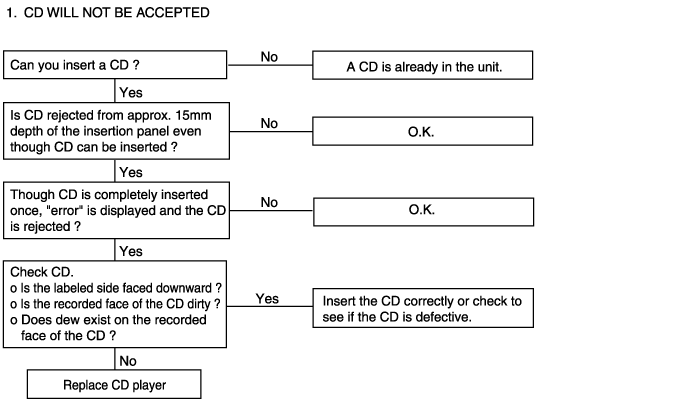
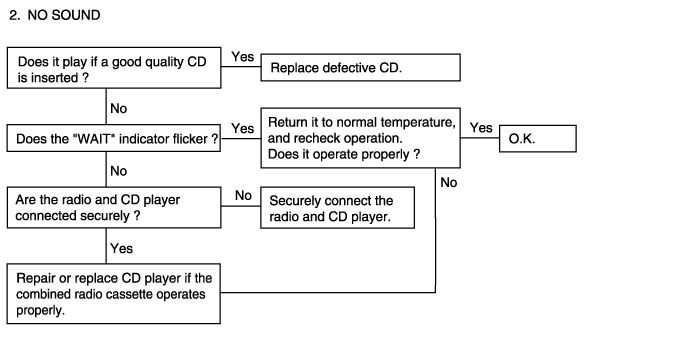
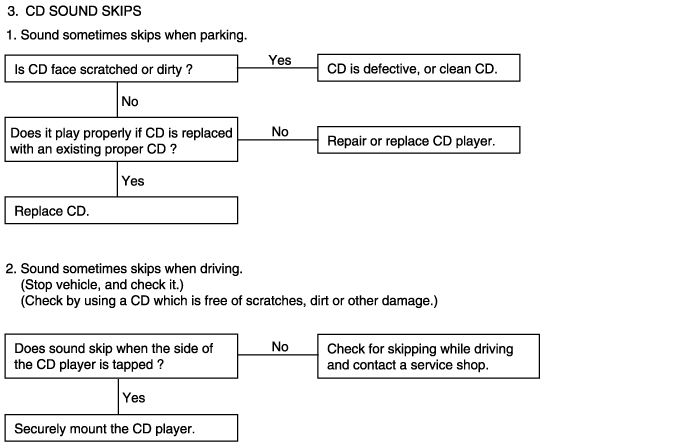
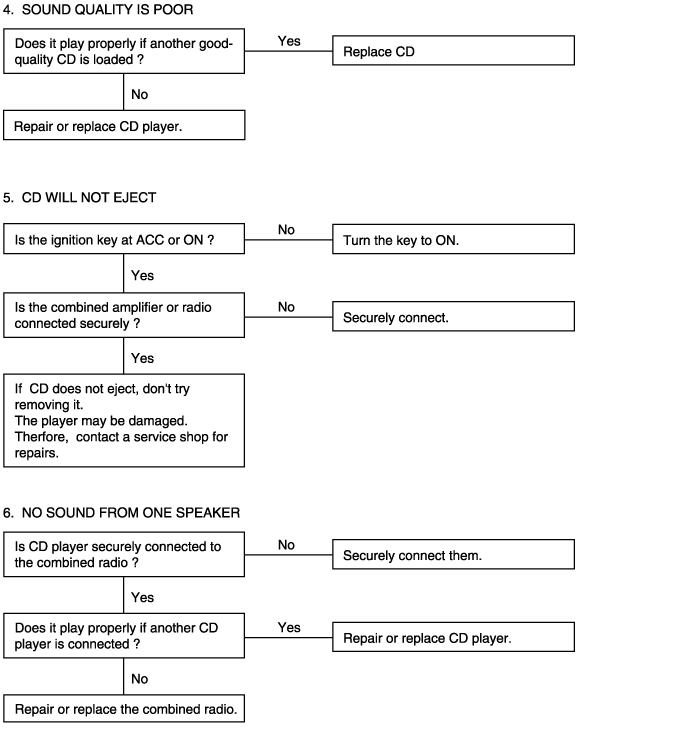
CHART 6
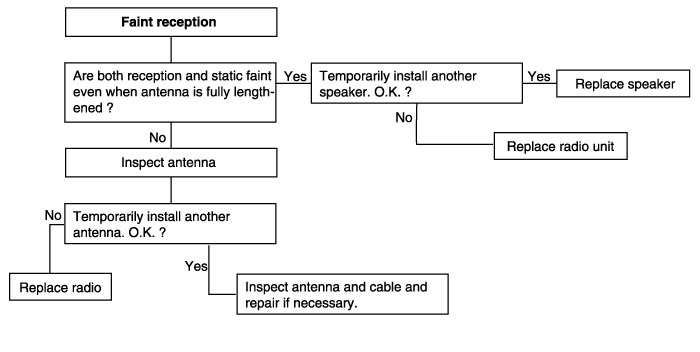
CHART 7
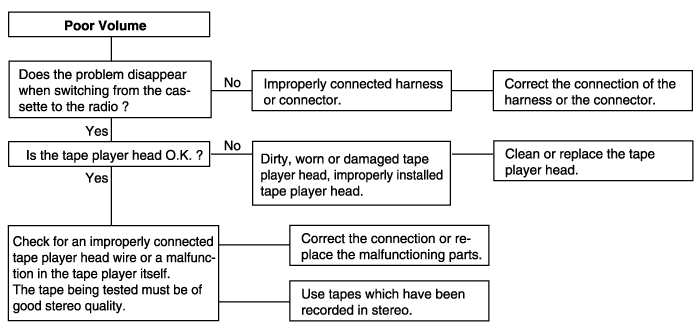
CHART 8
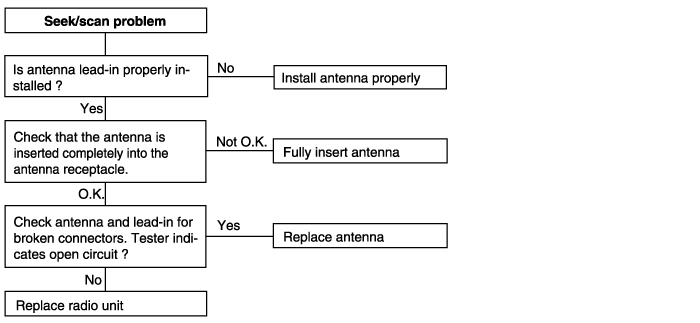
CHART 9
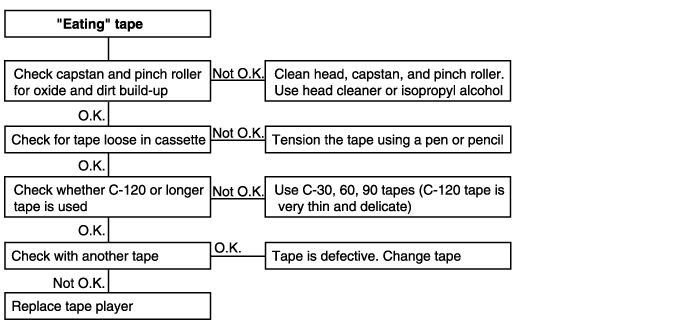
CHART 10
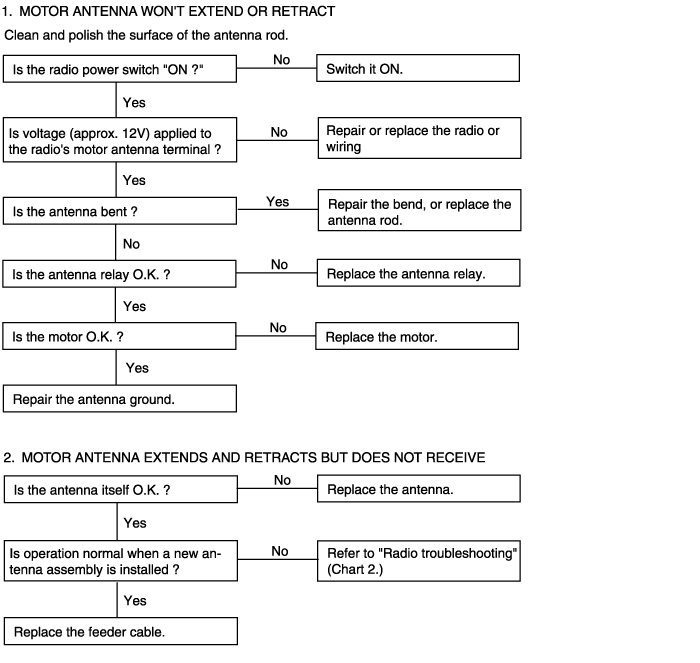
WINDSHIELD WIPER
|
Symptom |
Possible
cause |
Remedy |
|
Wipers do not operate or return to off
position |
Wiper fuse (No.27; 20A) blown
Wiper motor faulty
Wiper switch faulty
Wiring or ground faulty |
Check for short and replace fuse
Check motor
Check switch
Repair if necessary |
|
Wipers do not operate in INT
position |
ETACS CM faulty
Wiper switch faulty
Wiper motor faulty
Wiring or ground faulty |
Check ETACS CM
Check switch
Check motor
Repair if
necessary |
POWER WINDOW
|
Symptom |
Possible
cause |
Remedy |
|
No windows operate from the main switch on the
driver's door |
Fusible link (40A for P/Window)
blown
Poor ground
Defective power window main
switch
Open circuit in wires or loose or disconnected
connector |
Replace the fusible link
Clean and retighten the ground terminal
mounting bolt
Check the switch
Replace if necessary
Repair or replace
|
|
Driver's side window does not
operate |
Defective power window main
switch
Defective motor or circuit
breaker
Open circuit wires or loose or disconnected
connector |
Check for driver's window switch
Replace the motor
Check the harness and the
connector
|
|
Passenger's side window does
operate |
Defective power window subswitch
Defective motor or circuit
breaker
Wiring faulty or disconnected
connector |
Replace the switch
Replace the motor
Repair as
necessary |
POWER DOOR MIRROR
|
Symptom |
Possible
cause |
Remedy |
|
No mirrors operate |
No.30 fuse (15A) blown
Poor ground
Defective mirror switch
Open circuit in wires or loose or disconnected
connector |
Check the circuit and replace
fuse
Clean and retighten the gound terminal
mounting bolt
Check the switch
Replace if necessary
Repair or replace
|
|
One mirror does not operate |
Defective mirror switch
Defective mirror actuator
Open circuit wires or loose or disconnected
connector |
Check the switch
Replace if necessary
Replace the actuator
Repair or replace
|
ANTI-THEFT
|
Symptom |
||
|
The system is not armed
(The siren doesn't sound) |
Transmitter faulty
Receiver faulty
Damaged or disconnected wiring of door switch
input circuit
ETACS module faulty |
Replace the transmitter
Replace the receiver
Repair the harness
Replace the ETACS module |
|
The siren sounds in error when a door or trunk
lid is unlocked with the key whilethe system is
armed |
Damaged or disconnected wiring of a door key
cylinder and trunk lid key cylinder switch input
circuit
ETACS module faulty |
Repair the harness or replace a door key
cylinder and the trunk lid key cylinder switch
Replace the ETACS module |
|
Engine does not start in disarm
state |
Burglar alarm relay faulty
Damage or disconnected wiring of burglar alarm
relay activation circuit
Malfunction of the ETACS
module |
Replace the burglar alarm relay
Replace the harness
Replace the ETACS module |
|
There is no alarm when, as an alarm test, a
door is opened without using the key
(The arming and disarming are normal, and the
alarm is activated when the trunk lid or hood is
opened) |
Damaged or disconnected wiring of door switch
(all doors) input circuit
Malfunction of the door switch
Malfunction of the ETACS
module |
Repair the harness or replace the door
switch
Check the door switch
Replace the ETACS module |
|
There is no alarm when, as an alarm test, the
trunk lid is opened without using thekey.
(The alarm is activated, however, by opening a
door or the hood) |
Damaged or disconnected wiring of luggage
compartment light switch input circuit
Malfunction of the tailgate
switch
Malfunction of the ETACS
module |
Repair the harness or replace the luggage
compartment light switch
Check the tailgate switch
Replace the ETACS module |
|
There is no alarm when, as an alarm test the
hood is opened from within the vehicle.
(The alarm is activated, however, by opening a
door or trunk lid) |
Damaged or disconnected wiring of hood switch
input circuit
Malfunction of the hood switch
Malfunction of the ETACS
module |
Repair the harness or replace the hood
switch
Check the hood switch
Replace the ETACS
module |
KEYLESS ENTRY SYSTEM
|
Symptom |
Possible
casue |
Check |
Remedy |
|
Operation range is unstable |
Discharged transmitter battery |
Replace the battery | |
|
Transmitter or receiver faulty |
Replace the transmitter or the
receiver | ||
|
Central locking device operates but keyless
entry does not work |
Discharged receiver battery |
Check the transmitter, red lamp blinking upon
pressing the transmitter switch |
Replace the battery |
|
Faulty signal code
registration |
Ensure normal door opening/closing by using
the door key and register the code again | ||
|
Faulty keyless entry circuit |
Check the receiver connector, the ETACS
connector, and the harness between the receiver and
ETACS |
Repair the connector or the
harness | |
|
Faulty receiver |
Check the receiver output using the
oscilloscope |
Replace the receiver | |
|
Faulty control unit and door
module |
Replace the faulty control unit and
module |
If central lock and keyless entry do not
operate simultaneously, systems other than the keyless entry may be
considered faulty.
Then check related
systems. |
