| INSPECTION |
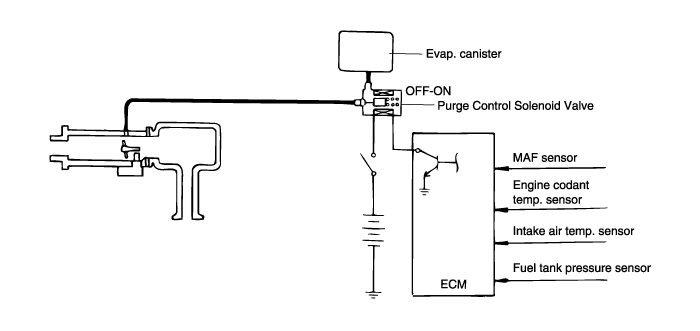
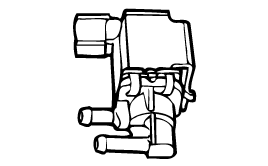
EVAP Canister Purge Solenoid Valve
The EVAP Canister Purge Solenoid Valve is
controlled by the ECM; when the engine coolant temperature is low,
and also during idling, the valve closes so that evaporated fuel is
not drawn into the surge tank. After engine warm-up during ordinary
driving, it opens to let the stored vapors flow into the surge
tank.
When disconnecting the vacuum hose, make an
identification mark on it so that it can be reconnected to its
original position.
|

| 1. |
Disconnect the vacuum hose (black with red
stripe) from the solenoid valve. |
| 2. |
Detach the harness
connector. |
| 3. |
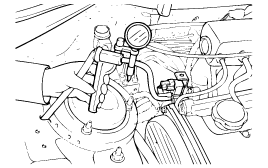
Connect a vacuum pump to the nipple to which
the red-striped vacuum hose was
connected. |
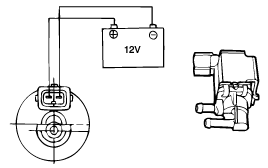
| 4. |
Apply vacuum and check when voltage is applied
to the EVAP Canister Purge Solenoid Valve and when the voltage is
discontinued.
|
| 5. |
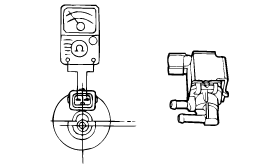
Measure the current between the terminals of
the solenoid valve.
|
VACUUM HOSE
Engine coolant
temperature : 80~95°C (176~205°F)
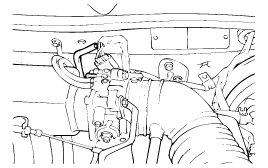
| 1. |
Disconnect the vacuum hose from the intake
manifold purge hose nipple and connect a hand vacuum pump to the
nipple.
|
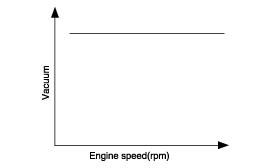
| 2. |
Start the engine and check that, after raising
the engine speed by racing the engine, vacuum remains fairly
constant.
|
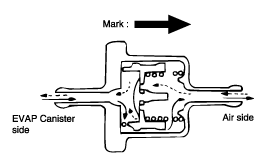
OVERFILL LIMITER (TWO WAY VALVE)
To inspect the overfill
limiter (two-way valve), refer to the Fuel tank.