| INSPECTION PROCEDURES FOR TROUBLE SYMPTOMS |
INSPECTION PROCEDURE 1
|
Communication with
the scan tool |
Probable
cause | ||||||
|
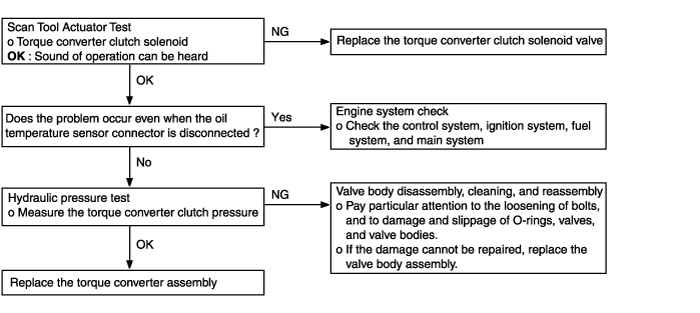
If communication with a known good scan tool
is not possible, the cause is probably a defective diagnostic
trouble line or the TCM is not functioning. |
|
INSPECTION PROCEDURE 2
|
Starting
impossible |
Probable
cause | ||||||
|
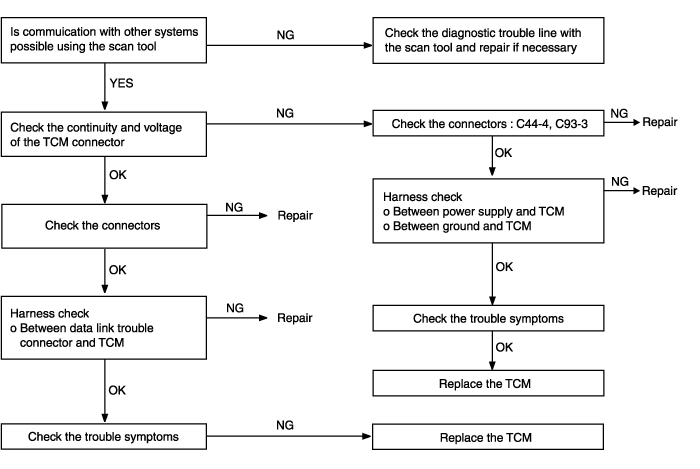
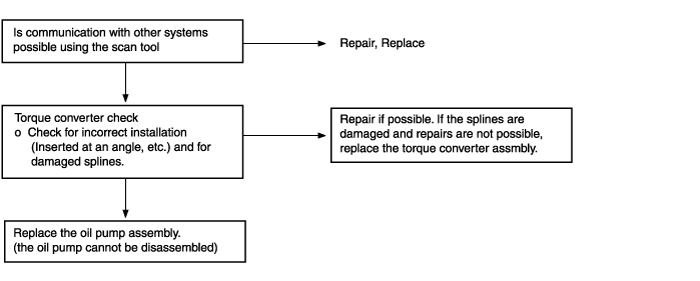
Starting is not possible when the selector
lever is in P or N range. In such cases, the cause is possibly a
defective engine system, torque converter or oil
pump. |
|
INSPECTION PROCEDURE 3
|
Does not
move |
Probable
cause | ||||||||
|
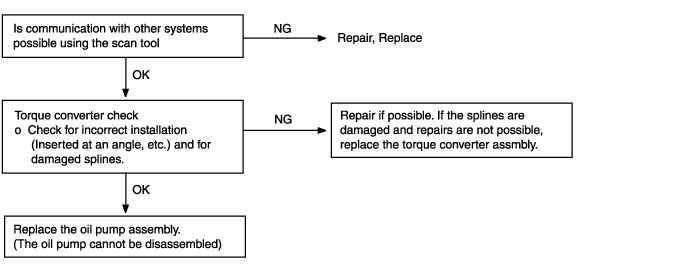
If the vehicle does not move forward when the
selector lever is shifted from N to D range while the engine is
idling, the cause is probably abnormal line pressure or a
malfunction of the underdrive clutch or valve body. |
|
INSPECTION PROCEDURE 4
|
Does not
reverse |
Probable
cause | ||||||||||||
|
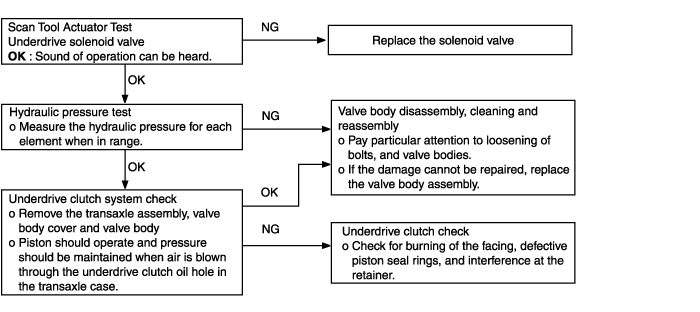
If the vehicle does not reverse when the
selector lever is shifted from N to R range while the engine is
idling, the cause is probably abnormal pressure in the reverse
clutch or low and reverse brake or a malfunction of the reverse
clutch, low and reverse brake or valve body. |
|
INSPECTION PROCEDURE 5
|
Does not move
(forward or reverse) |
Probable
cause | ||||||||
|
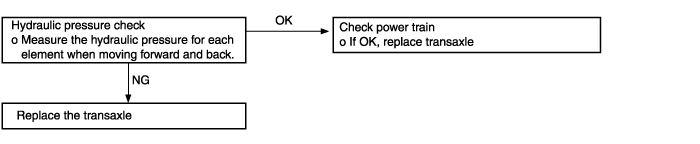
If the vehicle does not move forward or
reverse when the selector lever is shifted to any position while the
engine is idling, the cause is probably abnormal line pressure, or a
malfunction of the power train, oil pump or valve
body. |
|
INSPECTION PROCEDURE 6
|
Engine stalling when
shifting |
Probable
cause | ||||||||
|
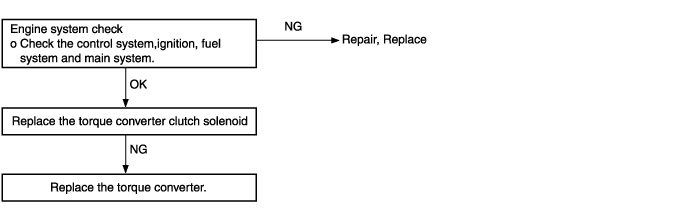
If the engine stalls when the selector lever
is shifted from N to D or R range while the engine is idling, the
cause is possibly a malfunction of the engine system, torque
converter clutch solenoid, valve body or torque converter (torque
converter clutch malfunction). |
|
INSPECTION PROCEDURE 7
|
Shocks when changing
from N to D range and time lag |
Probable
cause | ||||||||
|
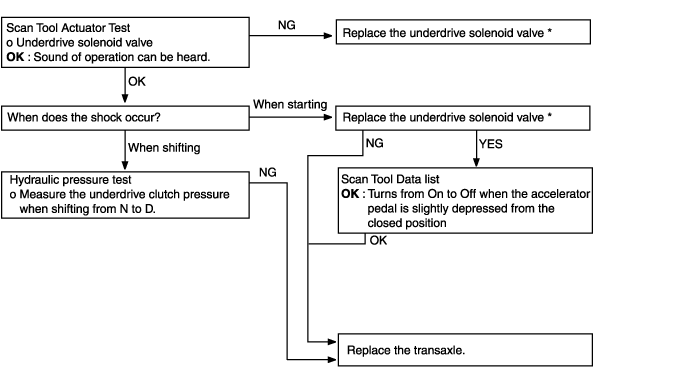
If abnormal shocks or a time lag of 2 second
or more occur when the selector lever is shifted from N to D range
while the engine is idling, the cause is probably abnormal
underdrive clutch pressure or a malfunction of the underdrive
clutch, valve body. |
|
INSPECTION PROCEDURE 8
|
Shock when changing
from N to R and large time lag |
Probable
cause | ||||||||||||
|
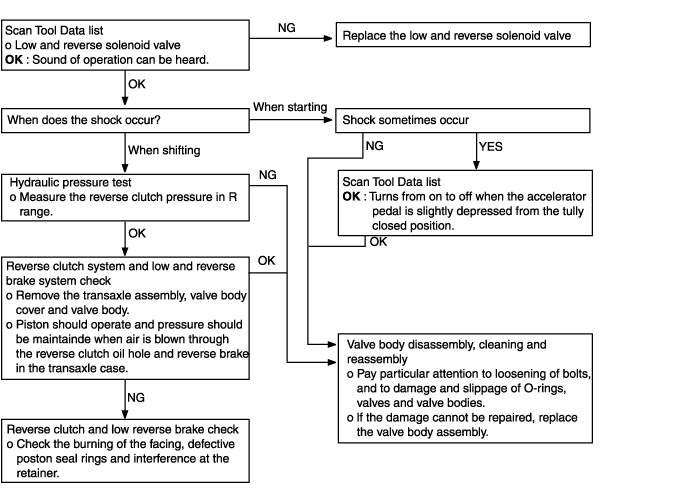
If abnormal shocks or a time lag of 2 seconds
or more occurs when the selector lever is shifted from N to R range
while the engine is idling, the cause is probably abnormal reverse
clutch pressure or low and reverse brake pressure, or a malfunction
or the reverse clutch, low and reverse brake. |
|
INSPECTION PROCEDURE 9
|
Shocks when changing
from N to R, N to D and large time lag |
Probable
cause | ||||||
|
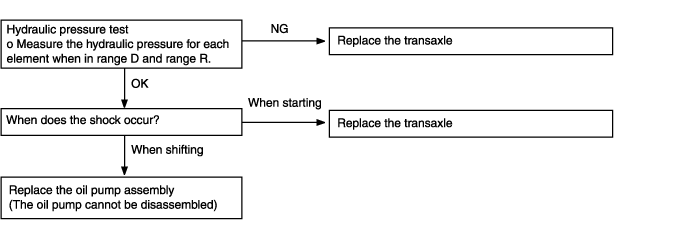
If abnormal shocks or a time lag of 2seconds
or more occurs when the selector lever is shifted from N to R range
while the engine is idling, the cause is probably abnormal line
pressure or a malfunction of the oil pump or valve
body. |
|
INSPECTION PROCEDURE 10
|
Shocks and running
up |
Probable
cause | ||||||||||
|
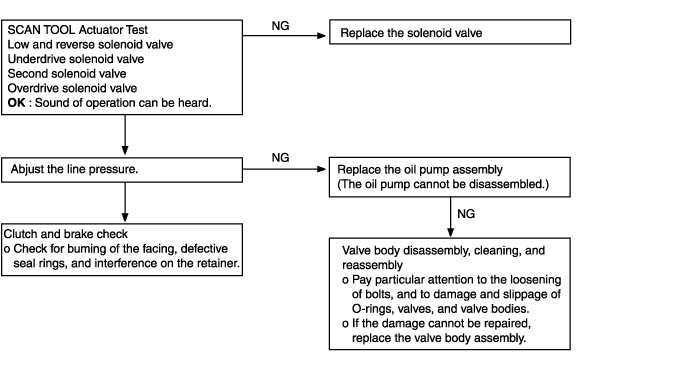
If shocks occur when driving due to upshifting
or downshifting and the transaxle speed becomes higher than the
engine speed, the cause is probably abnormal line pressure or a
malfunction of a solenoid valve, oil pump, valve body, brake or
clutch. |
|
INSPECTION PROCEDURE 11
|
All points
(Displaced shifting points) |
Probable
cause | ||||||||||||
|
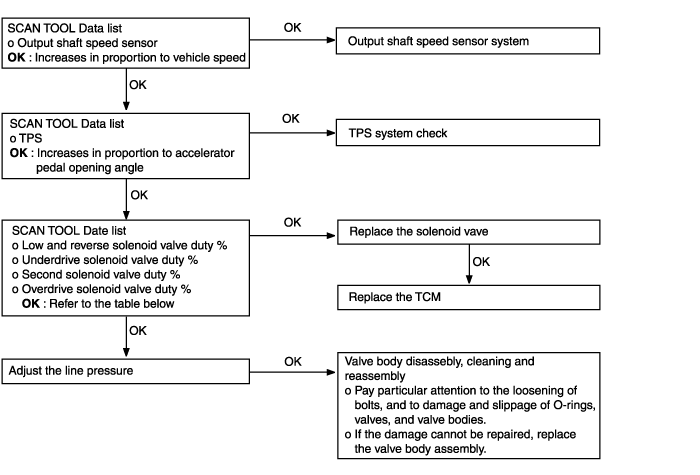
If all shift points are displaced while
driving, the cause is probably a malfunction of the output shaft
speed sensor, TPS or a solenoid valve. |
|
INSPECTION PROCEDURE 12
|
Some points
(Displaced shifting points) |
Probable
cause | ||
|
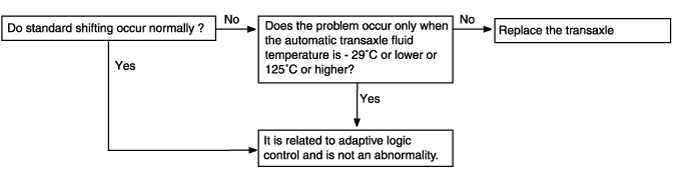
If some of the shift points are displaced
while driving, the cause is probably a malfunction of the valve
body, or it is related to control and is not an
abnormality. |
|
INSPECTION PROCEDURE 13
|
No diagnostic
trouble codes (Does not shift) |
Probable
cause | ||||
|
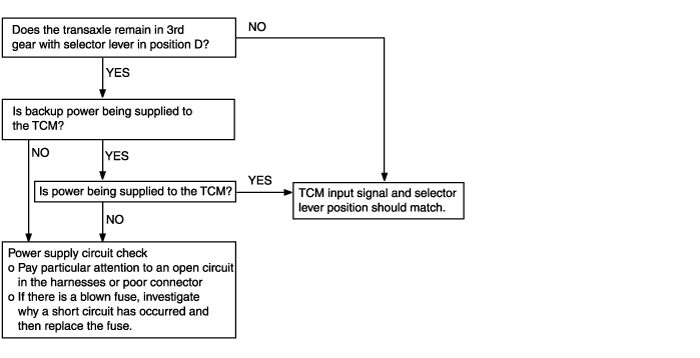
If shifting does not occur while driving and
no diagnostic trouble codes are output, the cause is probably a
malfunction of the Park/Neutral position switch, or
TCM. |
|
INSPECTION PROCEDURE 14
|
Poor
acceleration |
Probable
cause | ||||
|
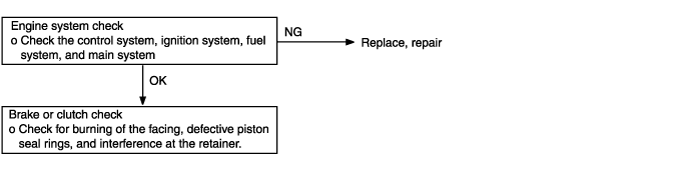
If acceleration is poor even if downshifting
occurs while driving, the cause is probably a malfunction of the
engine system, brake or clutch. |
|
INSPECTION PROCEDURE 15
|
Vibration |
Probable
cause | ||||||||||
|
If vibration occurs when driving at constant
speed or when accelerating in top range, the cause is probably
abnormal torque converter clutch pressure or a malfunction of the
engine system, torque converter clutch solenoid, torque converter or
valve body. |
|