| DESCRIPTION |
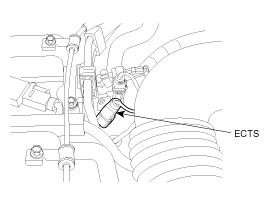
The engine coolant
temperature sensor (ECTS) is located in the engine coolant passage of the
cylinder head for detecting the engine coolant temperature. The ECTS uses
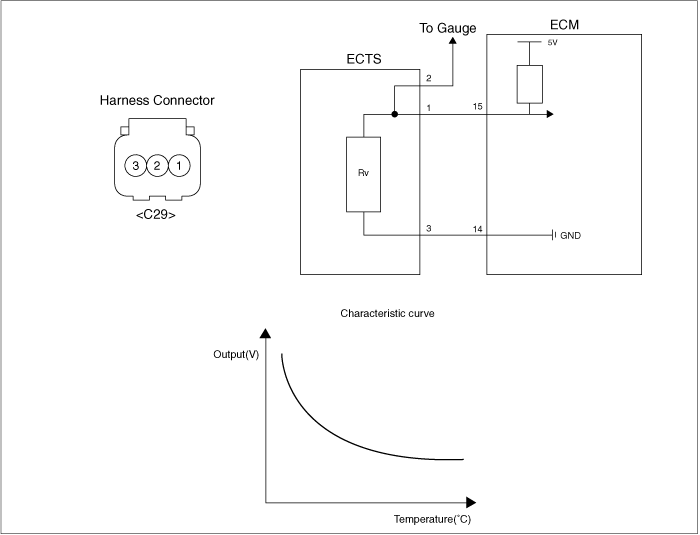
a thermistor whose resistance changes with the temperature variation. The
electrical resistance of the ECTS decreases as the temperature increases,
and increases as the temperature decreases. When the resistance value of
the thermistor in the ECTS changes according to the engine coolant
temperature, the output voltage also changes. During cold engine operation
the ECM increases the fuel injection duration and controls the ignition
timing using the information of engine coolant temperature to avoid engine
stalling and improve driveability.
| CIRCUIT DIAGRAM |
SENSOR INSPECTION
| 1. |
Remove the Engine Coolant Temperature Sensor
(ECTS) from the engine block. |
| 2. |
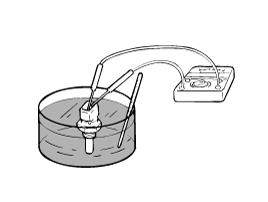
With the temperature sensing portion of Engine
Coolant Temperature Sensor (ECTS) immersed in hot engine coolant,
measure resistance between the terminals 1 and 3 of ECTS
connector.
|
| 3. |
If the resistance deviates from the standard
value greatly, replace the sensor. |
HARNESS INSPECTION
Refer to DTC P0117 and
P0118 troubleshooting procedures.
INSTALLATION
| 1. |
Apply sealant LOCTITE 962T or the equivalent
to the threaded portion. |
| 2. |
Install the ECTS and tighten it to the
specified torque.
|
| 3. |
Securely connect the harness
connector. |