| 1. |
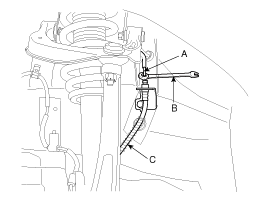
Disconnect the brake hose(C) from the brake
line(A) using a flare-nut wrench(B).
|
| 2. |
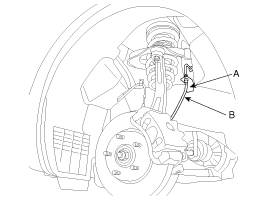
Remove the bracket mounting bolt(A), and then
remove the brake hose(B).
|
| 3. |
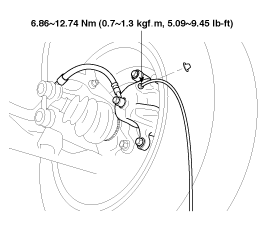
Remove the connector bolt from the caliper,
and disconnect the brake hose from the
caliper. |
| 1. |
Install a brake hose on the caliper with
tightening brake hose bolt. |
| 2. |
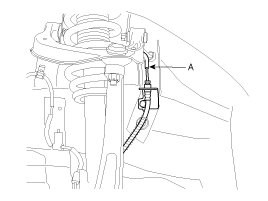
Install the bracket and the brake hose
mounting bolt.
|
| 3. |
Connect the brake hose(A) to the brake
line. |
| 4. |
After installing the brake hose, bleed the
brake system. |
| • |
Check the brake tubes for cracks, crimps and
corrosion. |
| • |
Check the brake hoses for cracks, damaged and
oil leakage. |
| • |
Check the brake tube flare nuts for damage and
oil leakage. |
| •
|
Do not reuse the drained
fluid. |
| •
|
Always use Genuine DOT3 or DOT 4 Brake
Fluid. Using a non-Genuine DOT or 4 brake fluid can cause
corrosion and decrease the life of the
system. |
| •
|
Make sure no dirt of other foreign
matter is allowed to contaminate the brake
fluid. |
| •
|
Do not spill brake fluid on the vehicle,
it may damage the paint; if brake fluid does contact the
paint, wash it off immediately with
water. |
| •
|
The reservoir on the master cylinder
must be at the MAX (upper) level mark at the start of bleeding
procedure and checked after bleeding each brake caliper. Add
fluid as
required. | |
| 1. |
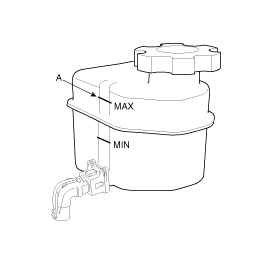
Make sure the brake fluid in the reservoir is
at the MAX (upper) level line (A).
|
| 2. |
Have someone slowly pump the brake pedal
several times, then apply pressure. |
| 3. |
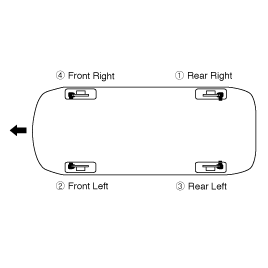
Lossen the right-rear brake bleed screw to
allow air to escape from the system. Then tighten the bleed screw
securely. |
| 4. |
Repeat the procedure for wheel in the sequence
shown below unit air bubbles no longer appear in the
fluid. |
| 5. |
Refill the master cylinder reservoir to
MAX(upper) level line.
|
FRONT DISC BRAKE
|
