VALVE-PCV 4.7L/5.7L
DESCRIPTION
4.7L V-8
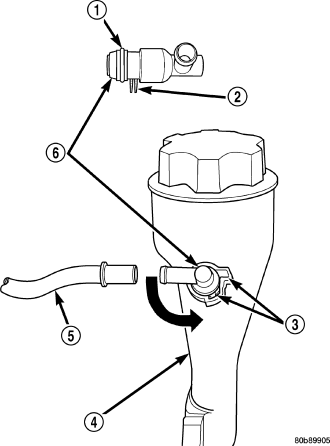
The 4.7L V-8 engine is equipped with a closed crankcase ventilation system. The Positive Crankcase Ventilation (PCV) valve (6) is mounted to the oil filler housing (4).
The PCV valve is sealed to the oil filler housing with an O-ring (1).
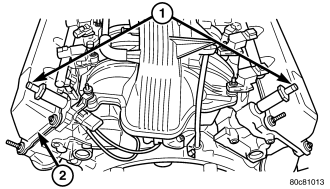
Two interconnected breathers (1) threaded into the rear of each cylinder head are used with the system.
The system also includes the air cleaner housing and various tubes and hoses to connect the system components.
5.7L V-8
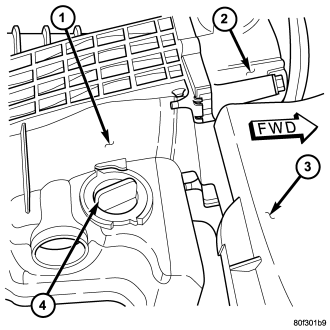
The 5.7L V-8 engine is equipped with a closed crankcase ventilation system and a Positive Crankcase Ventilation (PCV) valve.
A PCV valve (4) mounted into the top of the intake manifold (1), located to the right / rear of the throttle body (2) is used.
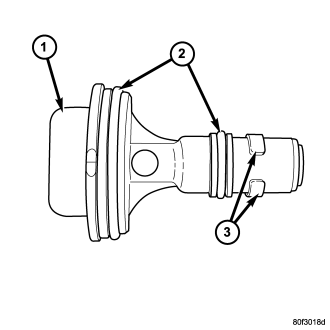
The PCV valve (1) is sealed to the intake manifold with two O-rings (2).
The system also consists of passages in the intake manifold, and various tubes and hoses to connect the system components.
OPERATION
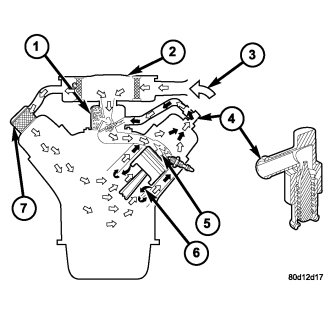
A typical enclosed crankcase ventilation system is shown in the graphic.
The PCV system operates by engine intake manifold vacuum. Filtered air is routed into the crankcase through the air cleaner hose. The metered air, along with crankcase vapors, are drawn through the PCV valve (4) and into a passage in the intake manifold. The PCV system manages crankcase pressure and meters blow by gases to the intake system, reducing engine sludge formation.
The PCV valve contains a spring loaded plunger. This plunger meters the amount of crankcase vapors routed into the combustion chamber based on intake manifold vacuum.
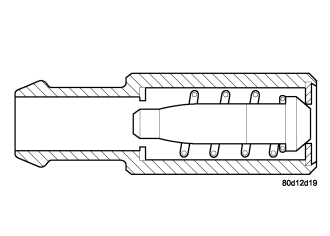
When the engine is not operating or during an engine pop-back, the spring forces the plunger back against the seat. This will prevent vapors from flowing through the valve.
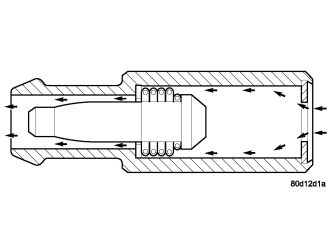
During periods of high manifold vacuum, such as idle or cruising speeds, vacuum is sufficient to completely compress spring. It will then pull the plunger to the top of the valve. In this position there is minimal vapor flow through the valve.
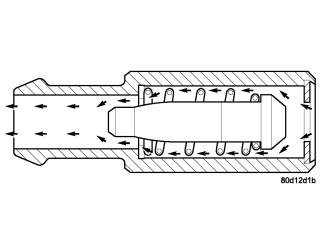
During periods of moderate manifold vacuum, the plunger is only pulled part way back from inlet. This results in maximum vapor flow through the valve.
DIAGNOSIS AND TESTING - PCV VALVE - 4.7L V-8
1. Disconnect PCV line/hose (5) by disconnecting rubber connecting hose at PCV valve fitting.
2. Remove PCV valve (6) at oil filler tube by rotating PCV valve downward until locating tabs (2) have been freed at cam lock . After tabs have cleared, pull valve straight out from filler tube. To prevent damage to PCV valve locating tabs, valve must be pointed downward for removal. Do not force valve from oil filler tube.
3. After valve is removed, check condition of valve O-ring (1) . Also, PCV valve should rattle when shaken.
4. Reconnect PCV valve to its connecting line/hose.
5. Start engine and bring to idle speed.
6. If valve is not plugged, a hissing noise will be heard as air passes through valve. Also, a strong vacuum should be felt with a finger placed at valve inlet.
7. If vacuum is not felt at valve inlet, check line/hose for kinks or for obstruction. If necessary, clean out intake manifold fitting at rear of manifold. Do this by turning a 1/4 inch drill (by hand) through the fitting to dislodge any solid particles. Blow out the fitting with shop air. If necessary, use a smaller drill to avoid removing any metal from the fitting.
8. Do not attempt to clean the old PCV valve.
9. Return PCV valve back to oil filler tube by placing valve locating tabs into cam lock. Press PCV valve in and rotate valve upward. A slight click will be felt when tabs have engaged cam lock. Valve should be pointed towards rear of vehicle.
10. Connect PCV line/hose and connecting rubber hose to PCV valve.
11. Disconnect rubber hose from fresh air fitting at air cleaner resonator box. Start engine and bring to idle speed. Hold a piece of stiff paper (such as a parts tag) loosely over the opening of the disconnected rubber hose.
12. The paper should be drawn against the hose opening with noticeable force. This will be after allowing approximately one minute for crankcase pressure to reduce.
13. If vacuum is not present, disconnect each PCV system hose at top of each crankcase breather (1) . Check for obstructions or restrictions.
14. If vacuum is still not present, remove each PCV system crankcase breather from each cylinder head. Check for obstructions or restrictions. If plugged, replace breather. Tighten breather to 12 N·m (106 in. lbs.) torque. Do not attempt to clean breather.
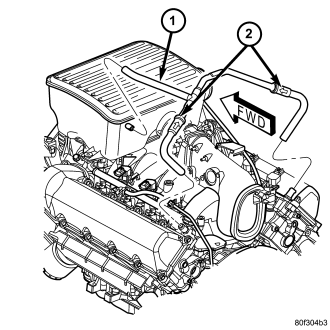
15. If vacuum is still not present, disconnect each PCV system hose at each fitting, and at each check valve . Check for obstructions or restrictions.
REMOVAL - 4.7L V-8
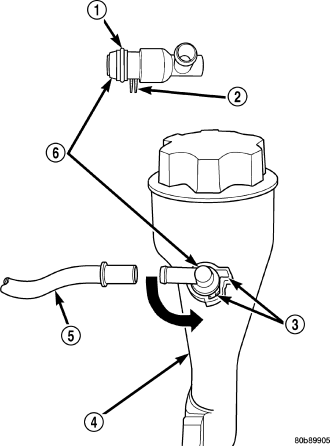
The PCV valve (6) is located on the oil filler tube . Two locating tabs (2) are located on the side of the valve . These 2 tabs fit into a cam lock in the oil filler tube. An O-ring seals the valve to the filler tube.
1. Disconnect PCV line/hose by disconnecting rubber hose at PCV valve fitting.
2. Remove PCV valve at oil filler tube by rotating PCV valve downward (counter-clockwise) until locating tabs have been freed at cam lock . After tabs have cleared, pull valve straight out from filler tube. To prevent damage to PCV valve locating tabs, valve must be pointed downward for removal. Do not force valve from oil filler tube.
3. After valve is removed, check condition of valve O-ring .
5.7L V-8
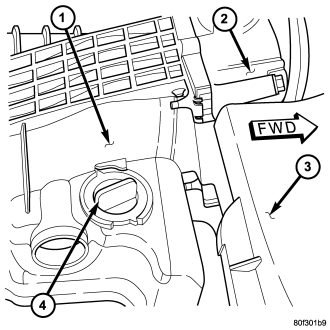
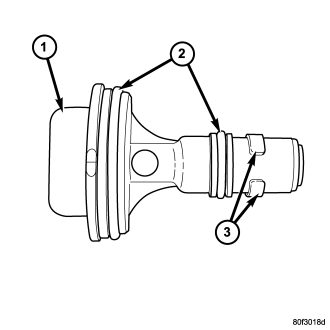
1. The PCV valve is sealed to the intake manifold with 2 O-rings (2).
2. Remove PCV valve by rotating counter-clockwise 90 degrees until locating tabs (3) have been freed. After tabs have cleared, pull valve straight up from intake manifold.
3. After valve is removed, check condition of 2 valve O-rings (2).
INSTALLATION
4.7L V-8
The PCV valve is located on the oil filler tube. Two locating tabs are located on the side of the valve. These 2 tabs fit into a cam lock in the oil filler tube. An O-ring seals the valve to the filler tube.
1. Return PCV valve back to oil filler tube by placing valve locating tabs into cam lock. Press PCV valve in and rotate valve upward. A slight click will be felt when tabs have engaged cam lock. Valve should be pointed towards rear of vehicle.
2. Connect PCV line/hose and rubber hose to PCV valve.
5.7L V-8
1. Clean out intake manifold opening.
2. Check condition of 2 O-rings on PCV valve.
3. Apply engine oil to 2 O-rings.
4. Place PCV valve into intake manifold and rotate 90 degrees clockwise for installation.