REMOVAL
GAS ENGINES
WARNING: Do not remove the cylinder block drain plugs or loosen the radiator draincock with the system hot and under pressure. Serious burns from coolant can occur. Refer to cooling system draining.
Do not waste reusable coolant. If the solution is clean, drain the coolant into a clean container for reuse.
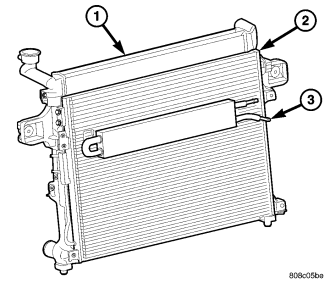
CAUTION: When removing the radiator or A/C condenser for any reason, note the location of all radiator-to-body and radiator-to-A/C condenser rubber air seals. These are used at the top, bottom and sides of the radiator and A/C condenser. To prevent overheating, these seals must be installed to their original positions.
1. Disconnect the negative battery cable at battery.
2. Drain coolant from radiator (Refer to 7 - COOLING - STANDARD PROCEDURE) .
3. Remove the front grille (Refer to 23 - BODY/EXTERIOR/GRILLE - REMOVAL).
4. Remove two radiator mounting bolts.
5. Disconnect both transmission cooler lines from radiator.
6. Disconnect electrical connector for the fan control solenoid.
7. Disconnect the power steering cooler line from cooler and filter.
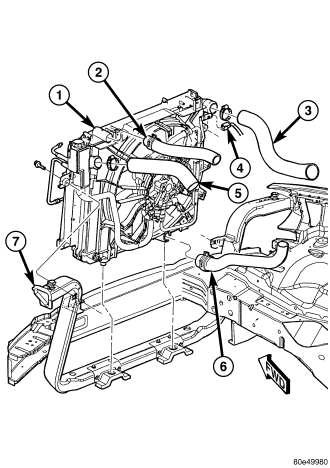
8. Disconnect the radiator upper and lower hoses.
9. Disconnect the overflow hose from radiator.
10. Remove the air inlet duct at the grille.
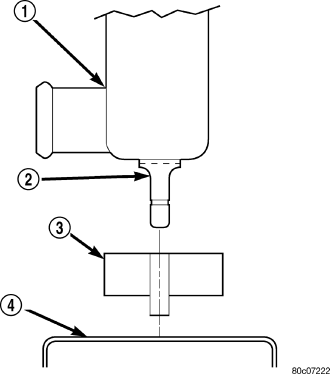
11. The lower part of radiator is equipped with two alignment dowel pins. They are located on the bottom of radiator tank and fit into rubber grommets. These rubber grommets are pressed into the radiator lower crossmember.
WARNING: The air conditioning system (if equipped) is under a constant pressure even with the engine off. Refer to refrigerant warnings in, heating and air conditioning before handling any air conditioning component.
NOTE: The radiator and radiator cooling fan can be removed as an assembly. It is not necessary to remove the cooling fan before removing or installing the radiator.
12. Disconnect the two high pressure fluid lines at the hydraulic fan drive.
13. Disconnect the low pressure return hose at the hydraulic fan drive.
14. Gently lift up and remove radiator from vehicle. Be careful not to scrape the radiator fins against any other component. Also be careful not to disturb the air conditioning condenser (if equipped).
3.0L DIESEL
WARNING: Risk of injury to skin and eyes from scalding coolant. Do not open cooling system unless temperature is below 90°c (194°f). Open cap slowly to release pressure. Store coolant in approved and appropriately marked container. Wear protective gloves, clothing and eye wear.
NOTE: When removing the radiator, note the location of the rubber radiator-to-body air seals. These seals are used to prevent overheating and must remain in there original positions.
Do Not waste usable coolant. If solution is clean, drain into a clean container for reuse.
1. Disconnect negative battery cable.
2. Drain coolant from radiator (Refer to 7 - COOLING/ENGINE/COOLANT - STANDARD PROCEDURE).
NOTE: When ever the high pressure line fittings are removed from the hydraulic fan drive the O-rings must be replaced.
3. Disconnect both pressure lines at hydraulic fan drive (Refer to 7 - COOLING/ENGINE/RADIATOR FAN - REMOVAL).
4. Disconnect low pressure return hose at hydraulic fan drive (Refer to 7 - COOLING/ENGINE/RADIATOR FAN - REMOVAL).
5. Disconnect fan electrical connector and set aside.
6. Remove lower, upper radiator, and coolant pressure container hoses from radiator.
NOTE: The lower portion of the radiator is equipped with two alignment dowel pins that are seated in rubber grommets. These grommets are pressed into the lower cross member and must remain present to prevent radiator tank damage.
7. Remove radiator retaining bolts, and carefully remove coolant module assembly from vehicle .
8. Separate coolant fan from radiator.