DIFFERENTIAL-VARI-LOK
OPERATION
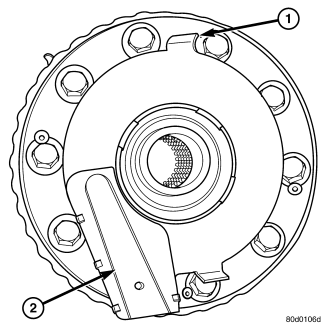
A gerotor pump and clutch pack are used to provide the torque transfer capability. One axle shaft is splined to the gerotor pump and one differential side gears, this provides input to the pump. Anti-rotation tabs (1) on the pump hold the oil feed tube (2) down in the differential lubricant. As a wheel begins to lose traction, the speed differential is transmitted from one side of the differential to the other through the side gears. The motion of one side gear relative to the other turns the inner rotor of the pump. Since the outer rotor of the pump is grounded to the differential case, the inner and outer rotors are moving relative to each other, which creates pressure in the pump. The tuning of the front and rear axle orifices and valves inside the gerotor pump are unique. Each system has a torque-limiting pressure relief valve to protect the clutch pack, which also facilitates vehicle control under extreme side-to-side traction variations. The resulting pressure is applied to the clutch pack and the transfer of torque is completed. Vari-lok® system is less subject to wear, remaining more consistent over time in its ability to transfer torque.
DIAGNOSIS AND TESTING-VARI-LOK
1. Park the vehicle on a level surface or raise vehicle on hoist so that the vehicle is level.
2. Remove the axle fill plug.
3. Verify that the axle fluid level is correct. The fluid level is correct if the fluid is level with the bottom of the fill hole.
4. Shift the transfer case into the 4WD full-time position.
5. Drive the vehicle in a tight circle for 2 minutes at 5mph to fully prime the pump.
6. Block the tires opposite the axle to be tested to prevent the vehicle from moving.
7. Shift the transfer case into the 4WD Low position and the transmission into the Park position.
8. Raise both the wheels of the axle to be tested off of the ground.
9. Rotate the left wheel by hand at a minimum of one revolution per second while an assistant rotates the right wheel in the opposite direction.
10. The left wheel should spin freely at first and then increase in resistance within 5 revolutions until the wheels cannot be continuously rotated in opposite directions.
11. The Vari-lok® differential has engaged properly if the wheels cannot be rotated in opposite directions for a moment. After the wheels stop rotating for a moment, the fluid pressure will drop in the differential and the wheels begin to rotate once again.
12. If the system does not operate properly, replace the Vari-lok® differential.