P0071-AMBIENT AIR TEMPERATURE SENSOR PERFORMANCE
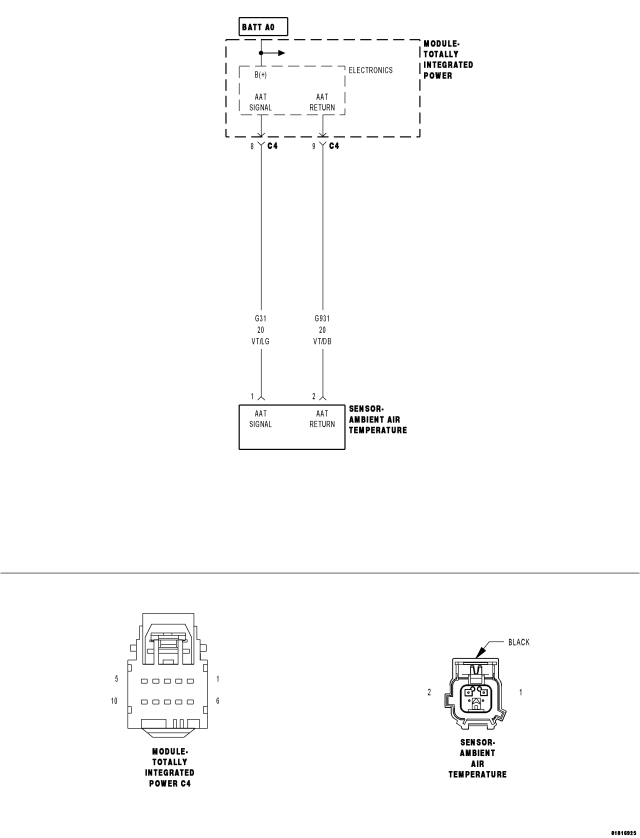
For a complete wiring diagram Refer to Section 8W
- When Monitored:
With engine off time greater than 480 minutes and ambient temperature greater than – 7° C (19.4° F).
- Set Condition:
After a calibrated amount of cool down time, the PCM compares the AAT, ECT, and IAT Sensor values. If one sensor value is not within 10° C (18° F) of the other temperature sensors for two consecutive trips, a DTC will set. Three good trips to turn off the MIL.
| Possible Causes |
| INTERMITTENT DTC |
| (G31) AAT SIGNAL CIRCUIT SHORTED TO VOLTAGE |
| (G31) AAT SIGNAL CIRCUIT SHORTED TO GROUND |
| (G31) AAT SIGNAL CIRCUIT SHORTED TO (G931) AAT SENSOR GROUND CIRCUIT |
| (G31) AAT SIGNAL CIRCUIT OPEN OR HIGH RESISTANCE |
| (G931) AAT SENSOR GROUND CIRCUIT OPEN OR HIGH RESISTANCE |
| AMBIENT AIR TEMPERATURE SENSOR |
| TOTALLY INTEGRATED POWER MODULE (TIPM) |
Always perform the Pre-Diagnostic Troubleshooting procedure before proceeding. (Refer to 9 - ENGINE - STANDARD PROCEDURE)
Diagnostic Test
1. DTC IS ACTIVENOTE: Diagnose any CAN - C Communication DTCs before continuing.
Turn the ignition off.
If possible, allow the vehicle to sit with the ignition off for more than 480 minutes in an environment where the temperature is consistent and above – 7° C (19.4° F).
Test drive the vehicle. The vehicle must exceed 48 km/h (30 mph) during the test drive. Do not cycle the ignition off when the test drive is completed.
With a scan tool, select View DTCs.
Is the status Active or Pending for this DTC?
Yes
- Go to 3
No
- Go to 2
2. AMBIENT AIR TEMPERATURE
Turn the ignition off.
Allow the vehicle to sit with the ignition off in an environment where the temperature is consistent and above – 7° C (19.4° F) until the engine coolant temperature is equal to ambient temperature.
Turn the ignition on.
With a scan tool, compare the AAT, ECT, and IAT sensor values.
Is the Ambient Air Temperature Sensor value within 10° C (18° F) of the other two sensor values?
Yes
- Refer to the *CHECKING FOR AN INTERMITTENT DTC Diagnostic Procedure. (Refer to 9 - ENGINE - DIAGNOSIS AND TESTING)
No
- Go to 3
3. (G31) AAT SIGNAL CIRCUIT SHORTED TO VOLTAGE
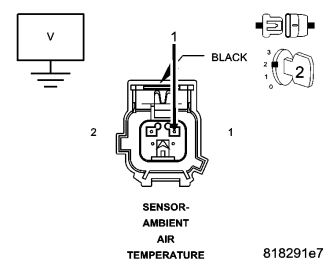
Turn the ignition off.
Disconnect the Ambient Air Temperature Sensor connector.
Disconnect the Totally Integrated Power Module (TIPM) connector.
Turn the ignition on.
Measure the voltage of the (G31) AAT Signal circuit in the Ambient Air Temperature Sensor harness connector.
Is there any voltage present?
Yes
- Repair the (G31) AAT Signal circuit for a short to voltage.
- Perform the PCM Verification Test Ver. 1 (Refer to 9 - ENGINE - STANDARD PROCEDURE).
No
- Go to 4
4. (G31) AAT SIGNAL CIRCUIT SHORTED TO GROUND
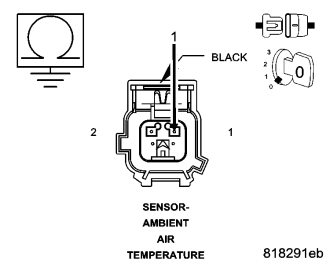
Turn the ignition off.
Measure the resistance between ground and the (G31) AAT Signal circuit in the Ambient Air Temperature Sensor harness connector.
Is the resistance above 100 ohms?
Yes
- Go to 5
No
- Repair the (G31) AAT Signal circuit for a short to ground.
- Perform the PCM Verification Test Ver. 1 (Refer to 9 - ENGINE - STANDARD PROCEDURE).
5. (G31) AAT SIGNAL CIRCUIT SHORTED TO (G931) AAT SENSOR GROUND CIRCUIT
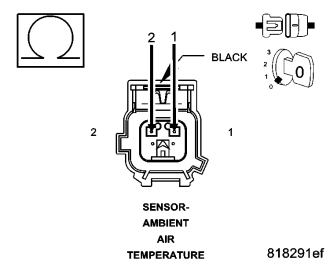
Measure the resistance between the (G31) AAT Signal circuit and the (G931) AAT Sensor Ground circuit in the Ambient Air Temperature Sensor harness connector.
Is the resistance above 100 ohms?
Yes
- Go to 6
No
- Repair the (G31) AAT Signal circuit for a short to the (G931) AAT Sensor Ground circuit.
- Perform the PCM Verification Test Ver. 1 (Refer to 9 - ENGINE - STANDARD PROCEDURE).
6. (G31) AAT SIGNAL CIRCUIT OPEN OR HIGH RESISTANCE
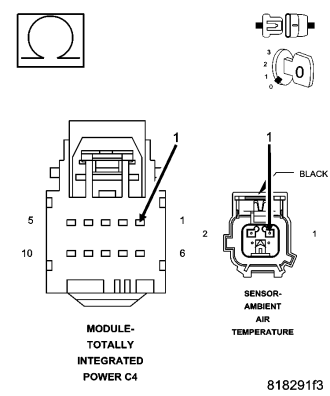
Measure the resistance of the (G31) AAT Signal circuit between the Ambient Air Temperature Sensor harness connector and the Totally Integrated Power Module (TIPM) harness connector.
Is the resistance below 5.0 ohms?
Yes
- Go to 7
No
- Repair the (G31) AAT Signal circuit for an open circuit or high resistance.
- Perform the PCM Verification Test Ver. 1 (Refer to 9 - ENGINE - STANDARD PROCEDURE).
7. (G931) AAT SENSOR GROUND CIRCUIT OPEN OR HIGH RESISTANCE
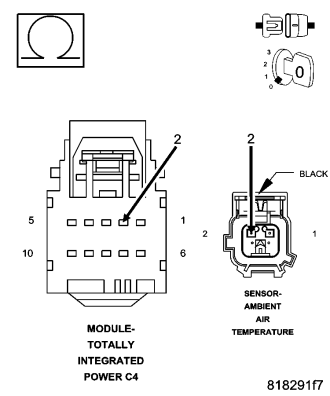
Measure the resistance of the (G931) AAT Sensor Ground circuit between the Ambient Air Temperature Sensor harness connector and the Totally Integrated Power Module (TIPM) harness connector.
Is the resistance below 5.0 ohms?
Yes
- Go to 8
No
- Repair the (G931) AAT Sensor Ground for an open circuit or high resistance.
- Perform the PCM Verification Test Ver. 1 (Refer to 9 - ENGINE - STANDARD PROCEDURE).
8. AMBIENT AIR TEMPERATURE SENSOR
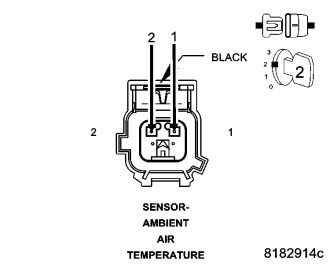
Turn the ignition off.
Connect the Totally Integrated Power Module (TIPM) connector.
Connect a jumper wire between the (G931) AAT Sensor Ground circuit and the (G31) AAT Signal circuit in the Ambient Air Temperature Sensor harness connector.
Turn the ignition on.
With the scan tool, read the Ambient Air Temperature Sensor signal voltage.
Is the voltage below 1.0 volt with the jumper wire in place?
Yes
- Replace the Ambient Air Temperature Sensor in accordance with the Service Information.
- Perform the PCM Verification Test Ver. 1 (Refer to 9 - ENGINE - STANDARD PROCEDURE).
No
- Go to 9
9. TOTALLY INTEGRATED POWER MODULE (TIPM)
Using the wiring diagram/schematic as a guide, inspect the wiring and connectors between the Ambient Air Temperature Sensor and the Totally Integrated Power Module (TIPM).
Look for any chafed, pierced, pinched, or partially broken wires.
Look for broken, bent, pushed out or corroded terminals.
Monitor the scan tool data relative to this circuit and wiggle test the wiring and connectors.
Look for the data to change or for the DTC to reset during the wiggle test.
Refer to any Technical Service Bulletins that may apply.
Were any problems found?
Yes
- Repair as necessary.
- Perform the PCM Verification Test Ver. 1 (Refer to 9 - ENGINE - STANDARD PROCEDURE).
No
- Replace the Totally Integrated Power Module (TIPM) in accordance with the Service Information.
- Perform the PCM Verification Test Ver. 1 (Refer to 9 - ENGINE - STANDARD PROCEDURE).