STANDARD PROCEDURE
TIRE INFLATION PRESSURES
The specified tire pressures have been chosen to provide safe operation, vehicle stability, and a smooth ride. The proper tire pressure specification can be found on the Tire And Loading Information Label provided with the vehicle (usually on the driver's door opening (B-pillar) or rear shutface of driver's door).
A quality air pressure gauge is recommended to check tire air pressure. Tire pressure should be checked cold once per month. Check tire pressure more frequently when the weather temperature varies widely. Tire pressure will decrease when the outdoor temperature drops. After checking the air pressure, replace valve cap finger tight.
Inflation pressures specified on the Tire Inflation Pressure Label are always the cold inflation pressure of the tire. Cold inflation pressure is obtained after the vehicle has not been operated for at least 3 hours, or the vehicle is driven less than one mile after being inoperative for 3 hours. Tire inflation pressures may increase from 2 to 6 pounds per square inch (psi) during operation. Do not reduce this normal pressure buildup.
Improper inflation can cause:
- Uneven wear patterns
- Reduced tread life
- Reduced fuel economy
- Unsatisfactory ride
- The vehicle to drift.
WARNING: Over Or Under Inflated Tires Can Affect Vehicle Handling. The Tire Can Fail Suddenly, Resulting In Loss Of Vehicle Control.
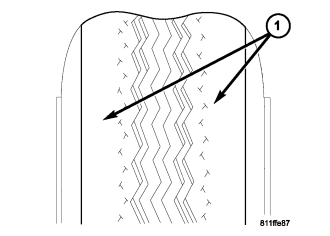
Under inflation causes rapid shoulder wear, tire flexing, and can result in tire failure (1).
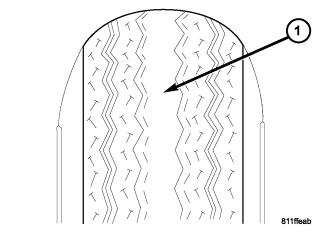
Over inflation causes rapid center wear and loss of the tire's ability to cushion shocks (1).
TIRE PRESSURE FOR HIGH SPEED OPERATION
Refer to the vehicle's Owners Manual Package.
TIRE LEAK REPAIRING
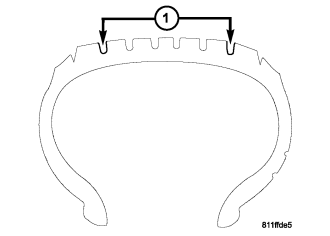
For proper repairing, a radial tire must be removed from the wheel. Repairs should only be made if the defect, or puncture, is in the tread area (1). The tire should be replaced if the puncture is located in the sidewall.
Deflate tire completely before attempting to dismount the tire from the wheel. Use a lubricant such as a mild soap solution when dismounting or mounting tire. Use tools free of burrs or sharp edges which could damage the tire or wheel rim.
Before mounting tire on wheel, make sure all rust is removed from the rim bead and repaint if necessary.
Install wheel on vehicle, and progressively tighten the five wheel nuts to a torque of 135 N·m (100 ft. lbs.).