RADIO NOISE SUPPRESSION COMPONENTS
DESCRIPTION
Radio noise suppression devices are installed on this vehicle. Radio Frequency Interference (RFI) and ElectroMagnetic Interference (EMI) can be produced by any on-board or external source of electromagnetic energy. These electromagnetic energy sources can radiate electromagnetic signals through the air, or conduct them through the vehicle electrical system.
When the audio system converts RFI or EMI to an audible acoustic wave form, it is referred to as radio noise. This undesirable radio noise is generally manifested in the form of “buzzing,” “hissing,” “popping,” “clicking,” “crackling,” and/or “whirring” sounds. In most cases, RFI and EMI radio noise can be suppressed using a combination of vehicle and component grounding, filtering and shielding techniques. This vehicle is equipped with radio noise suppression devices that were designed to minimize exposure to typical sources of RFI and EMI; thereby, minimizing radio noise complaints.
Radio noise suppression is accomplished primarily through circuitry or devices that are integral to the radios, audio power amplifiers and other on-board electrical components such as generators, wiper motors, blower motors, and fuel pumps that have been found to be potential sources of RFI or EMI. External radio noise suppression devices that are used on this vehicle to control RFI or EMI, and can be serviced, include the following:
- Engine-to-bulkhead ground strap - This length of braided ground strap has an eyelet terminal connector crimped to each end. One end is secured to the engine cylinder heads. The other is secured to the bulkhead.
- Resistor-type spark plugs - This type of spark plug has an internal resistor connected in series between the spark plug terminal and the center electrode to help reduce the production of electromagnetic radiation that can result in radio noise.
- Exhaust-to-frame ground strap - This length of braided ground strap has an eyelet terminal connector crimped to each end. One end is secured to the exhaust pipe. The other is secured to the frame.
OPERATION
There are two common strategies that can be used to suppress Radio Frequency Interference (RFI) and ElectroMagnetic Interference (EMI) radio noise. The first suppression strategy involves preventing the production of RFI and EMI electromagnetic signals at their sources. The second suppression strategy involves preventing the reception of RFI and EMI electromagnetic signals by the audio system components.
The use of braided ground straps in key locations is part of the RFI and EMI prevention strategy. These ground straps ensure adequate ground paths, particularly for high current components such as many of those found in the starting, charging, ignition, engine control and transmission control systems. An insufficient ground path for any of these high current components may result in radio noise caused by induced voltages created as the high current seeks alternative ground paths through components or circuits intended for use by, or in close proximity to the audio system components or circuits.
Preventing the reception of RFI and EMI is accomplished by ensuring that the audio system components are correctly installed in the vehicle. Loose, corroded or improperly soldered wire harness connections, improperly routed wiring and inadequate audio system component grounding can all contribute to the reception of RFI and EMI. A properly grounded antenna body and radio chassis, as well as a shielded antenna coaxial cable with clean and tight connections will each help reduce the potential for reception of RFI and EMI.
REMOVAL
ENGINE TO BULKHEAD - 4.7L
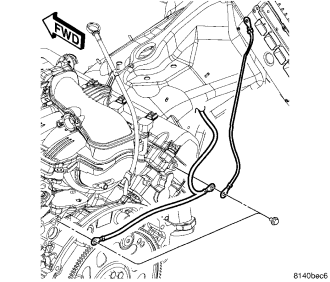
1. Disconnect and isolate the battery negative cable.
2. Remove mounting fasteners from engine cylinder heads.
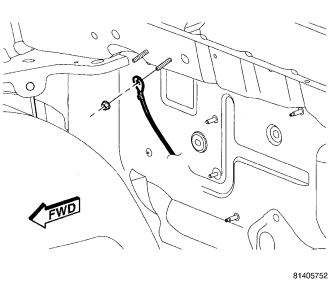
3. Remove mounting fastener from bulkhead and remove cable.
ENGINE TO BULKHEAD - 5.7L
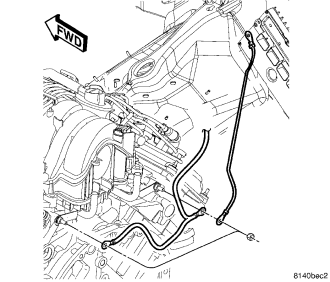
1. Disconnect and isolate the battery negative cable.
2. Remove mounting fasteners from engine cylinder heads.
3. Remove mounting fastener from bulkhead and remove cable.
EXHAUST TO FRAME
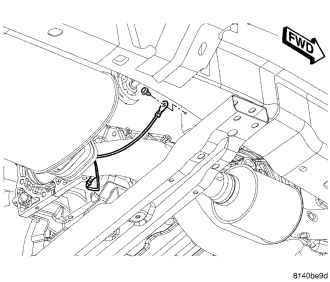
1. Disconnect and isolate the battery negative cable.
2. Remove mounting fastener from exhaust pipe.
3. Remove mounting fastener from frame and remove cable.
INSTALLATION
ENGINE TO BULKHEAD - 4.7L
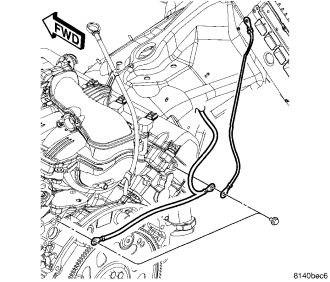
1. Position cable to cylinder heads.
2. Install and tighten mounting fasteners.
3. Position cable to bulkhead.
4. Install and tighten mounting fastener.
5. Connect battery negative cable.
ENGINE TO BULKHEAD - 5.7L
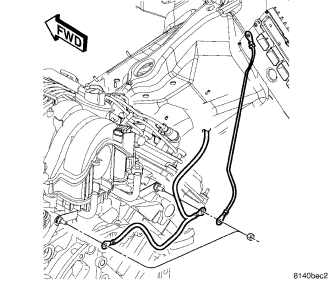
1. Position cable to cylinder heads.
2. Install and tighten mounting fasteners.
3. Position cable to bulkhead.
4. Install and tighten mounting fastener.
5. Connect battery negative cable.
EXHAUST TO FRAME
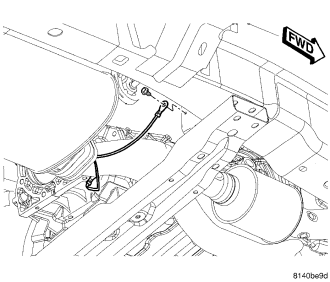
1. Position cable to exhaust pipe
2. Install and tighten mounting fastener to exhaust pipe.
3. Position cable to frame.
4. Install and tighten mounting fastener.
5. Connect battery negative cable.