REMOVAL
FRONT
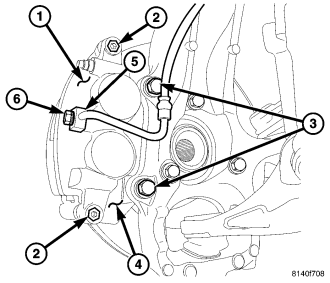
1. Raise and support vehicle.
2. Remove wheel and tire assembly.
3. Drain small amount of fluid from master cylinder brake reservoir with clean suction gun.
4. Remove the 2 caliper mounting bolts (2).
5. Compress the caliper and remove from the adaptor (4).
6. Secure caliper (1) to nearby suspension part with wire. Do not allow brake hose to support caliper weight.
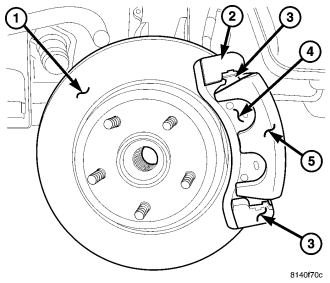
7. Remove the inboard and outboard brake pads (4) from the caliper adapter (2).
8. Remove the anti-rattle clips (3) from the brake caliper adapter (2).
FRONT - SRT8
1. Raise and support vehicle. (Refer to LUBRICATION & MAINTENANCE/HOISTING - STANDARD PROCEDURE)
2. Remove the front tire and wheel assembly.
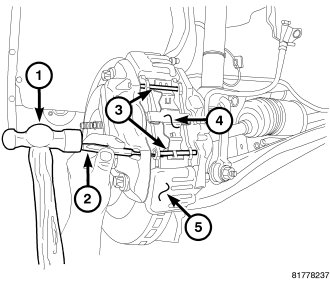
3. Using hammer (1) and pin punch (2) on outboard end, tap the lower brake pad support pin (3) out of caliper (5).
4. Remove brake pad spring clip (4) out from under the upper support pin (3) still in caliper.
5. Using pin punch (2) and hammer (1), remove upper brake pad support pin (3) in same manner used on lower support pin.
CAUTION: When pushing pistons back into caliper bores, if hand pressure is not sufficient, use only a trim stick or other suitable soft tool to do so. Never use a screwdriver or other metal pry bar due to potential damage to braking surface of rotor or pads.
6. Using hand pressure, pull pads back to seat caliper pistons into bores if possible. If not possible, perform the following to do this correctly without damaging the caliper, pistons, dust boots or brake rotor disc.
a. Place trim stick between inboard brake pad and outer edge of rotor.
b. Using trim stick, apply pressure against the inboard brake pad until both pistons are completely bottomed in bores of inboard caliper half. Leave trim stick in place to hold pistons in place.
c. Place second trim stick between outboard brake pad and rotor, then repeat above step on outboard pad and pistons.
NOTE: Once brake pads are removed from caliper, inspect all four caliper pistons and dust boots for evidence of brake fluid leakage. Also inspect dust boots on all caliper pistons for any cuts, tears or heat cracks and brake pad supports (if equipped) for excess wear or damage. If caliper fails inspection, it should be replaced.
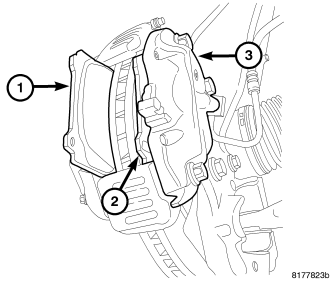
7. Remove inboard brake pad (2) through opening in caliper (3). Remove outboard brake pad (1) in same manner.
REAR
1. Raise and support vehicle.
2. Remove rear wheel and tire assembly.
3. Drain small amount of fluid from master cylinder brake reservoir with a clean suction gun.
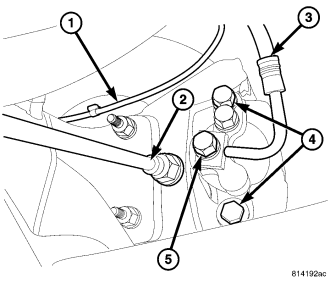
4. Bottom caliper pistons into the caliper by prying the caliper over.
5. Remove the caliper slide pins (4).
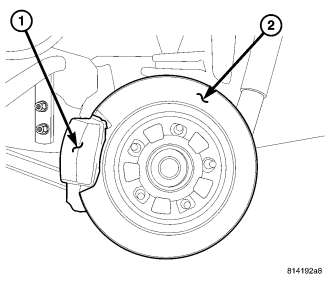
6. Remove caliper (1) from the anchor.
7. Secure caliper (1) to nearby suspension part with wire. Do not allow brake hose to support caliper weight.
8. Remove the inboard & outboard brake pads from the caliper.
REAR - SRT8
1. Raise and support vehicle.
2. Remove the tire and wheel assembly.
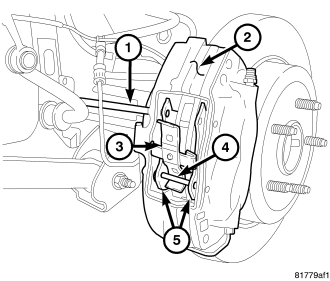
3. Using hammer and pin punch on outboard end, tap upper brake pad support pin (1) out of caliper (2).
4. Remove brake pad spring clip (3) out from under the lower support pin (4) still in caliper.
5. Using pin punch and hammer, remove lower brake pad support pin (4) in same manner used on upper support pin.
CAUTION: When pushing pistons back into caliper bores, if hand pressure is not sufficient, use only a trim stick as shown or other suitable soft tool to do so. Never use a screwdriver or other metal pry bar due to potential damage to braking surface of rotor or pads.
6. Using hand pressure, pull pads back to seat caliper pistons into bores if possible. If not possible, perform the following to do this correctly without damaging the caliper, pistons, dust boots or brake rotor disc.
a. Place trim stick between inboard brake pad and outer edge of rotor.
b. Using trim stick, apply pressure against the inboard brake pad until both pistons are completely bottomed in bores of inboard caliper half. Leave trim stick in place to hold pistons in place.
c. Place second trim stick between outboard brake pad and rotor, then repeat above step on outboard pad and pistons.
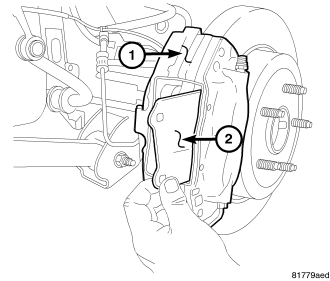
7. Remove inboard and outboard brake pads (2) through opening in caliper (1).
8. Once brake pads are removed from caliper (1), inspect all four caliper pistons and dust boots for evidence of brake fluid leakage. Also inspect dust boots on all caliper pistons for any cuts, tears or heat cracks and brake pad supports (if equipped) for excess wear or damage. If caliper fails inspection, it should be replaced.