CAP-RADIATOR PRESSURE
DESCRIPTION
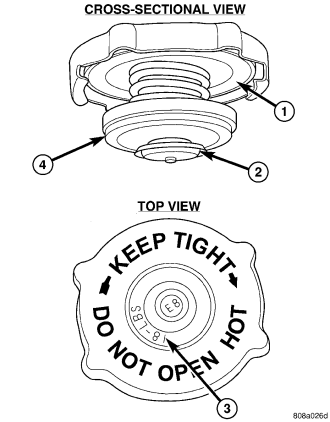
All radiators are equipped with a pressure cap . This cap releases pressure at some point within a range of 110 - 138 kPa (16 - 20 psi). The pressure relief point (in pounds) is engraved on top of the cap
The cooling system will operate at pressures slightly above atmospheric pressure. This results in a higher coolant boiling point allowing increased radiator cooling capacity. The cap contains a spring-loaded pressure relief valve. This valve opens when system pressure reaches the release range of 110 - 138 kPa (16 - 20 psi).
A rubber gasket seals the radiator filler neck. This is done to maintain vacuum during coolant cool-down and to prevent leakage when system is under pressure.
OPERATION
A vent valve in the center of the cap will remain shut as long as the cooling system is pressurized. As the coolant cools, it contracts and creates a vacuum in cooling system. This causes the vacuum valve to open and coolant in reserve/overflow tank to be drawn through connecting hose into radiator. If the vacuum valve is stuck shut, or overflow hose is kinked, radiator hoses will collapse on cool-down.
DIAGNOSIS AND TESTING - RADIATOR PRESSURE CAP
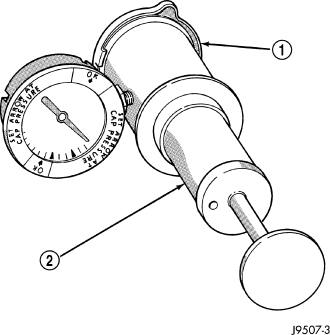
Remove cap from radiator. Be sure that sealing surfaces are clean. Moisten rubber gasket with water and install the cap on pressure tester (tool 7700 or an equivalent) .
Operate the tester pump and observe the gauge pointer at its highest point. The cap release pressure should be 110 to 138 kPa (16 - 20 psi). The cap is satisfactory when the pressure holds steady. It is also good if it holds pressure within the 110 - 138 kPa (16 - 20 psi) range for 30 seconds or more. If the pointer drops quickly, replace the cap.
CAUTION: Radiator pressure testing tools are very sensitive to small air leaks, which will not cause cooling system problems. A pressure cap that does not have a history of coolant loss should not be replaced just because it leaks slowly when tested with this tool. Add water to tool. Turn tool upside down and recheck pressure cap to confirm that cap needs replacement.
CLEANING
Clean the radiator pressure cap using a mild soap and water only.
INSPECTION
Visually inspect the pressure valve gasket on the cap. Replace cap if the gasket is swollen, torn or worn. Inspect the area around radiator filler neck for white deposits that indicate a leaking cap.