SENSOR-WATER IN FUEL
DESCRIPTION
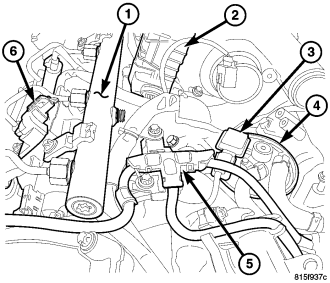
The water in fuel sensor (WIF) is located in the fuel filter housing (4). The WIF sensor (3) detects the presence of water in the fuel. If water is present in the fuel, a signal is sent to the ECM and the ECM signals the instrument cluster, over the CAN bus, to illuminate the water in fuel warning .
OPERATION
The non-dielectric properties of the water allow the sensors probes to close the electronic circuit when water is present in the system. When diesel fuel is present in the system, it's dielectric (does not conduct electricity well) properties do not allow any electrical contact between the probes. A 12V power signal is always present in order to illuminate the indicator on the instrument cluster.
REMOVAL
1. Disconnect the negative battery cable.
2. Remove the engine cover.
NOTE: Capture and store any fuel spillage in appropriate containers
3. Disconnect the water in fuel (WIF) electrical connector.
4. Remove the WIF sensor retaining screws.
5. Twist the WIF sensor so the tabs clear the retaining bracket.
6. Gently pry up on the sensor and remove.
INSTALLATION
NOTE: Remove any dirt and debris around the fuel filter assembly using a suitable solvent or compressed air. Area around the fuel filter assembly must be clean and dry.
1. Lubricate the water in fuel (WIF) sensor Orings with clean diesel fuel.
2. Insert the WIF sensor into the fuel filter assembly and twist the sensor until the retaining holes align with the retaining bracket on the fuel filter assembly.
3. Install the retaining screws. Tighten to 1.5 N·m (13 in. lbs.).
4. Connect the WIF wiring harness connector.
5. Connect the negative battery cable.
6. Start the engine, allow to warm, turn engine off and inspect for leaks.
7. Install engine cover.