TRANSDUCER-A/C PRESSURE
DESCRIPTION
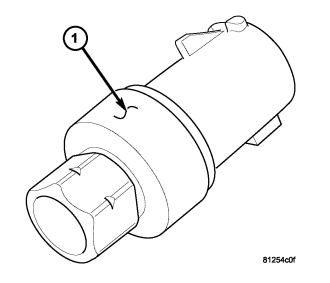
The A/C pressure transducer (1) sends a signal to the powertrain control module (PCM) which controls both A/C compressor clutch engagement/disengagement and electric cooling fan operation when equipped with the 3.7L gasoline engine. The A/C pressure transducer is mounted on a fitting located on the A/C discharge line near the A/C compressor. The PCM will disengage the A/C compressor clutch when high side pressure rises above 2971 kPa (431 psi) or fall below 206 kPa (30 psi).
The fitting for the A/C pressure transducer on the A/C discharge line is equipped with an O-ring seal and contains a Schrader-type valve, which allows the transducer to be serviced without discharging the refrigerant system.
OPERATION
The A/C pressure transducer monitors the pressures in the high side of the refrigerant system through its connection to a fitting on the A/C discharge line. The A/C pressure transducer will change its internal resistance in response to the pressures it monitors. A Schrader-type valve in the discharge line fitting permits the A/C pressure transducer to be removed or installed without disturbing the refrigerant in the A/C system.
The powertrain control module (PCM) provides a five volt reference signal and a sensor ground to the A/C pressure transducer, then monitors the output voltage of the A/C pressure transducer on a sensor return circuit to determine refrigerant pressure. The PCM is programmed to respond to the A/C pressure transducer and other sensor inputs by controlling the operation of the A/C compressor clutch and the radiator cooling fan to help optimize A/C system performance and to protect the system components from damage. The PCM will disengage the A/C compressor clutch when high side pressure rises above 2971 kPa (431 psi) or fall below 206 kPa (30 psi). The A/C pressure transducer input to the PCM will also prevent the A/C compressor clutch from engaging when ambient temperatures are below about 1.0° C (50° F) due to the pressure/temperature relationship of the refrigerant.
The A/C pressure transducer is diagnosed using a scan tool (refer to 9 - Engine Electrical Diagnostics for more information).
The A/C pressure transducer cannot be adjusted or repaired and must be replaced if found inoperative or damaged.
REMOVAL
NOTE: It is not necessary to discharge the refrigerant system to replace the A/C pressure transducer.
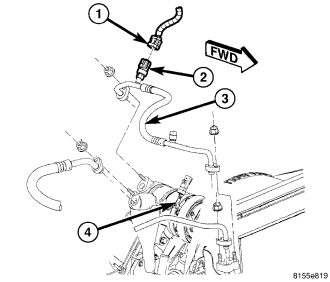
NOTE: LHD model shown. RHD model similar.
1. Disconnect and isolate the negative battery cable.
2. Disconnect the wire harness connector (1) from the A/C pressure transducer (2) located on the A/C discharge line (3) near the A/C compressor (4).
3. Remove the A/C pressure transducer from the A/C discharge line and remove and discard the O-ring seal.
INSTALLATION
NOTE: Use only the specified O-ring as it is made of special material for R-134a. Use only refrigerant oil of the type required for the A/C compressor.
NOTE: LHD model shown. RHD model similar.
1. Lubricate a new rubber O-ring seal with clean refrigerant oil and install it onto the A/C pressure transducer fitting.
2. Install the A/C pressure transducer (2) onto the A/C discharge line (3) near the A/C compressor (4). Hand-tightened the transducer securely.
3. Connect the wire harness connector (1) to the A/C pressure transducer.
4. Reconnect the negative battery cable.