STANDARD PROCEDURE
- ENGINE GASKET SURFACE PREPARATION
- STANDARD PROCEDURE - REPAIR DAMAGED OR WORN THREADS
- ENGINE CORE AND OIL GALLERY PLUGS
ENGINE GASKET SURFACE PREPARATION
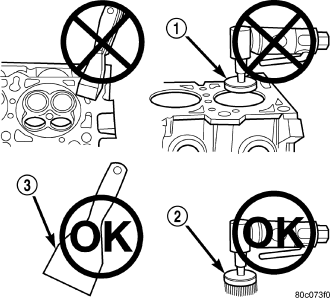
To ensure engine gasket sealing, proper surface preparation must be performed, especially with the use of aluminum engine components and multi-layer steel cylinder head gaskets.
Never use the following to clean gasket surfaces:
- Metal scraper (3).
- Abrasive pad (1) or paper to clean cylinder block and head.
- High speed power tool (1) with an abrasive pad or a wire brush.
NOTE: Multi-Layer Steel (MLS) head gaskets require a scratch free sealing surface.
Only use the following for cleaning gasket surfaces:
- Solvent or a commercially available gasket remover
- Plastic or wood scraper.
- Drill motor with 3M Roloc™ Bristle Disc (white or yellow).
CAUTION: Excessive pressure or high RPM (beyond the recommended speed), can damage the sealing surfaces. The mild (white, 120 grit) bristle disc is recommended. If necessary, the medium (yellow, 80 grit) bristle disc may be used on cast iron surfaces with care.
STANDARD PROCEDURE - REPAIR DAMAGED OR WORN THREADS
CAUTION: Be sure that the tapped holes maintain the original center line.
Damaged or worn threads can be repaired. Essentially, this repair consists of:
- Drilling out worn or damaged threads.
- Tapping the hole with a special Heli-Coil Tap, or equivalent.
- Installing an insert into the tapped hole to bring the hole back to its original thread size.
ENGINE CORE AND OIL GALLERY PLUGS
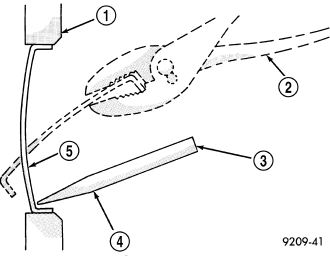
Using a blunt tool such as a drift and a hammer, strike the bottom edge of the cup plug (5). With the cup plug rotated, grasp firmly with pliers or other suitable tool and remove plug .
CAUTION: Do not drive cup plug into the casting as restricted cooling can result and cause serious engine problems.
Thoroughly clean inside of cup plug hole in cylinder block or head. Be sure to remove old sealer. Lightly coat inside of cup plug hole with Mopar® Stud and Bearing Mount. Make certain the new plug is cleaned of all oil or grease. Using proper drive plug, drive plug into hole so that the sharp edge of the plug is at least 0.5 mm (0.020 in.) inside the lead-in chamfer.
It is not necessary to wait for curing of the sealant. The cooling system can be refilled and the vehicle placed in service immediately.