PASSENGER AIRBAG
DESCRIPTION
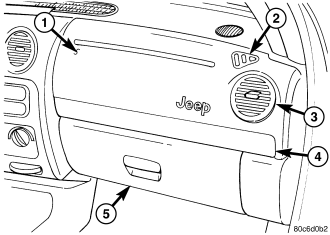
The rearward facing surface of the injection molded, thermoplastic passenger airbag door (1) is the most visible part of the passenger airbag. The passenger airbag door is located above the glove box (5) opening on the instrument panel in front of the front seat passenger seating position. The integral upper mounting flange of the airbag door is secured with five screws and the lower mounting flange with six screws to the instrument panel structural support.
The passenger airbag door includes an integral air conditioning panel outlet (3) housing and an integral side window demister outlet (2). An integral stamped metal bracket that reinforces the upper airbag door mounting flange is secured to the back of the door unit with heat stakes. The upper airbag door fasteners and mounting flange are concealed beneath the instrument panel top cover, while the lower fasteners and mounting flange are concealed beneath a bezel (4) on the instrument panel above the glove box opening.
Located behind the passenger airbag door within the instrument panel is the passenger airbag unit. The passenger airbag unit is secured by two screws on each side to two stamped metal mounting brackets that are fastened with screws to the instrument panel structural support.
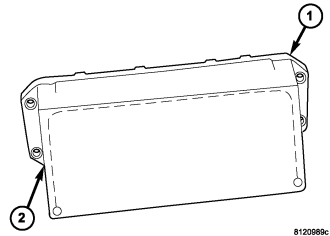
The passenger airbag unit used in this vehicle is a multistage unit that complies with revised federal airbag standards to deploy with less force than those used in some prior vehicles. The passenger airbag unit consists of a molded, glass-filled nylon plastic housing (1), a molded plastic inner airbag cushion cover (2), the airbag cushion, the airbag inflator and a heat shield. The airbag housing contains the airbag inflator and the heat shield, while the inner cover contains the folded airbag cushion. The inner cover completely encloses the airbag cushion and is permanently retained to the housing. The airbag cushion is constructed of a coated nylon fabric.
The airbag inflator is a dual-initiator, pyrotechnic-type unit that is secured to and sealed within the airbag housing. The passenger airbag is connected to the vehicle electrical system through two dedicated take outs of the instrument panel wire harness with connector insulators that connect directly to the two inflator initiators. The connector insulators are uniquely keyed and color-coded to ensure they can only be connected to the correct initiator.
The passenger airbag cannot be repaired, and must be replaced if deployed, ineffective, or in any way damaged. If the passenger airbag is deployed, the passenger airbag door and both passenger airbag mounting brackets must also be replaced. The passenger airbag door and the passenger airbag mounting brackets are available for individual service replacement.
OPERATION
The multistage passenger airbag is deployed by electrical signals generated by the Airbag Control Module (ACM) (also known as the Occupant Restraint Controller/ORC) through the passenger airbag squib 1 and squib 2 circuits to the two initiators in the airbag inflator. By using two initiators, the airbag can be deployed at multiple levels of force. The force level is controlled by the ACM to suit the monitored impact conditions by providing one of three delay intervals between the electrical signals provided to the two initiators. The longer the delay between these signals, the less forcefully the airbag will deploy.
The pyrotechnic-type inflator assembly includes two separate internal chambers filled with solid propellant. When the ACM sends the proper electrical signal to the airbag initiator, the initiator converts the electrical energy into chemical energy. This chemical energy ignites the solid propellant. As the solid propellant burns it produces a large quantity of inert gas. The inflator is sealed to the airbag cushion so that the inert gas is directed into the airbag cushion, causing the cushion to inflate. As the cushion inflates, the passenger airbag door will split at predetermined tear seam lines on the inside surface of the door and the door will pivot out of the way. Following a passenger airbag deployment, the airbag cushion quickly deflates by venting the inert gas through vent holes within the fabric used to construct the sides of the airbag cushion.
Typically, both initiators are used during an airbag deployment event. However, it is possible for only one initiator to be used during a deployment due to an airbag system fault; therefore, it is necessary to always confirm that both initiators have been used in order to avoid the improper disposal of potentially live pyrotechnic materials. (Refer to 8 - ELECTRICAL/RESTRAINTS - STANDARD PROCEDURE - SERVICE AFTER A SUPPLEMENTAL RESTRAINT DEPLOYMENT).
Proper diagnosis of the passenger airbag inflator and squib circuits requires the use of a diagnostic scan tool. Refer to the appropriate diagnostic information.