DIAGNOSIS AND TESTING
- PRESSURE GAUGES
- TIRE INFLATION
- TREAD WEAR INDICATORS
- TIRE WEAR PATTERNS
- TIRE NOISE OR VIBRATION
- TIRE/VEHICLE LEAD
PRESSURE GAUGES
A quality air pressure gauge is recommended to check tire pressure. After checking the air pressure, replace valve cap finger tight.
TIRE INFLATION
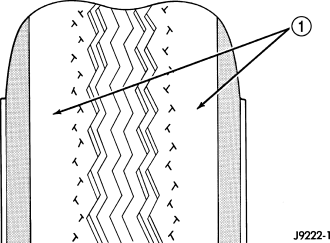
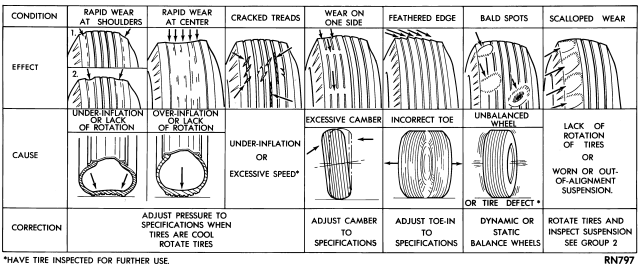
Under inflation will cause rapid shoulder wear, tire flexing, and possible tire failure .
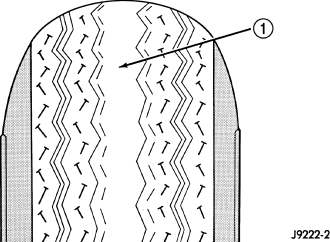
Over inflation will cause rapid center wear and loss of the tire's ability to cushion shocks .
Improper inflation can cause:
- Uneven wear patterns
- Reduced tread life
- Reduced fuel economy
- Unsatisfactory ride
- Vehicle drift
For proper tire pressure specification refer to the Tire Inflation Pressure Chart provided with the vehicle.
Tire pressures have been chosen to provide safe operation, vehicle stability, and a smooth ride. Tire pressure should be checked cold once a month. The spare tire pressure should be check at least twice annually. Tire pressure decreases as the ambient temperature drops. Check tire pressure frequently when ambient temperature varies widely.
Inflation pressures specified on the placards are cold inflation pressure. The vehicle must sit for at least 3 hours to obtain the correct cold inflation pressure reading. Or driven less than one mile after sitting for 3 hours. Tire inflation pressures may increase from 2 to 6 pounds per square inch (psi) during operation, due to increased tire temperature.
WARNING: OVER OR UNDER INFLATED TIRES CAN AFFECT VEHICLE HANDLING AND TREAD WEAR. THIS MAY CAUSE THE TIRE TO FAIL SUDDENLY, RESULTING IN LOSS OF VEHICLE CONTROL.
TREAD WEAR INDICATORS
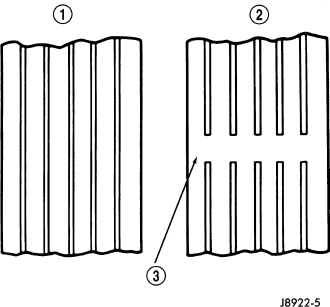
Tread wear indicators are molded into the bottom of the tread grooves. When tread depth is 1.6 mm (1/16 in.), the tread wear indicators will appear as a 13 mm (1/2 in.) band .
Tire replacement is necessary when indicators appear in two or more grooves or if localized balding occurs.
TIRE WEAR PATTERNS
Under inflation will cause wear on the shoulders of tire. Over inflation will cause wear at the center of tire.
Excessive camber causes the tire to run at an angle to the road. One side of tread is then worn more than the other .
Excessive toe-in or toe-out causes wear on the tread edges and a feathered effect across the tread .
TIRE NOISE OR VIBRATION
Radial-ply tires are sensitive to force impulses caused by improper mounting, vibration, wheel defects, or possibly tire imbalance.
To find out if tires are causing the noise or vibration, drive the vehicle over a smooth road at varying speeds. Note the noise level during acceleration and deceleration. The engine, differential and exhaust noises will change as speed varies, while the tire noise will usually remain constant.
TIRE/VEHICLE LEAD
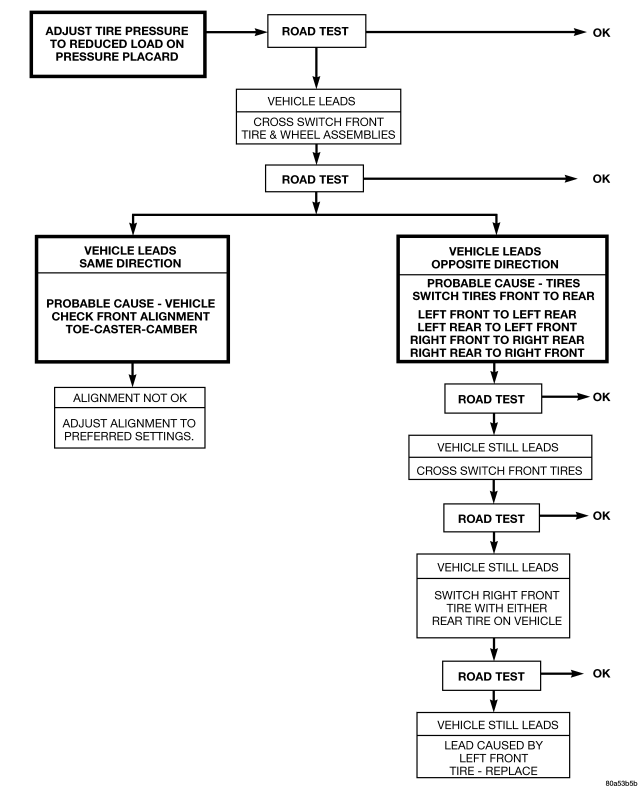
Use the following Vehicle Lead Diagnosis And Correction Chart to diagnose and correct a vehicle lead or drift problem .