DIAGNOSIS AND TESTING
RADIATOR CAP-TO-FILLER NECK SEAL
The pressure cap upper gasket (seal) pressure relief can be tested by removing overflow hose from radiator filler neck nipple. Attach hose of pressure tester tool 7700 (or equivalent) to nipple. It will be necessary to disconnect hose from its adapter for filler neck. Pump air into radiator. The pressure cap upper gasket should relieve at 69-124 kPa (10-18 psi) and hold pressure at a minimum of 55 kPa (8 psi).
WARNING: The warning words - DO NOT OPEN HOT - on radiator pressure cap, are a safety precaution, when hot, pressure builds up in cooling system. To prevent scalding or injury, radiator cap should not be removed while system is hot and/or under pressure.
Do not remove radiator cap at any time except for the following purposes:
1. Check and adjust antifreeze freeze point.
2. Refill system with new antifreeze.
3. Conducting service procedures.
4. Checking for vacuum leaks.
WARNING: If vehicle has been run recently, wait at least 15 minutes before removing radiator cap. With a rag, squeeze radiator upper hose to check if system is under pressure. Place a rag over cap and without pushing cap down, rotate it counter-clockwise to first stop. Allow fluid to escape through the coolant reserve/overflow hose into reserve/overflow tank. Squeeze radiator upper hose to determine when pressure has been released. When coolant and steam stop being pushed into tank and system pressure drops, remove radiator cap completely.
DIAGNOSIS AND TESTING - RADIATOR CAP
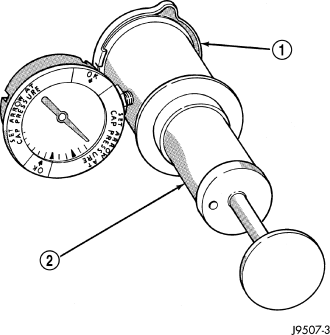
Remove cap from radiator. Be sure that sealing surfaces are clean. Moisten rubber gasket with water and install cap on pressure tester 7700 or an equivalent.
Operate tester pump to bring pressure to 117 kPa (17 psi) on gauge. If pressure cap fails to hold pressure of at least 110 kPa (16 psi) replace cap. Refer to the following CAUTION.
The pressure cap may test properly while positioned on tool 7700 (or equivalent). It may not hold pressure or vacuum when installed on radiator. If so, inspect radiator filler neck and cap's top gasket for damage. Also inspect for dirt or distortion that may prevent cap from sealing properly.
CAUTION: Radiator pressure testing tools are very sensitive to small air leaks, which will not cause cooling system problems. A pressure cap that does not have a history of coolant loss should not be replaced just because it leaks slowly when tested with this tool. Add water to tool. Turn tool upside down and recheck pressure cap to confirm that cap needs replacement.