INJECTOR-FUEL
REMOVAL
CAUTION: Cleanliness cannot be overemphasized when handling or replacing diesel fuel system components. This especially includes the fuel injectors, high-pressure fuel lines and fuel injection pump. Very tight tolerances are used with these parts. Dirt contamination could cause rapid part wear and possible plugging of fuel injector nozzle tip holes. This in turn could lead to possible engine misfire. Always wash/clean any fuel system component thoroughly before disassembly and then air dry. Cap or cover any open part after disassembly. Before assembly, examine each part for dirt, grease or other contaminants and clean if necessary. When installing new parts, lubricate them with clean engine oil or clean diesel fuel only.
1. Disconnect negative battery cable at battery. Isolate end of cable.
2. Remove dress-up cover from top of engine.
3. Remove the high-pressure fuel lines from fuel rail to fuel injectors. Refer to Fuel Line Removal.
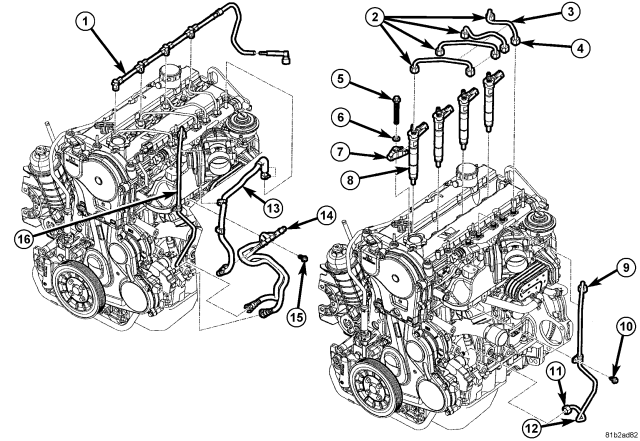
4. Locate common fuel return line (1).
5. Disconnect electrical connector at top of injector(s).
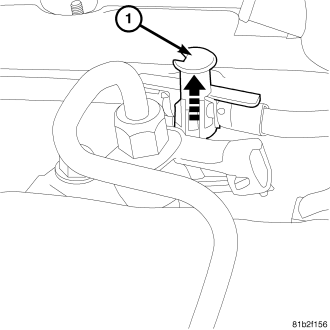
6. A lock button (1) is used to secure the common fuel return line to each fuel injector. Use your fingers to lift all four lock buttons (1) up. After unlocking all four buttons, lift fuel return line assembly up for removal.
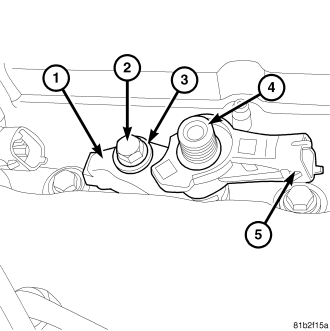
7. Remove injector mounting bolt (2) and washer (3).
8. Remove injector mounting clamp (1).
9. Using compressed air, thoroughly clean surface area in and around injector bore to prevent foreign material from falling into the injector bore after injector removal.
10. Using your hand, pull fuel injector straight up from cylinder head for removal.
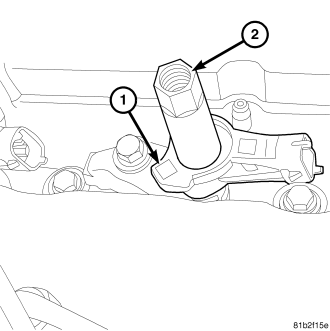
11. If injector can't be removed by hand, install special fuel injector removal tool #9552 (2) to top of fuel injector.
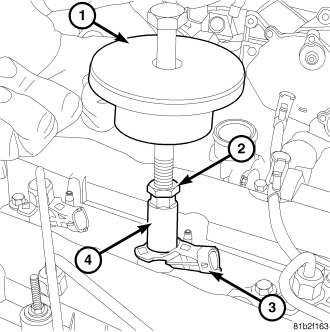
12. Install special slide hammer tool #8941 (1) onto special tool #9552 (4). Tighten lock nut (2). Remove injector from cylinder head.
NOTE: DO NOT use a wire brush to clean the fuel injector or nozzle. Possible restriction of the injector needle may result.
INSTALLATION
CAUTION: Cleanliness cannot be overemphasized when handling or replacing diesel fuel system components. This especially includes the fuel injectors, high-pressure fuel lines and fuel injection pump. Very tight tolerances are used with these parts. Dirt contamination could cause rapid part wear and possible plugging of fuel injector nozzle tip holes. This in turn could lead to possible engine misfire. Always wash/clean any fuel system component thoroughly before disassembly and then air dry. Cap or cover any open part after disassembly. Before assembly, examine each part for dirt, grease or other contaminants and clean if necessary. When installing new parts, lubricate them with clean engine oil or clean diesel fuel only.
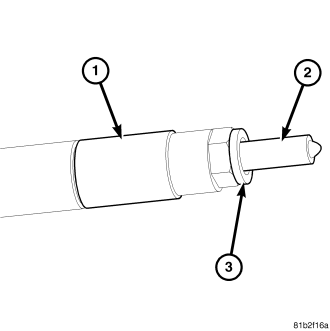
NOTE: DO NOT use a brush to clean around the injector nozzle (2). DO NOT lubricate area around injector nozzle. The injector may become restricted with debris.
NOTE: Be sure a new copper washer/seal (3) is installed on end of injector and the old seal is removed, before installing in cylinder head.
NOTE: Apply anti-seize compound to injector body (1).
1. Install fuel injector into cylinder head with new seal and O-ring.
2. Install fuel injector retainer clamp (1), washer (3) and bolt (2). Tighten clamp bolt (2) to 33 N·m (24 ft. lbs.) torque.
3. Connect electrical connector to fuel injector.
4. Install fuel injector high-pressure lines. Refer to Fuel Line Installation.
5. Position female fittings on fuel return line to male fittings at each fuel injector. Be sure lock buttons (1) are in up position before positioning.
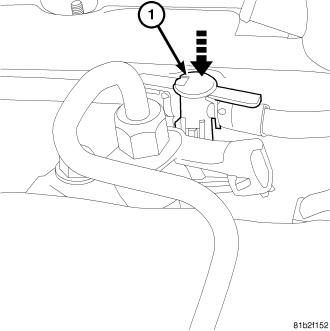
6. After positioning, push each lock button (1) down to secure fuel return line to each fuel injector.
7. Connect each fuel injector electrical connector.
8. Connect negative battery cable.
9. Perform the injector classification procedure with a diagnostic scan tool.
10. Start the engine and allow to warm. Turn off the ignition switch and inspect for fuel leaks.
11. Install engine dress-up cover.