DESCRIPTION
FRONT
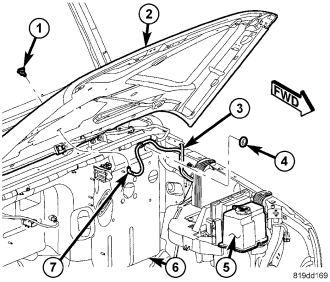
The front washer plumbing (7) consists of a small diameter rubber hose that is routed along with the rear washer plumbing (3) (if the vehicle is so equipped) from the washer reservoir (5) located at the left front corner of the engine compartment. Both hoses are attached to their respective front or rear outlet nipple of the washer pump/motor unit near the bottom of the reservoir. The hoses are then routed through molded clips integral to the underside of the molded plastic component tray to the dash panel (6) within the engine compartment. From the dash panel, the two washer hoses are routed separately.
The front hose is routed up to the hood panel (2) inner rear reinforcement, then across the rear of the hood to the front washer nozzle (1). If the vehicle is equipped with the rear wiper and washer system, the rear hose is routed through a rubber grommet and a hole near the top of the dash panel into the passenger compartment. If the vehicle does not have the rear wiper and washer system, the clearance hole in the dash panel is sealed with a rubber plug (4). The front hose is secured to the hood inner reinforcement by plastic push-in type retainers, then is routed through a clearance hole in the hood silencer on the underside of the inner hood panel. A plastic in-line fitting, a molded rubber elbow and the front washer system check valve complete the front washer plumbing.
Washer hose is available for service only as roll stock, which must then be cut to length. The molded plastic or rubber washer hose fittings cannot be repaired. If these fittings are ineffective or damaged, they must be replaced.
REAR
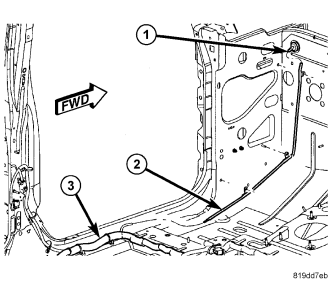
The rear washer plumbing consists of a small diameter rubber hose that is routed along with the front washer plumbing from the washer reservoir located at the left front corner of the engine compartment. Both hoses are attached to their respective front or rear outlet nipple of the washer pump/motor unit near the bottom of the reservoir. The hoses are then routed through molded clips integral to the underside of the molded plastic component tray to the dash panel (6) within the engine compartment. From the dash panel, the two washer hoses are routed separately.
A rear washer jumper hose (2) is connected to the rear washer hose in the engine compartment by a molded plastic in-line fitting with barbed nipples and is then routed through a clearance hole with a rubber grommet in the upper left corner of the dash panel into the passenger compartment. The jumper hose is routed down the cowl side inner panel where it is secured by plastic push-in type retainers to the left sill. It follows the sill back to the front seat crossmember, where it is connected by another plastic in-line fitting to the rear washer hose contained within the body wire harness (3).
The rear washer hose exits the body wire harness at the left D-pillar below the belt line, where the hose and a take out of the body wire harness are connected to a nipple and check valve integral to the hardtop disconnect plate. A hardtop hose is then routed up through the roof D-pillar and across the rear lift glass opening header to a barbed fitting on the rear wiper motor on the upper left inner corner of the lift glass.
Washer hose is available for service only as roll stock, which must then be cut to length. The headliner washer hose is integral to the headliner and, if ineffective or damaged, the headliner unit must be replaced. The molded plastic washer hose fittings and routing clips cannot be repaired. If these fittings or clips are ineffective or damaged, they must be replaced.