Fuel Delivery, Diesel
- WARNING
- HIGH PRESSURE FUEL LEAKS
- FUEL SUPPLY RESTRICTIONS
- DRAINING FUEL TANK
- CLEANING FUEL SYSTEM COMPONENTS
- SPECIFICATIONS
- SPECIAL TOOLS
WARNING
WARNING
High-pressure fuel lines deliver
fuel under extreme pressure from the injection pump to the injectors.
This may be as high as 1800 bar (26,106 psi). Use extreme caution
when inspecting for high-pressure fuel leaks. Fuel under this amount
of pressure can penetrate skin causing personal injury or death. Inspect
high-pressure fuel leaks with a sheet of cardboard. Wear safety goggles
and adequate protective clothing when servicing fuel system.
WARNING:
HIGH PRESSURE FUEL LEAKS
HIGH PRESSURE FUEL LEAKS
 |
High-pressure lines deliver diesel
fuel under extreme pressure from the injection pump to the fuel injectors.
This may be as high as 1800 bar (26,106 psi). Use extreme caution
when inspecting for high-pressure fuel leaks. Fuel under this amount
of pressure can penetrate skin causing personal injury or death. Inspect
for high-pressure fuel leaks with a sheet of cardboard. Wear safety
goggles and adequate protective clothing when servicing fuel system.
WARNING:
High-pressure fuel leaks can cause starting problems and poor engine performance.
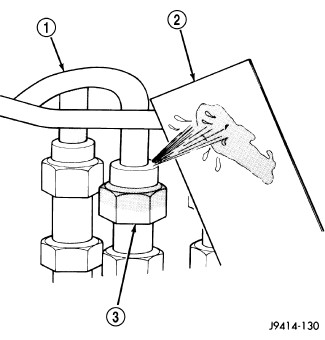
Carefully place a piece of cardboard (2) over the high-pressure fuel lines or suspected area. Move your body and hands away from the area. Start the engine and run till warm. TURN THE ENGINE OFF. Inspect the piece of cardboard for witness marks. If a high-pressure line connection is leaking, replace damaged, restricted or leaking high-pressure fuel lines with the correct replacement line.
The high-pressure fuel lines cannot
contact each other or other components. Do not attempt to weld high-pressure
fuel lines or to repair lines that are damaged. Only use the recommended
lines when replacement of high-pressure fuel line is necessary.
CAUTION:
FUEL SUPPLY RESTRICTIONS
FUEL SUPPLY RESTRICTIONS
LOW-PRESSURE LINES
Fuel supply line restrictions or a restricted fuel filter can cause starting problems and prevent engine from accelerating. The starting problems include; no start, longer cranking times, low power and/or white fog like exhaust.
Inspect all fuel supply lines for restrictions or blockage, including the fuel filter. Flush or replace as necessary.
HIGH-PRESSURE LINES
High-pressure lines cannot contact
each other or other components. Do not attempt to weld high-pressure
fuel lines or to repair lines that are damaged. High-pressure lines
can be reused only after close inspection for cracks or deformation
around the sealing cone. Corroded pipes must be replaced. Use only
recommended lines when replacement of high-pressure fuel line is necessary.
CAUTION:
| NOTE: |
High-pressure fuel lines must be replaced at each disassembly. |
Restricted (kinked or bent) high-pressure lines can cause starting problems, poor engine performance, engine mis-fire and white smoke from exhaust.
DRAINING FUEL TANK
DRAINING FUEL TANK
Conventional Procedure
| NOTE: |
Due to a one-way check valve installed into the fuel fill fitting at the tank, the tank cannot be drained at the fuel fill cap. |
- Disconnect the fuel feed line (2) quick-connect fitting (Refer to 14 - Fuel System/Fuel Delivery/FITTING, Quick Connect - Standard Procedure) .
-
Install the appropriate Fuel Line Adapters / Fitting from the
Decay Tool, Fuel 8978A . Route the opposite end of this hose to an diesel fuel draining station.
NOTE: Activation of the fuel pump module may time out and need to be restarted several times to completely drain the fuel tank.
- Using a diagnostic scan tool, activate the fuel pump until the fuel tank is empty.
Alternative Procedure
- Disconnect the negative battery cable.
- Raise and support vehicle (Refer to 04 - Vehicle Quick Reference/Hoisting - Standard Procedure) .
- Remove the fuel pump module (Refer to 14 - Fuel System/Fuel Delivery/MODULE, Fuel Pump - Removal) .
- Drain fuel tank using an approved diesel fuel draining station.
CLEANING FUEL SYSTEM COMPONENTS
CLEANING FUEL SYSTEM COMPONENTS
Cleanliness cannot be overemphasized
when handling or replacing diesel fuel system components. This especially
includes the fuel injectors, high-pressure fuel lines, fuel rail,
and fuel injection pump. Very tight tolerances are used with these
parts. Dirt contamination could cause rapid part wear and possible
plugging of fuel injector nozzle tip holes. This in turn could lead
to possible engine misfire. Always wash/clean any fuel system component
thoroughly before disassembly and then air dry. DO NOT wire brush
injector nozzles when cleaning. Cap or cover any open part after disassembly.
Before assembly, examine each part for dirt, grease or other contaminants
and clean if necessary. When installing new parts, lubricate them
with clean engine oil or clean diesel fuel only.
CAUTION:
SPECIFICATIONS
SPECIFICATIONS
| DESCRIPTION | N·m | Ft. Lbs. | In. Lbs. |
|---|---|---|---|
|
Fuel Filler Tube Clamp |
4 |
— |
35 |
|
Fuel Injectors Retaining Bolts |
33 |
24 |
— |
|
Fuel Injector Tubes at Fuel Injectors |
28 |
21 |
— |
|
Fuel Injector Fuel Tubes at Fuel Rail |
5 |
— |
44 |
|
PLUS 75° TURN |
|||
|
Fuel Line Fittings at Filter Housing |
35 |
25 |
— |
|
Fuel Fittings at Pump |
24 |
17 |
— |
|
Fuel Line Clamp Bolt |
15 |
— |
133 |
|
Fuel Quantity Solenoid |
7 |
— |
62 |
|
Fuel Rail Nuts |
25 |
18 |
— |
|
Fuel Tank Bolts |
61 |
45 |
— |
|
Fuel Water/Separator Mounting Nuts |
25 |
18 |
— |
|
High Pressure Fuel Feed Tube at Fuel Rail |
5 |
— |
44 |
|
PLUS 75° TURN |
|||
|
High Pressure Fuel Tubes at High Pressure Pump |
28 |
21 |
— |
|
High Pressure Injection Pump Blocker Nuts |
25 |
18 |
— |
|
High Pressure Injection Pump Nuts |
25 |
18 |
— |
|
High Pressure Injection Pump Sprocket Nut |
88 |
65 |
— |
SPECIAL TOOLS
SPECIAL TOOLS
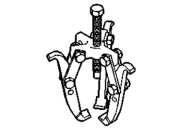 |
1023 - Puller Originally Shipped In Kit Number(s) 8678. |
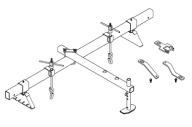 |
8534B - Fixture, Driveline Support Originally Shipped In Kit Number(s) 8534, 8534B, 8849, 9565. |
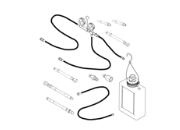 |
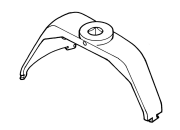
8978A - Decay Tool, Fuel |
 |
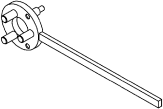
9340 - SAE Fuel Pump Lock Ring Wrench Originally Shipped In Kit Number(s) 9327, 9327CC, 9397, 9575. |
 |
VM.1055 - Locking Tool Originally Shipped In Kit Number(s) 9599. |