B1B94-PASSENGER SEAT TRACK POSITION SENSOR CIRCUIT HIGH
B1B94-PASSENGER SEAT TRACK POSITION SENSOR CIRCUIT HIGH
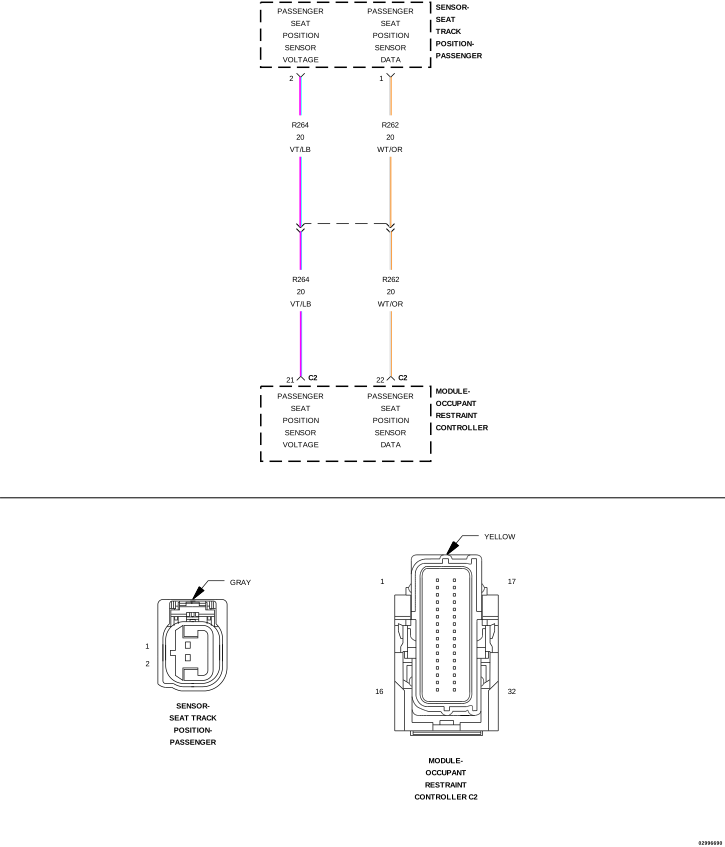 |
For a complete wiring diagram, refer to the Wiring Information.
Theory of Operation
When powered, the Occupant Restraints Controller (ORC) sends a test current to the seat track position sensors to verify the integrity of the sensor and wiring. The use of the ORC adapter tool in the tests below provides a test point in place of the module.
-
When Monitored:
While the CAN bus ignition status is in IGN_RUN and the module is configured for a Passenger Seat Track Position Sensor, the module checks the sensor input current ranges.
-
Set Condition:
If the module detects that the sensor input is greater than or equal to 20.5 mA. This DTC may set when the current is between 17 mA and 20.5 mA.
Possible Causes |
|---|
| PASSENGER SEAT HARNESS IMPROPERLY ROUTED |
| PASSENGER SEAT HARNESS WIRES CHAFED, PIERCED, PINCHED, PARTIALLY BROKEN |
| PASSENGER SEAT HARNESS CONNECTOR TERMINALS BROKEN, BENT, PUSHED OUT, SPREAD, CORRODED, CONTAMINATED |
| (R262) PASSENGER SEAT POSITION SENSOR DATA CIRCUIT SHORTED TO VOLTAGE |
| (R264) PASSENGER SEAT POSITION SENSOR VOLTAGE CIRCUIT SHORTED TO VOLTAGE |
| PASSENGER SEAT TRACK POSITION SENSOR |
| OCCUPANT RESTRAINT CONTROLLER (ORC) |
Always perform the Pre-Diagnostic Troubleshooting procedure before proceeding. (Refer to 28 - DTC-Based Diagnostics/CONTROLLER, Occupant Restraint (ORC) - Standard Procedure).
1. IDENTIFYING VEHICLE EQUIPMENT
| NOTE: | Make sure the battery is fully charged. |
| 1. | Turn the ignition on. |
| 2. | With the scan tool, read ORC active DTCs. |
Does the scan tool display: B1B94-PASSENGER SEAT TRACK POSITION SENSOR CIRCUIT HIGH?
Yes
- Go To 2
No
- Perform the AIRBAG SYSTEM INTERMITTENT TEST. (Refer to 28 - DTC-Based Diagnostics/CONTROLLER, Occupant Restraint (ORC) - Standard Procedure).
2. CHECK FOR ACTIVE INTERNAL FAULTS, IGNITION FAULTS, AND BATTERY FAULTS IN THE OCCUPANT RESTRAINT CONTROLLER (ORC)
| 1. | With the scan tool, read Occupant Restraint Controller (ORC) DTCs. |
Does the scan tool display any active DTCs relating to internal faults, ignition faults, or battery faults?
Yes
- (Refer to 28 - DTC-Based Diagnostics/CONTROLLER, Occupant Restraint (ORC) - Diagnosis and Testing) and perform appropriate diagnostic procedure.
No
- Go To 3
3. INSPECT PASSENGER SEAT HARNESS WIRES AND CONNECTORS
Turn the ignition off, disconnect
the 12-volt battery and wait two minutes before proceeding. Failure
to follow these instructions may result in possible serious or fatal
injury.
WARNING:
| 1. | Using the wiring diagram/schematic as a guide, inspect the passenger seat harness wiring and connectors. Look for chafed, pierced, pinched, or partially broken wires and broken, bent, pushed out, spread, corroded, or contaminated terminals. |
Are any of these conditions present?
Yes
-
NOTE: Do not attempt to repair the Seat Harness. Replace the Seat Harness if the condition inspecting or testing for is present in the Seat Harness. - Replace the passenger seat harness in accordance with the Service Information.
- Perform the AIRBAG SYSTEM VERIFICATION TEST. (Refer to 28 - DTC-Based Diagnostics/CONTROLLER, Occupant Restraint (ORC) - Standard Procedure).
No
- Go To 4
4. VERIFY THAT THE PASSENGER SEAT HARNESS IS ROUTED CORRECTLY
| 1. | Verify that the Passenger Seat Harness is routed correctly. |
Is the Passenger Seat Harness routed correctly?
Yes
- Go To 5
No
- Reroute the Passenger Seat Harness as necessary.
- Perform the AIRBAG SYSTEM VERIFICATION TEST. (Refer to 28 - DTC-Based Diagnostics/CONTROLLER, Occupant Restraint (ORC) - Standard Procedure).
5. CHECK FOR DTC B1B94-PASSENGER SEAT TRACK POSITION SENSOR CIRCUIT HIGH WITH PASSENGER SEAT TRACK POSITION SENSOR DISCONNECTED
Turn the ignition off, disconnect
the 12-volt battery and wait two minutes before proceeding. Failure
to follow these instructions may result in possible serious or fatal
injury.
WARNING:
| 1. | Disconnect the Passenger Seat Track Position Sensor harness connector. |
Turn the ignition on, then reconnect
the 12-volt battery and wait two minutes before proceeding. Failure
to follow these instructions may result in possible serious or fatal
injury.
WARNING:
| 2. | Wait two minutes, and then with the scan tool, read ORC DTCs. |
Does the scan tool display: B1B94-PASSENGER SEAT TRACK POSITION SENSOR CIRCUIT HIGH?
Yes
- Go To 6
No
-
Replace the Passenger Seat Track Position Sensor in accordance with the service information.WARNING: Turn the ignition off, disconnect the 12-volt battery and wait two minutes before proceeding. Failure to follow these instructions may result in possible serious or fatal injury.
- Perform the AIRBAG SYSTEM VERIFICATION TEST. (Refer to 28 - DTC-Based Diagnostics/CONTROLLER, Occupant Restraint (ORC) - Standard Procedure).
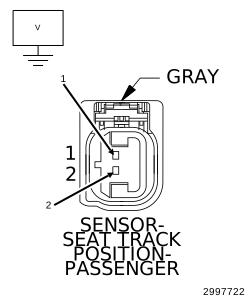
6. CHECK (R262) PASSENGER SEAT POSITION SENSOR DATA CIRCUIT AND (R264) PASSENGER SEAT POSITION SENSOR VOLTAGE CIRCUIT FOR A SHORT TO VOLTAGE
 |
Turn the ignition off, disconnect
the 12-volt battery and wait two minutes before proceeding. Failure
to follow these instructions may result in possible serious or fatal
injury.
WARNING:
| 1. | Disconnect the both ORC harness connectors. |
Turn the ignition on, then reconnect
the 12-volt battery and wait two minutes before proceeding. Failure
to follow these instructions may result in possible serious or fatal
injury.
WARNING:
| 2. | Measure the voltage of the (R262) Passenger Seat Position Sensor Data circuit at the Passenger Seat Track Position Sensor harness connector. |
| 3. | Measure the voltage of the (R263) Passenger Seat Position Sensor Voltage circuit at the Passenger Seat Track Position Sensor harness connector. |
Is the voltage above 0.2 of a volt on either circuit?
Yes
-
NOTE: Do not attempt to repair the Seat Harness. Replace the Seat Harness if the condition inspecting or testing for is present in the Seat Harness. -
Replace the Passenger Seat Harness in accordance with the Service Information.WARNING: Turn the ignition off, disconnect the 12-volt battery and wait two minutes before proceeding. Failure to follow these instructions may result in possible serious or fatal injury.
- Perform the AIRBAG SYSTEM VERIFICATION TEST. (Refer to 28 - DTC-Based Diagnostics/CONTROLLER, Occupant Restraint (ORC) - Standard Procedure).
No
-
WARNING: If the Occupant Restraint Controller (ORC) is dropped at any time, it must be replaced. Failure to follow these instructions may result in possible serious or fatal injury.
- Replace the ORC in accordance with the Service Information.
- Perform the AIRBAG SYSTEM VERIFICATION TEST. (Refer to 28 - DTC-Based Diagnostics/CONTROLLER, Occupant Restraint (ORC) - Standard Procedure).