P0252-INJECTION PUMP FUEL METERING CONTROL CIRCUIT PERFORMANCE
P0252-INJECTION PUMP FUEL METERING CONTROL CIRCUIT PERFORMANCE
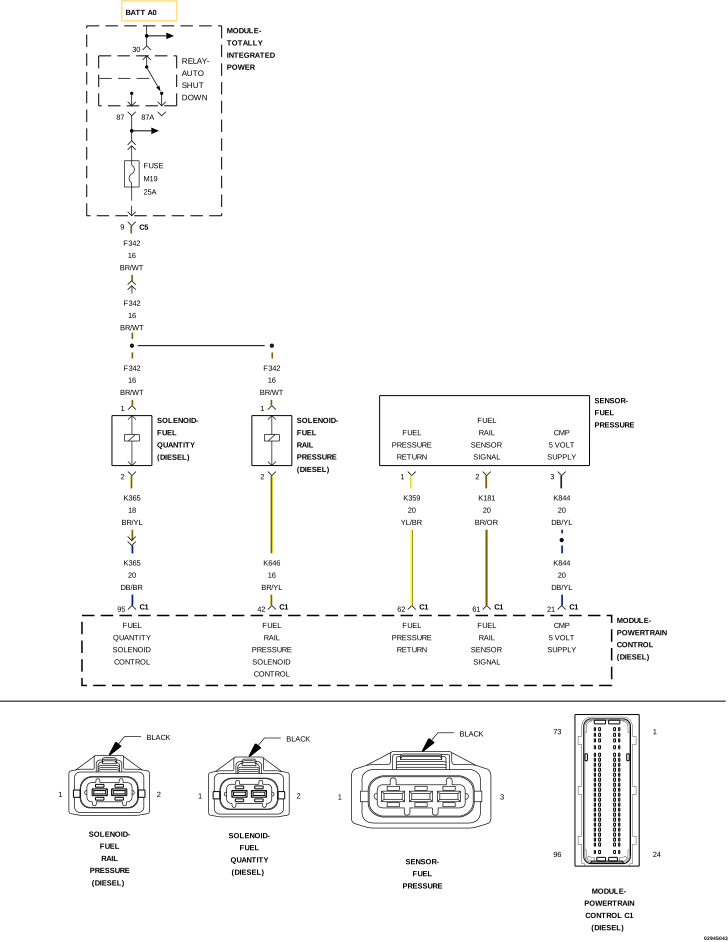
For a complete wiring diagram, refer to the Wiring Information.
Theory of Operation
The Fuel Quantity Solenoid (FQS) works in tandem with the Fuel Pressure Regulator (FPR) to control fuel volume and pressure in the Fuel Rail. The FQS is positioned in the inlet side of the High Pressure Delivery Pump (HPDP). The FQS receives 12 Volts from the Totally Integrated Power Module (TIPM) and a duty-cycle ground signal from the Powertrain Control Module (PCM). The FQS is normally open, so when the FQS is not actuated (no ground signal from the PCM), the HPDP inlet passage is open allowing full fuel flow to the pumping chambers inside the HPDP. When the PCM grounds the FQS control signal the FQS closes the fuel inlet passage, preventing fuel from entering the pumping chambers. The FPR is positioned at the return passage of the Fuel Rail. The solenoid receives 12 Volts from the TIPM and a duty-cycle ground signal from the PCM. The FPR is normally open and when the solenoid is not actuated (no ground signal from the PCM), the Fuel Rail return passage opens allowing fuel pressure in the rail to escape into the return circuit and on to the Fuel Tank. When the PCM grounds the FPR control signal, the solenoid valve closes allowing fuel pressure to build in the rail.
When Monitored:
With the ignition on and the Fuel Quantity Solenoid commanded off.
Set Condition:
The Powertrain Control Module (PCM) detects that the (K365) Fuel Quantity Solenoid Control circuit is shorted to ground for 0.2 second.
3.
CHECK THE (K365) FUEL QUANTITY SOLENOID CONTROL CIRCUIT FOR AN OPEN/HIGH RESISTANCE
1.
Turn the ignition off.
2.
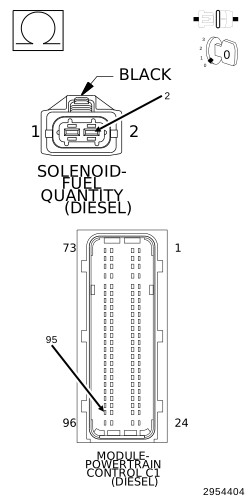
Disconnect the PCM C1 harness connector.
3.
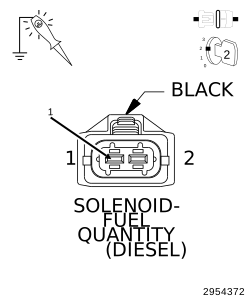
Measure the resistance of the (K365) Fuel Quantity Solenoid Control circuit between the Fuel Quantity Solenoid harness connector and the PCM C1 harness connector.
Using the wiring diagram/schematic as a guide, inspect the wiring and connectors between the Fuel Quantity Solenoid and the Powertrain Control Module (PCM).
2.
Look for any chafed, pierced, pinched, or partially broken wires.
3.
Look for broken, bent, pushed out or corroded terminals.
4.
Perform any Technical Service Bulletins that may apply.