The fuel pressure solenoid is not a serviceable item.
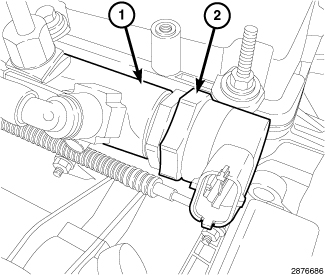
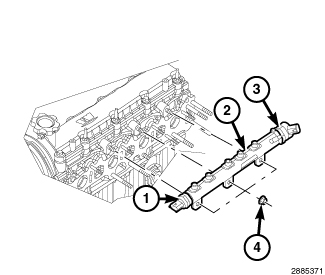
The fuel pressure solenoid (2) is attached to the rear of the fuel rail (1). The tip of the fuel pressure solenoid (2) uses a knife edge, for metal to metal sealing. The knife edge actually deforms the metal in the fuel rail in order to seal the surfaces. The solenoid must be replaced when ever it is removed from the rail. The solenoid controls and maintains constant rail pressure with a control current transmitted by the Powertrain Control Module (PCM).
OPERATION
OPERATION
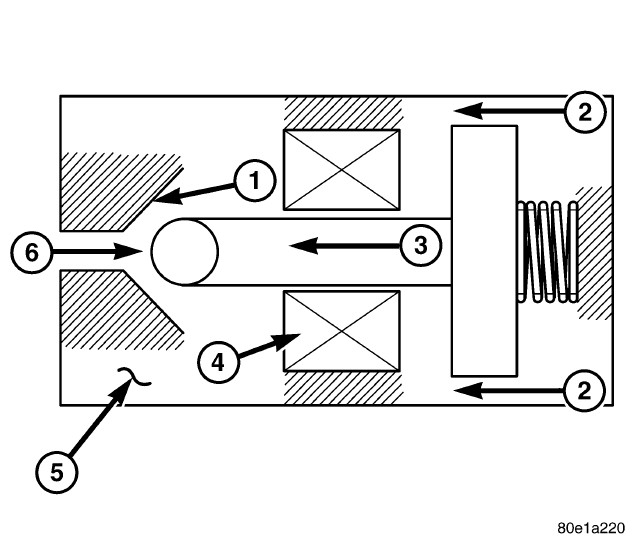
High pressure which is present in the fuel rail flows to the ball seat (1) of the pressure solenoid. The specified pressure required by the system is built up in the rail by the fuel pressure solenoid building up a magnetic force which corresponds to this specific pressure by means of a control current from the Powertrain Control Module (PCM). This magnetic force equals a certain outlet cross section at the ball seat of the valve. The rail pressure is altered as a result of the quantity of fuel which flows off. The current fuel pressure is signaled by the fuel rail pressure sensor to the PCM. The controlled fuel flows back along the return fuel line, into the tank.
In a de-energized state, the fuel pressure solenoid is closed as the spring force (2) presses the ball into the ball seat. When driving, the fuel pressure solenoid is constantly open. When engine is started, the fuel pressure solenoid is held closed by magnetic force. When driving, the pressure of the fluid counteracts the magnetic force of the coil and the slight spring force.
REMOVAL
REMOVAL
NOTE:
The fuel rail pressure solenoid is not a serviceable item. If diagnosis has lead you to replace the fuel rail pressure solenoid, then a new fuel rail must to be installed.
High-pressure fuel lines deliver
fuel under extreme pressure from the injection pump to the injectors.
This may be as high as 1800 bar (26,106 psi). Use extreme caution
when inspecting for high-pressure fuel leaks. Fuel under this amount
of pressure can penetrate skin causing personal injury or death. Inspect
high-pressure fuel leaks with a sheet of cardboard. Wear safety goggles
and adequate protective clothing when servicing fuel system.
WARNING:
Before working on an open fuel
system, eliminate any source of sparks or open flames near the work
area, and do not smoke. Wash diesel fuel off skin as soon as possible
to avoid the risk of poisoning from inhaling and swallowing fuel.
Do not allow diesel fuel to come in contact with eyes, otherwise,
severe injury can result from contact with fuel. Pour fuels only into
suitable and appropriately marked containers. Wear protective clothing
whenever possible to avoid injury.