MUFFLER, Exhaust
DESCRIPTION
All engines use a stainless steel muffler and tailpipe assembly to control exhaust noise levels and exhaust back pressure.
REMOVAL
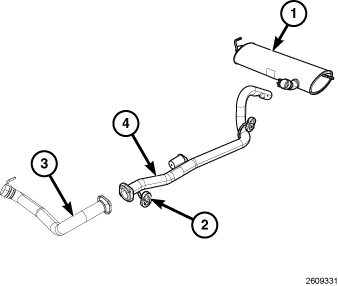 |
The normal operating temperature
of the exhaust system is very high. Therefore, never attempt to service
any part of the exhaust system until it is cooled. Special care should
be taken when working near the catalytic converter. The temperature
of the converter rises to a high level after a short period of engine
operation time.
WARNING:
If torches are used when servicing
the exhaust system, do not allow any flame near the fuel lines or
the fuel tank. Failure to follow these instructions may result in
possible serious or fatal injury.
WARNING:
When servicing and/or replacing
exhaust system components, disconnect the oxygen sensor connector(s).
Allowing the exhaust system to hang by the oxygen sensor harness will
damage the wiring and/or oxygen sensor.
CAUTION:
All original equipment exhaust systems are manufactured with the exhaust tailpipe welded to the muffler. Service replacement mufflers and exhaust tailpipes are either clamped together or welded together.
INSTALLATION
|
- Position the muffler and tailpipe assembly (1) into the vehicle.
- Install the muffler and tailpipe assembly (1) hangers into the insulators.
- Position the exhaust pipe (4) into the muffler and tailpipe assembly (1)
- Make sure the muffler and tailpipe are correctly positioned and properly aligned. The minimum clearance between components is 25mm (1 inch).
- Tighten muffler and tailpipe assembly (1) to exhaust pipe (4) clamp to 28 N·m (21 ft. lbs.).
- Lower the vehicle.
- Start the engine and inspect for any exhaust leaks. Repair any exhaust leaks as necessary.
-
Check the exhaust system for contact with the body panels. Make the necessary adjustments, if needed.