B1C4E-1st ROW PASSENGER SEAT BELT BUCKLE TENSIONER CIRCUIT OPEN
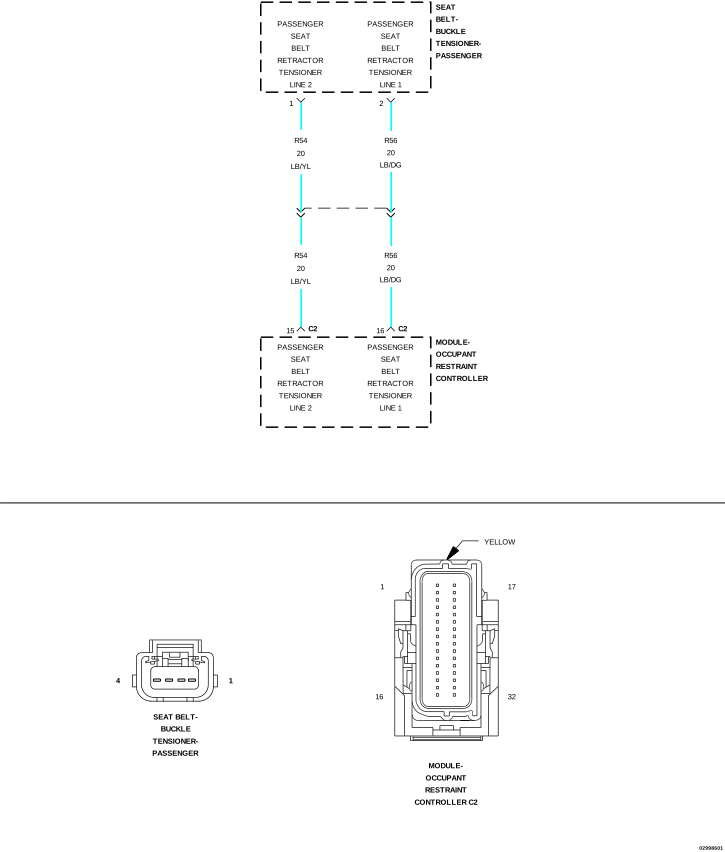 |
For a complete wiring diagram, refer to the Wiring Information.
Theory of Operation
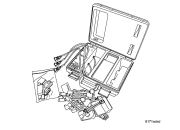
When powered, the Occupant Restraint Controller (ORC) sends a test current to the squibs to verify the integrity of the squib and wiring. These circuits are maintained in a “floating” configuration at the module (connected to neither power nor ground) as protection against inadvertent deployment. Use of the SRS Load Tool Kit
8443Ain the tests below substitutes a suspect squib with a known good component. The use of the SRS Load Tool Adapter tool provides a test point as well as a method for opening the shorting bar connections within the harness connector.
-
When Monitored:
The ORC sends out a 40 mA diagnostic current on each squib voltage supply circuit at power up and every 200 ms thereafter while the ignition is in on. The module then monitors the return wire to determine the state of the circuit.
-
Set Condition:
This DTC sets when the ORC detects an open on the squib circuit for more than 2.6 seconds. This DTC transitions from active to stored when the module sees a recovery from an open condition for greater than 2.6 seconds.
Possible Causes |
|---|
| (R54) PASSENGER SEAT BELT TENSIONER LINE 2 CIRCUIT OPEN |
| (R56) PASSENGER SEAT BELT TENSIONER LINE 1 CIRCUIT OPEN |
| PASSENGER SEAT BELT BUCKLE TENSIONER |
| OCCUPANT RESTRAINT CONTROLLER (ORC) |
Always perform the Pre-Diagnostic Troubleshooting procedure before proceeding. (Refer to 28 - DTC-Based Diagnostics/CONTROLLER, Occupant Restraint (ORC) - Standard Procedure).
1. DETERMINE ACTIVE OR STORED DTC
| NOTE: | Make sure the battery is fully charged. |
| 1. | Turn the ignition on. |
| 2. | With the scan tool, read all active ORC DTCs. |
Is the DTC active or stored?
ORC - ACTIVE DTC
- Go To 2
ORC - STORED DTC
- Perform the AIRBAG SYSTEM INTERMITTENT TEST. (Refer to 28 - DTC-Based Diagnostics/CONTROLLER, Occupant Restraint (ORC) - Standard Procedure).
2. CHECK FOR OPEN PASSENGER SEAT BELT BUCKLE TENSIONER
 |
Turn the ignition off, disconnect
the 12-volt battery and wait two minutes before proceeding. Failure
to follow these instructions may result in possible serious or fatal
injury.
WARNING:
| 1. | Disconnect the Passenger Seat Belt Buckle Tensioner harness connector. |
Do not place an intact undeployed
airbag face down on a hard surface, the airbag will propel into the
air if accidentally deployed. Failure to follow these instructions
may result in possible serious or fatal injury.
WARNING:
| NOTE: | Check the connectors - Clean and repair as necessary. |
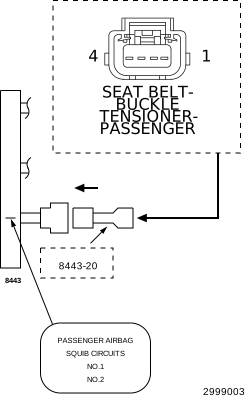
| 2. | Connect the SRS Load Tool Kit 8443A and the appropriate SRS Load Tool Jumper to the Passenger Seat Belt Buckle Tensioner harness connector. |
Turn the ignition on, then reconnect
the 12-volt battery and wait two minutes before proceeding. Failure
to follow these instructions may result in possible serious or fatal
injury.
WARNING:
| 3. | With the scan tool, read the active ORC DTCs. |
Does the scan tool display: B1C4E-1st ROW PASSENGER SEAT BELT BUCKLE TENSIONER CIRCUIT OPEN?
Yes
- Go To 3
No
-
Replace the Passenger Seat Belt Buckle Tensioner in accordance with the Service Information.WARNING: Turn the ignition off, disconnect the 12-volt battery and wait two minutes before proceeding. Failure to follow these instructions may result in possible serious or fatal injury.
-
Perform the AIRBAG SYSTEM VERIFICATION TEST. (Refer to 28 - DTC-Based Diagnostics/CONTROLLER, Occupant Restraint (ORC)
- Standard Procedure).
3. CHECK (R56) PASSENGER SEAT BELT TENSIONER LINE 1 CIRCUIT FOR AN OPEN
 |
Turn the ignition off, disconnect
the 12-volt battery and wait two minutes before proceeding. Failure
to follow these instructions may result in possible serious or fatal
injury.
WARNING:
| 1. | Disconnect the SRS Load Tool Kit 8443A and the SRS Load Tool Jumper from the Passenger Seat Belt Buckle Tensioner harness connector. |
| 2. | Disconnect the ORC harness connectors. |
| NOTE: | Check the connectors - Clean and repair as necessary. |
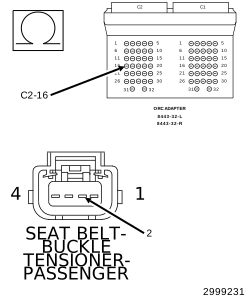
| 3. | Connect the SRS Load Tool Adapter 8443-32-L or 8443-32-R to the ORC harness connectors. |
| 4. | Measure the resistance of the (R56) Passenger Seat Belt Tensioner Line 1 circuit between the Passenger Seat Belt Buckle Tensioner harness connector and the appropriate terminal of the SRS Load Tool Adapter 8443-32-L or 8443-32-R . |
Is the resistance below 1.0 Ohm?
Yes
- Go To 4
No
-
Repair or replace the (R56) Passenger Seat Belt Tensioner Line 1 circuit in accordance with the Service Information. Then Go To 4
4. CHECK (R54) PASSENGER SEAT BELT TENSIONER LINE 2 CIRCUIT FOR AN OPEN
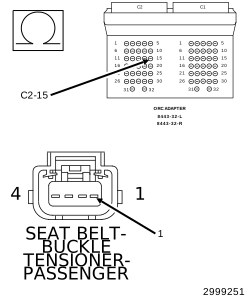 |
| 1. | Measure the resistance of the (R54) Passenger Seat Belt Tensioner Line 2 circuit between the Passenger Seat Belt Buckle Tensioner harness connector and the appropriate terminal of the SRS Load Tool Adapter 8443-32-L or 8443-32-R . |
Is the resistance below 1.0 Ohm?
Yes
-
WARNING: If the Occupant Restraint Controller (ORC) is dropped at any time, it must be replaced. Failure to take the proper precautions can result in accidental airbag deployment. Failure to follow these instructions may result in possible serious or fatal injury.
- Replace the ORC in accordance with the Service Information.
- Perform the AIRBAG SYSTEM VERIFICATION TEST. (Refer to 28 - DTC-Based Diagnostics/CONTROLLER, Occupant Restraint (ORC) - Standard Procedure).
No
- Repair or replace the (R54) Passenger Seat Belt Tensioner Line 2 circuit for an open in accordance with the Service Information.
-
Perform the AIRBAG SYSTEM VERIFICATION TEST. (Refer to 28 - DTC-Based Diagnostics/CONTROLLER, Occupant Restraint (ORC)
- Standard Procedure).