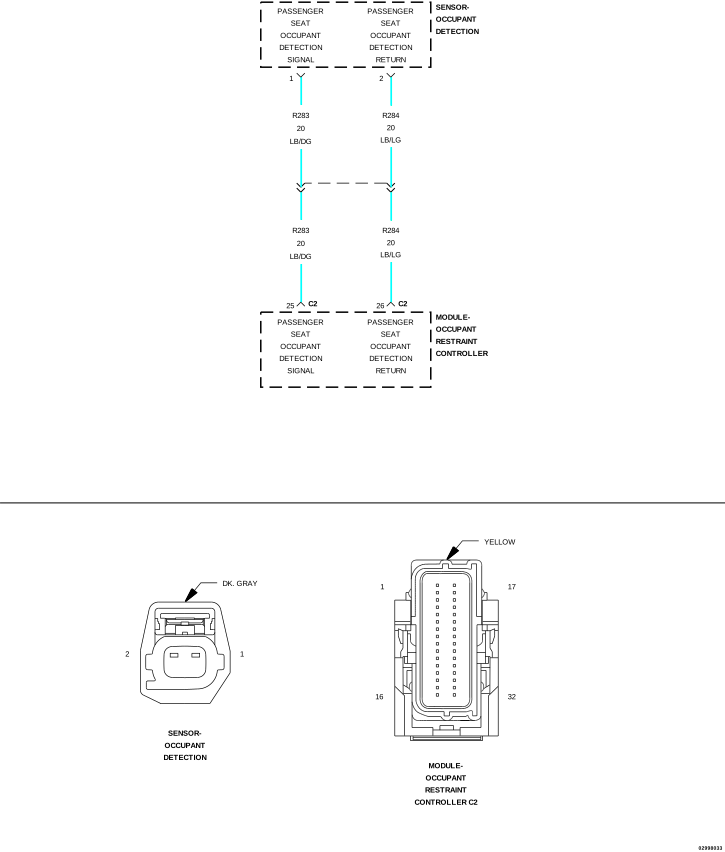
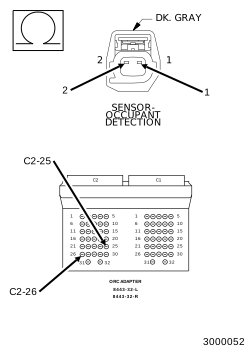
The ORC module cannot recognize between the different faults so it will set a High code. The diagnosis is to check the ODS signal and return circuits for all faults (short to voltage, open, short to ground, and shorted together).
For a complete wiring diagram, refer to the Wiring Information.
Theory of Operation
The Occupant Detection Sensor (ODS) is a resistive sensor that is located in the front passenger seat. This sensor is only used for passenger seatbelt reminder. The seat sensor assumes a passenger is present when a minimum of 53.5 pounds (20kg) of weight is placed in the seat. The resistance of the sensor decreases, signaling to the ORC module that a passenger is present. The ORC then transmits this information to the Instrument cluster over the CAN bus. The passenger is only reminded to buckle up if the passenger seat occupant minimum weight threshold determined by the ODS is surpassed and the seat belt buckle is still not latched. The ODS receives battery voltage and clean ground through dedicated sensor plus and minus circuits from the ORC. The ORC receives, processes, and continuously monitors (monitor rate of 500 ms) the analog signal from the ODS. The ODS component is not repairable, if determined inoperable, it would require to be replaced with a new component.
When Monitored:
The ORC receives, processes, and continuously monitors (monitor rate of 500 ms) the analog signal from the ODS.
Set Condition:
The ORC detects High voltage on the (R283) Passenger Occupant Detector Sensor Signal circuit for 2.5 - 5 seconds. The DTC will not latch for the entire ignition cycle. The code goes from Active to Stored 2.5 - 5 seconds after the code setting criteria is gone. This code also covers the Open fault.
Possible Causes
(R283) PASSENGER OCCUPANT DETECTOR SIGNAL CIRCUIT OPEN
(R283) PASSENGER OCCUPANT DETECTOR SIGNAL CIRCUIT SHORTED TO VOLTAGE
(R283) PASSENGER SEAT OCCUPANT DETECTOR SIGNAL CIRCUIT SHORTED TO GROUND
(R284) PASSENGER OCCUPANT DETECTOR RETURN CIRCUIT OPEN
(R283) PASSENGER SEAT OCCUPANT DETECTOR SIGNAL CIRCUIT SHORTED TO THE (R284) PASSENGER SEAT OCCUPANT DETECTOR RETURN CIRCUIT
The seat belt warning lamp in the instrument cluster does not set to indicate a passenger seat belt reminder feature.
NOTE:
The use of a approved special tool or Digital Multimeter such as a Fluke Meter that will not apply more than 20 milliamperes to a circuit are the only measurement tools to be used.
NOTE:
Make sure the battery is fully charged.
1.
Turn the ignition on.
2.
With the scan tool, read the ORC DTCs
NOTE:
Diagnosing for the high code but also will be checking for an Open fault in both the (R283) signal and (R284) return circuits.
Does the scan tool display active B1CDC-PASSENGER OCCUPANT DETECTOR CIRCUIT HIGH DTC?
2.
CHECK THE (R283) PASSENGER OCCUPANT DETECTOR SIGNAL CIRCUIT FOR A SHORT TO VOLTAGE
NOTE:
Repair of the wiring is only to be done on the seat body harness side of the connector. If the wiring fault is in the component side of the wiring harness routed into the seat cushion a ODS sensor replacement is to be performed. (Refer to 10 - Restraints/SENSOR, Occupant Detection - Removal)
.
WARNING:
Turn the ignition off, disconnect
the 12-volt battery and wait two minutes before proceeding. Failure
to follow these instructions may result in possible serious or fatal
injury.
1.
Keep the Passenger Occupant Detector Sensor harness connector in the seat cushion connected.
2.
Keep the inline harness underseat connector connected.
3.
Keep the Occupant Detection Sensor (ODS) in the passenger seat cushion connected.
4.
Disconnect the ORC harness connectors.
5.
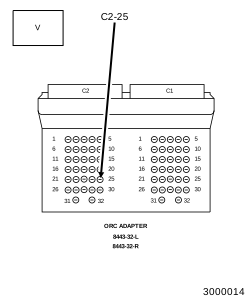
Connect the SRS Load Tool Adapter
8443-32-L
or
8443-32-R
to the ORC harness connectors.
WARNING:
Turn the ignition on, then reconnect
the 12-volt battery and wait two minutes before proceeding. Failure
to follow these instructions may result in possible serious or fatal
injury.
6.
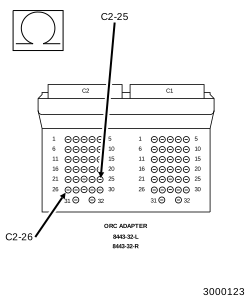
Measure the voltage of the (R283) Passenger Occupant Detector Signal circuit at the appropriate terminal of the SRS Load Tool Adapter
8443-32-L
or
8443-32-R
.
Is there any voltage present?
Yes
NOTE:
The ODS sensor is to be replaced whenever a short to voltage fault has been found in the ODS harness even after the harness repair has been performed.
WARNING:
Turn the ignition off disconnect
the 12-volt battery and wait two minutes before proceeding. Failure
to follow these instructions may result in possible serious or fatal
injury.
Repair the (R283) Passenger Occupant Detector Signal circuit for a short to voltage.
3.
CHECK THE (R283) PASSENGER OCCUPANT DETECTOR SIGNAL CIRCUIT FOR A SHORT TO VOLTAGE BETWEEN THE ORC AND THE IN-LINE UNDERSEAT HARNESS CONNECTOR
WARNING:
Turn the ignition off disconnect
the 12-volt battery and wait two minutes before proceeding. Failure
to follow these instructions may result in possible serious or fatal
injury.
NOTE:
Check connectors - Clean/Repair as necessary.
1.
Disconnect the in-line underseat harness connector.
WARNING:
Turn the ignition on, then reconnect
the 12-volt battery and wait two minutes before proceeding. Failure
to follow these instructions may result in possible serious or fatal
injury.
2.
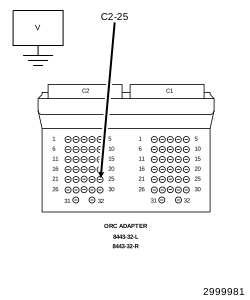
Measure the voltage between ground and the (R283) Passenger Occupant Detector Signal circuit at the appropriate terminal of the SRS Load Tool Adapter
8443-32-L
or
8443-32-R
.
Is there voltage present?
Yes
NOTE:
The ODS sensor is to be replaced whenever a short to voltage fault has been found in the ODS harness even after the harness repair has been performed.
WARNING:
Turn the ignition off disconnect
the 12-volt battery and wait two minutes before proceeding. Failure
to follow these instructions may result in possible serious or fatal
injury.
Repair the short to voltage in the (R283) Passenger Occupant Detector Signal circuit located between the ORC and the in-line underseat jumper harness connector.
4.
CHECK THE (R283) PASSENGER OCCUPANT DETECTOR SENSOR SIGNAL CIRCUIT FOR A SHORT TO VOLTAGE IN THE UNDERSEAT JUMPER HARNESS
WARNING:
Turn the ignition off disconnect
the 12-volt battery and wait two minutes before proceeding. Failure
to follow these instructions may result in possible serious or fatal
injury.
1.
Connect the underseat connector.
NOTE:
Confirm the connector is seated firmly and the lock tab is fully seated.
2.
Access the Passenger Occupant Detector Sensor (ODS) harness connector located at the passenger seat cushion.
3.
Disconnect the Passenger Occupant Detector Sensor (ODS) harness connector.
WARNING:
Turn the ignition on, then reconnect
the 12-volt battery and wait two minutes before proceeding. Failure
to follow these instructions may result in possible serious or fatal
injury.
4.
Measure the voltage between ground and the (R283) Occupant Detector Signal circuit at the appropriate terminal of the SRS Load Tool Adapter
8443-32-L
or
8443-32-R
.
Is there any voltage present?
Yes
NOTE:
The ODS sensor is to be replaced whenever a short to voltage fault has been found in the ODS harness even after the harness repair has been performed.
WARNING:
Turn the ignition off disconnect
the 12-volt battery and wait two minutes before proceeding. Failure
to follow these instructions may result in possible serious or fatal
injury.
Repair the short to voltage in the (R283) Passenger Occupant Detector Signal circuit located between the underseat in-line harness connector and the Passenger Occupant Detector Sensor harness connector.
5.
CHECK THE (R283) PASSENGER OCCUPANT DETECTOR SENSOR SIGNAL CIRCUIT AND (R284) PASSENGER OCCUPANT DETECTOR SENSOR RETURN CIRCUIT FOR AN OPEN OR HIGH RESISTANCE BETWEEN THE ORC AND THE UNDERSEAT HARNESS CONNECTOR
WARNING:
Turn the ignition off disconnect
the 12-volt battery and wait two minutes before proceeding. Failure
to follow these instructions may result in possible serious or fatal
injury.
1.
Disconnect the underseat harness connector.
2.
Measure the resistance of the (R283) Occupant Detector Sensor Signal circuit from the underseat harness connector to the appropriate terminal of the SRS Load Tool Adapter
8443-32-L
or
8443-32-R
.
3.
Measure the resistance of the (R284) Occupant Detector Sensor Return circuit from the underseat connector to the appropriate terminal of the SRS Load Tool Adapter
8443-32-L
or
8443-32-R
.
Is the resistance for either circuit below 1.0 Ohm?
6.
CHECK THE (R283) PASSENGER OCCUPANT DETECTOR SENSOR SIGNAL CIRCUIT AND (R284) PASSENGER OCCUPANT DETECTOR RETURN CIRCUIT FOR AN OPEN OR HIGH RESISTANCE IN THE SEATBACK JUMPER HARNESS
WARNING:
Turn the ignition off disconnect
the 12-volt battery and wait two minutes before proceeding. Failure
to follow these instructions may result in possible serious or fatal
injury.
1.
Reconnect the passenger seat underseat jumper connector.
NOTE:
Inspect terminal pins and verify the passenger under seat jumper connector is fully seated correctly and that the connector locking tab is correctly in place.
2.
Access the Passenger Occupant Detector Sensor located in the passenger seat cushion.
3.
Disconnect the Passenger Occupant Detector Sensor.
4.
Measure the resistance of the (R283) Passenger Occupant Sensor Signal circuit and (R284) Occupant Detector Sensor Return circuit of the appropriate terminals of the ODS sensor to the appropriate terminals of the SRS Load Tool Adapter
8443-32-L
or
8443-32-R
.
Is the resistance for either circuit below 1.0 Ohm?
Repair of the wiring is only to be done on the seat body harness side of the connector. If the wiring fault is in the component side of the wiring harness routed into the seat cushion a ODS sensor replacement is to be performed. (Refer to 10 - Restraints/SENSOR, Occupant Detection - Removal)
.
Repair the (R283) Passenger Occupant Detector Signal circuit or (R284) Occupant Detector Sensor Return circuit in the body harness for an open or high resistance.
7.
CHECK THE (R283) PASSENGER OCCUPANT DETECTOR SENSOR SIGNAL CIRCUIT AND (R284) PASSENGER OCCUPANT DETECTOR SENSOR RETURN CIRCUIT FOR AN OPEN OR HIGH RESISTANCE WITH THE ODS HARNESS FULLY CONNECTED
NOTE:
Confirm the connector is seated firmly and the lock tab is fully seated.
1.
Connect the Occupant Detector Sensor (ODS), verify all in-line connections are secure.
2.
Measure the resistance of the (R283) Passenger Occupant Detector Signal circuit to the (R284) Passenger Occupant Detector Sensor Return circuit at the appropriate terminals of the SRS Load Tool Adapter
8443-32-L
or
8443-32-R
.
Is the resistance below 700 Ohms?
Yes
WARNING:
Turn the ignition on, then reconnect
the 12-volt battery and wait two minutes before proceeding. Failure
to follow these instructions may result in possible serious or fatal
injury.
Turn the ignition Off and wait 15 seconds before turning the ignition On.
8.
CHECK OPERATION OF THE PASSENGER OCCUPANT DETECTOR SENSOR
WARNING:
Turn the ignition off disconnect
the 12-volt battery and wait two minutes before proceeding. Failure
to follow these instructions may result in possible serious or fatal
injury.
Remove any special tools or jumper wires and reconnect all previously disconnected components - except the Battery.
WARNING:
Turn the ignition on, then reconnect
the 12-volt battery and wait two minutes before proceeding. Failure
to follow these instructions may result in possible serious or fatal
injury.
3.
Connect the scan tool to the Data Link Connector - use the most current software available.
4.
Use the scan tool and erase the ORC stored codes.
5.
Turn the Ignition Off and wait 15 seconds before turning the Ignition On.
6.
Wait one minute and read active codes and if there are none present read the stored codes.
Does the scan tool display active B1CDC-PASSENGER OCCUPANT DETECTOR CIRCUIT HIGH DTC?
Yes
WARNING:
Turn the ignition off, disconnect
the 12-volt battery and wait two minutes before proceeding. Failure
to follow these instructions may result in possible serious or fatal
injury.
WARNING:
If the Occupant Restraint Controller
(ORC) is dropped at any time, it must be replaced. Failure to follow
these instructions may result in possible serious or fatal injury.