2014 Jeep Wrangler JK Factory Service Manual 28 - DTC-Based Diagnostics

B10B9-CABIN HEATER 2 CONTROL CIRCUIT HIGH


For a complete wiring diagram, refer to the Wiring Information.


Possible Causes

(K361) CABIN HEATER RELAY 2 CONTROL CIRCUIT SHORTED TO VOLTAGE
CABIN HEATER RELAY 2
TOTALLY INTEGRATED POWER MODULE (TIPM)

1. VERIFY THAT THE DIAGNOSTIC TROUBLE CODE (DTC) IS ACTIVE


1. Ignition on, engine not running.
2. Using the scan tool, read and record TIPM DTCs.


NOTE: Record the Environmental Data for all DTCs before erasing. The Environmental Data can help in duplicating the conditions in which the DTC originally set.
3. Using the scan tool, erase TIPM DTCs.
4. Using the scan tool, actuate the Cabin Heater Relay 2 and allow the actuator to run for a least of two minutes.
5. Using the scan tool, read TIPM DTCs.


Did this DTC reset?

Yes


No


2. CHECK THE CABIN HEATER RELAY 2


1. Turn the ignition off to the lock position.
2. Install a substitute relay for the Cabin Heater Relay 2.


NOTE: Check connectors - Clean/repair as necessary.
3. Ignition on, engine not running.
4. Using the scan tool, erase TIPM DTCs.
5. Using the scan tool, actuate the Cabin Heater Relay 2 and allow the actuator to run for a least of two minutes.
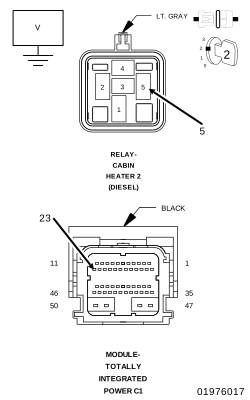
6. Using the scan tool, read TIPM DTCs.


Did this DTC reset?

Yes


No


3. CHECK (K361) CABIN HEATER RELAY 2 CONTROL CIRCUIT FOR A SHORT TO VOLTAGE


1. Turn the ignition off to the lock position.
2. Remove the substitute Cabin Heater Relay 2.
3. Disconnect the TIPM C1 harness connector.
4. Ignition on, engine not running.
5. Measure the voltage of the (K361) Cabin Heater Relay 2 Control circuit.


Is there any voltage present?

Yes


No


4. CHECK THE WIRING AND CONNECTORS


1. The conditions necessary to set the DTC are not present at this time.
2. Using the scan tool, check the Environmental Data to help identify the conditions in which the DTC originally set.
3. Using the schematics as a guide, inspect the wiring and connectors specific to this circuit.
4. Check for an intermittent condition by inspecting the related wiring harness for chafed, pierced, pinched, or partially broken wires.
5. Check the connectors for broken, bent, pushed out, spread, corroded, or contaminated terminals.
6. Wiggle the wiring and connectors while checking for shorted and open circuits.


Were there any problems found?

Yes


No