NOZZLE, Washer
FRONT
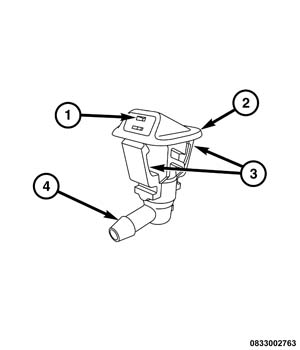 |
The fluidic front washer nozzles (2) are constructed of molded plastic and have integral latch features (3) that secure them in dedicated mounting holes located at the rear edge of the hood panel near the windshield. The domed upper surface of each washer nozzle is visible on the outside of the hood panel, and the nozzle orifice (1) is oriented towards the windshield glass.
The washer plumbing fitting (4) for the washer nozzle extends below the hood panel and is accessible from the engine compartment.
The front washer nozzles cannot be adjusted or repaired and, if
ineffective or damaged, they must be replaced.
REAR
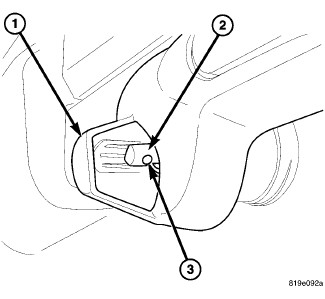 |
The fluidic rear washer nozzle (2) is constructed of molded plastic
with an integral metal orifice insert (3). The rear washer nozzle
is integral to the rear wiper motor output shaft and is visible through
a cutout in the rear wiper arm nut cover (1) on the upper left corner
of the outer rear lift glass. The nozzle orifice is oriented toward
the lower path of the rear wiper blade on the lift glass and moves
in concert with the rear wiper motor output shaft and the rear wiper
arm.
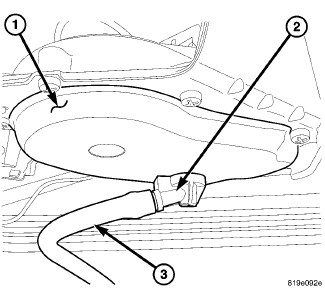 |
The rear washer nozzle receives washer fluid through the rear wiper motor output shaft. Washer fluid is supplied to the rear wiper motor through the hardtop washer hose (3) which is connected to a molded plastic barbed fitting (2) on the motor transmission housing (1) on the upper left corner of the inner rear lift glass. The washer supply hose and rear wiper motor are concealed on the inside of the lift glass by a molded plastic trim cover.
The rear washer nozzle cannot be adjusted or repaired and, if ineffective
or damaged, the rear wiper motor unit must be replaced.
FRONT
The front washer nozzles are designed to dispense washer fluid into the wiper pattern area on the outside of the windshield glass. Pressurized washer fluid is fed to the nozzles from the washer reservoir by the washer pump/motor unit through a single hose, which is attached to a barbed nipple on each washer nozzle below the inner hood panel. A fluidic matrix within each washer nozzle causes the pressurized washer fluid to be emitted from the nozzle orifice as a fan-like stream to more effectively cover a larger area of the glass to be cleaned.
The integral check valve in each nozzle prevents washer fluid from draining out of the washer supply hoses back to the washer reservoir. This drain-back would result in a lengthy delay after the washer switch is actuated until washer fluid was dispensed through the nozzles, because the washer pump would have to refill the washer plumbing from the reservoir to the nozzles. Such a drain-back condition could also result in water, dirt, or other outside contaminants being siphoned into the washer system through the washer nozzle orifice. This water could subsequently freeze and plug or damage the nozzle, while other contaminants could interfere with proper nozzle operation and cause improper nozzle spray patterns. In addition, the check valve prevents washer fluid from siphoning through the washer nozzles after the washer pump stops operating.
When the washer pump pressurizes and pumps washer fluid from the reservoir through the washer plumbing, the fluid pressure unseats a diaphragm from over a sump well within the nozzle by overriding the spring pressure applied to it by a piston. With the diaphragm unseated, washer fluid is allowed to flow toward the nozzle orifice. When the washer pump stops operating, the spring pressure on the piston seats the diaphragm over the sump well in the nozzle and fluid flow in either direction within the washer plumbing is prevented.
REAR
The rear washer nozzle is designed to dispense washer fluid into the wiper pattern area on the outside of the lift glass. Pressurized washer fluid is fed to the nozzle from the washer reservoir by the washer pump/motor through a single hose, which is attached to a barbed nipple on the back of the rear wiper motor transmission housing cover. A fluidic matrix within the nozzle causes the pressurized washer fluid to be emitted from the nozzle orifice as an oscillating stream which, when combined with the wet arm-like movement of the nozzle with the rear wiper motor output shaft, more effectively covers a larger area of the glass to be cleaned.
REMOVAL
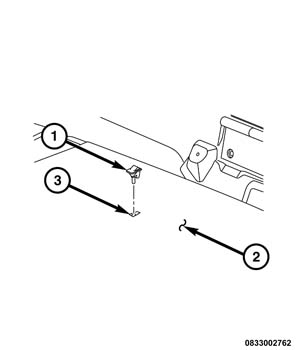 |
- Unlatch, open and support the hood (2).
- From the underside of the hood near the rear edge, disconnect the hose connection (3) from the barbed nipple of the front washer nozzle (1).
- From the underside of the hood, depress the integral latch features of the front washer nozzle and push the nozzle out through the mounting hole toward the top side of the hood.
-
Remove the nozzle from
the top of the hood panel.
INSTALLATION
|
- Position the front washer nozzle (1) to the mounting hole on the outside of the hood panel (2).
- Align the anti-rotation tab of the nozzle with the anti-rotation notch in the mounting hole.
- Using hand pressure, push firmly and evenly on the top of the nozzle until the integral latch features snap into place on the underside of the hood panel.
- From the underside of the hood, reconnect the washer hose connector (3) to the barbed nipple of the nozzle.
-
Close and latch the
hood.