SENSOR, Fuel Tank Pressure
DESCRIPTION
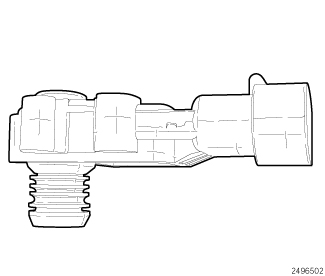 |
The fuel tank pressure sensor provides the PCM with information on vapor pressure inside the fuel tank. The sensor is a diaphragm-type pressure sensor and varies its voltage output depending on fuel tank pressure. When the fuel tank isolation valve is activated (closed), preventing fuel vapors from leaving the tank, the PCM will monitor the fuel tank pressure sensor to prevent pressure from increasing or decreasing to an unsafe level.
Excessive fuel tank pressure could cause fuel vapors to vent out the fuel filler cap or damage system components while insufficient fuel tank pressure (vacuum) caused by lack of air entering the tank to take the place of consumed fuel could lead to collapsed tank, lines or loss of fuel pressure.
REMOVAL
 |
- Disconnect and isolate the negative battery cable.
- Remove the fuel filler cap to relieve tank pressure.
- Raise and support the vehicle (Refer to 04 - Vehicle Quick Reference, Lifting and Hoisting).
-
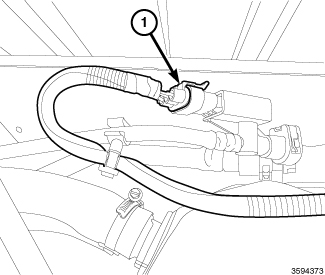
Disconnect the fuel tank pressure sensor electrical connector (1).
-
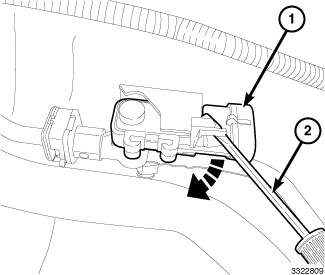
Carefully raise the retaining tab (2), rotate and remove the fuel tank pressure sensor (1) from the fuel tank vent tube.
-
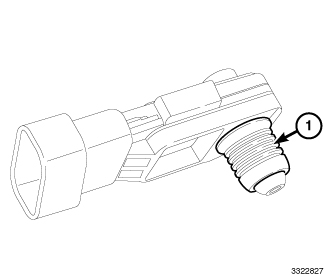
The fuel tank pressure sensor seal (1) can be reused if not damaged.
INSTALLATION
|
-
The fuel tank pressure sensor seal (1) can be reused if not damaged.
-
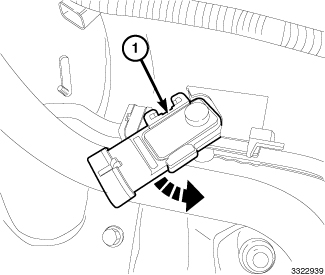
Install the fuel tank pressure sensor (1) into the fuel tank vent tube and rotate into position.
- Connect the fuel tank pressure sensor electrical connector (1).
- Lower the vehicle.
- Install the fuel filler cap.
-
Connect the negative battery cable and tighten nut to 5 N·m (45 in. lbs.).