Previous Next

Engine

OIL LEVEL CHECK

  1. Make sure the car is parked on level ground.
  2. When checking the oil level, it is best for the engine to be at normal operating temperature, although checking the oil immediately after stopping will lead to a false reading. Wait a few minutes after turning off the engine to allow the oil to drain back into the crankcase.
  3. Open the hood and locate the dipstick which will be in a guide tube mounted in the engine block. Pull the dipstick from its tube, wipe it clean (using a clean, lint free rag) and then reinsert it.
  4. The oil dipstick has two marks to indicate the minimum (MIN.) and maximum (MAX) oil level. If the oil is at or below the "MIN'' mark on the dipstick, add oil of the proper viscosity through the capped opening in the top of the camshaft (valve) cover. See the oil and fuel recommendations listed earlier in this section for the proper viscosity and rating of oil to use. The oil level should be maintained in the safety margin, neither going above the "MAX'' mark or below the "MIN'' mark.

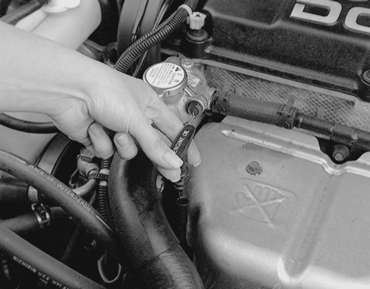
    Fig. 1: To check the engine oil level, pull the dipstick out of it's tube and wipe it clean with a lint free rag

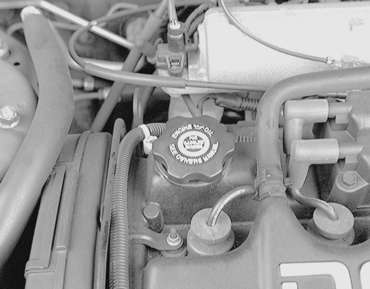
    Fig. 2: The engine oil fill cap is located on the camshaft cover, next to the ignition coil

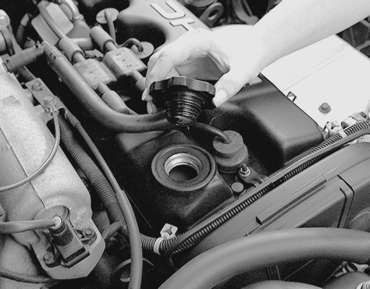
    Fig. 3: Remove the engine oil fill cap . . .

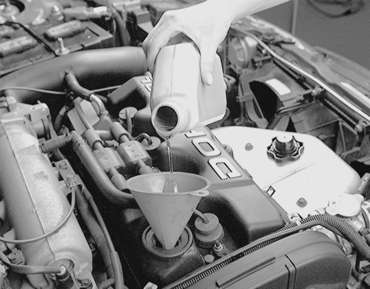
    Fig. 4: . . . then use a funnel to add the proper type and amount of engine oil

  5. Insert the dipstick and check the oil level again after adding any oil. Approximately one quart of oil will raise the level from the MIN mark to the MAX mark. Be sure not to overfill the crankcase and waste the oil. Excess oil will generally be consumed at an accelerated rate.

    WARNING
    DO NOT overfill the crankcase. It may result in oil-fouled spark plugs, oil leaks caused by oil seal failure or engine damage due to oil foaming.
Previous Next