All vehicles except those equipped with DOHC engines have been designed to run on unleaded fuel having a minimum octane rating of 87 or 91 RON (Research Octane Number).
Vehicles equipped with DOHC engines have been designed to run on unleaded fuel having a minimum octane rating of 91 or 95 RON (Research Octane Number).
The use of a fuel too low in octane (a measurement of anti-knock quality) will result in spark knock. Since many factors such as altitude, terrain, air temperature and humidity affect the operating efficiency, knocking may result even though the recommended fuel is being used. If persistent knocking occurs, it may be necessary to switch to a higher grade of fuel. Continuous or heavy knocking may result in engine damage and should be diagnosed, if continued.
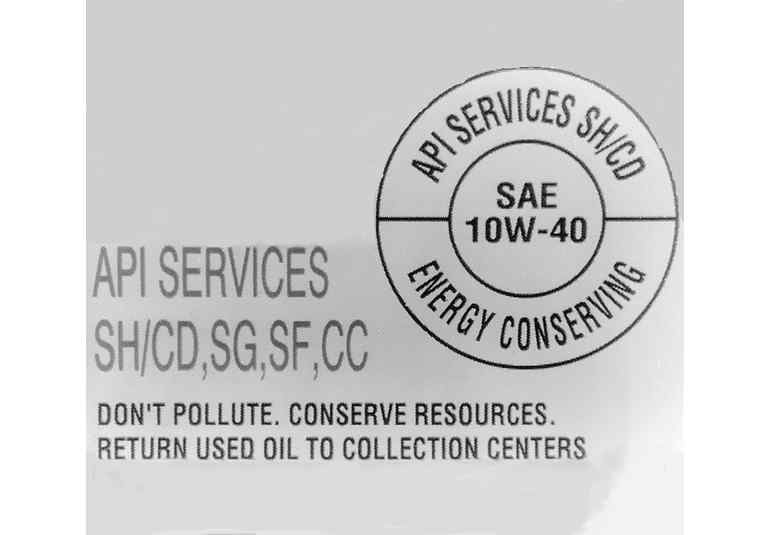
| Fig. 1: Look for the API oil identification label when
choosing your engine oil
|
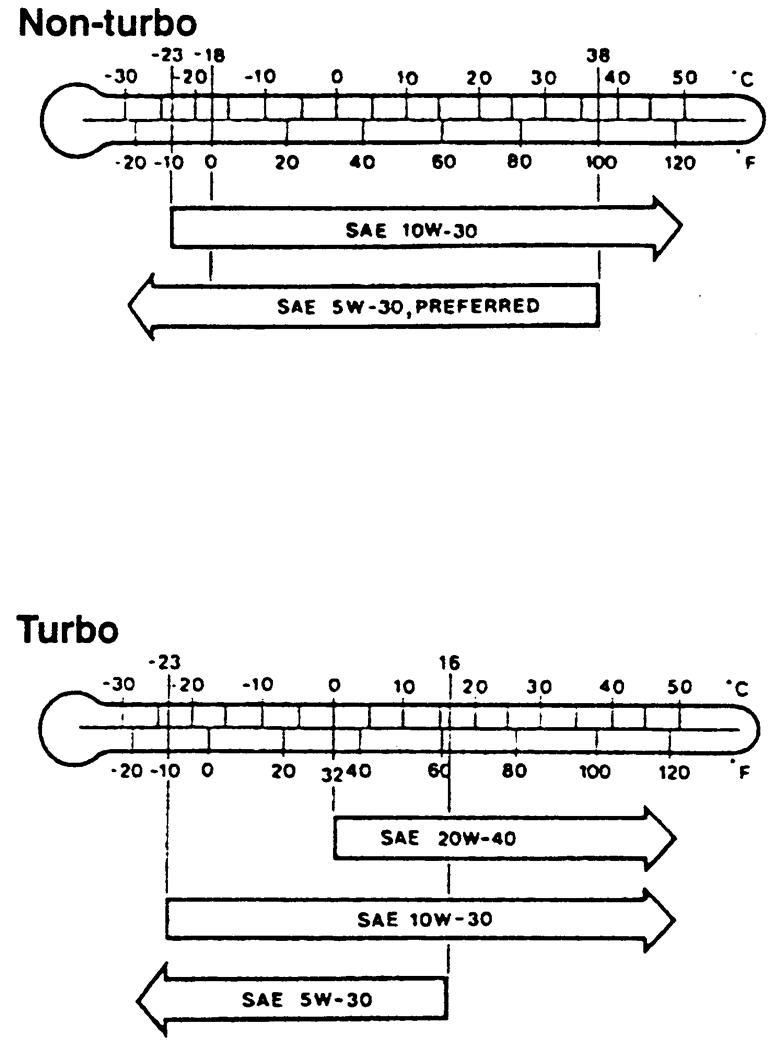
Engine oil should be used which conforms to the requirements of the API classification "For Service SJ'' or "For Service SJ/CD", and have the proper SAE grade number for the expected temperature range of vehicle operation.
| Fig. 2: Recommended SAE oil viscosity grades for gasoline
engines
|
CAUTION
Non-detergent or straight mineral oil must never be used.
In order to improve fuel economy and conserve energy new, lower friction engine oils have been developed. These oils are readily available and can be identified by such labels as "Energy Conserving", "Energy Saving", "Improved Economy", etc.
A standard symbol appears on the top of oil containers and has 3 distinct areas for identifying various aspects of the oil. The top portion will indicate quality of the oil. The center portion will show SAE viscosity grade, such as SAE 10W-30. "Energy Conserving'' shown in the lower portion, indicates that the oil has fuel-saving capabilities.