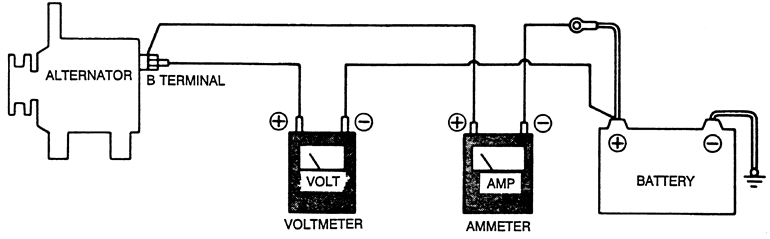
This test will determine whether or not the wiring (including the fusible link)
between the alternator B terminal and the battery positive
terminal is sound by voltage drop method. A clamp type ammeter that can measure
current without disconnecting the harness is preferred for this test.
- Turn the ignition OFF.
| Fig. 1: Schematic of the alternator output wire voltage
drop test
|
- Disconnect the battery ground cable.
- Disconnect the alternator output lead from the alternator B terminal.
- Connect the positive lead of an ammeter to the B terminal
and the negative lead to the disconnected output wire.
- Connect a digital voltmeter between the alternator B terminal
and the battery positive terminal. Connect the positive lead wire of the voltmeter
to the B terminal and the negative lead wire to the battery
positive terminal.
- Connect the battery ground cable.
- Leave the hood to the engine compartment open.
- Start the engine.
- Turn the headlamps and small lamps ON and adjust the engine
speed so that the ammeter reads 20A. Note the voltmeter indication under this
condition.
- It is OK if the voltmeter reads the standard value of 0.2V max.
- If the voltmeter indicates a value larger than the standard value, poor
wiring is suspected, in which case check the wiring from the alternator B terminal
to the fuse link to battery positive terminal. Check for loose connection,
color change due to overheating hardness, etc. and correct before testing
again.
- Upon completion of the test, set the engine speed at idle.
- Turn the lights and the ignition switch OFF.
- Disconnect the battery ground cable.
- Disconnect the ammeter and the voltmeter that have been connected for the
purpose of the test.
- Connect the alternator output wire to the alternator B terminal.
- Connect the battery ground cable.
This test is designed to judge whether or not the alternator gives an output
current that is equivalent to the nominal output.
- Check the battery that installed in the vehicle, making sure it is in good
sound state. Test the battery as required to assure this. The battery used
to check output current should be one that has been rather discharged. With
a fully discharged battery, the test may not be conducted correctly due to
an insufficient load.
- Check the alternator drive belt for proper tension, as outlined in Section
1.
- Make sure the ignition switch is turned OFF. Disconnect the
battery ground cable.
- Disconnect the alternator output lead from the alternator B terminal.
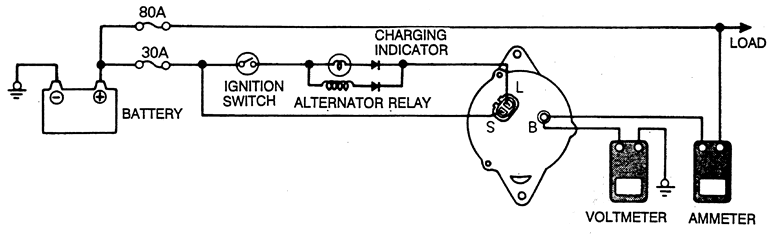
- Connect the positive lead of an ammeter to the B terminal
and the negative lead to the disconnected output wire.
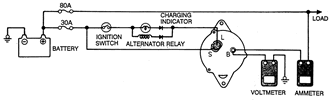
| Fig. 2: Test the alternator output current as shown
|
NOTE: Tighten each connection by bolt and nuts securely
as a heavy current will flow through the wire. Do not rely on clips.
- Connect a voltmeter between the B terminal and ground.
Connect the positive lead wire to the alternator B terminal
and the negative lead wire to a sound ground.
- Connect the battery ground cable.
- Leave the hood open.
- Check to see that the voltmeter reads the same value as the battery voltage.
If the voltmeter reads 0 volts, an open circuit in the wire between the alternator B terminal
and the battery negative terminal, a blown fuse link, or poor grounding is
suspected.
- Turn the headlight switch on and start the engine.
- Set the headlights at high beam and the heater blower switch at high, quickly
increase the engine speed to 2,500 rpm and read the maximum output current
value indicated by the ammeter.
NOTE: After engine start up, the charging current drops
quickly, therefore, above operation must be done quickly to read the maximum
current value correctly.
- The ammeter reading must be higher than the limit value. If it is lower
than the limit value but the alternator output wire is normal, remove the
alternator from the vehicle and check it further. The limit values are as
follows:
- 65A alternator — 45.5A minimum
- 75A alternator — 52.5A minimum
NOTE: The nominal output current value is shown on the
nameplate affixed to the alternator body. The output current value changes
with the electrical load and the temperature of the alternator itself. Therefore,
the nominal output current may not be obtained if the vehicle electrical
load at the time of the test is small. In such case, keep the headlights
on to cause discharge of the battery to increase the electrical load. The
nominal output current may not be obtained if the temperature of the alternator
itself or ambient temperature is too high.
- Upon completion of the test, lower the engine speed to idle and turn the
ignition switch OFF.
- Disconnect the battery ground cable.
- Disconnect and remove the engine tachometer, voltmeter and ammeter connected
for the purpose of this test.
- Connect the alternator output wire.
- Connect the battery ground cable.
The purpose of this test is to determine that the electronic voltage regulator
controls the voltage correctly.
- Check the battery that installed in the vehicle, making sure it is in good
sound state. Test the battery as required to assure this. The battery must
be fully charged.
- Check the alternator drive belt for proper tension as outlined in Section
1.
- Make sure the ignition switch is turned OFF. Disconnect the
battery ground cable.
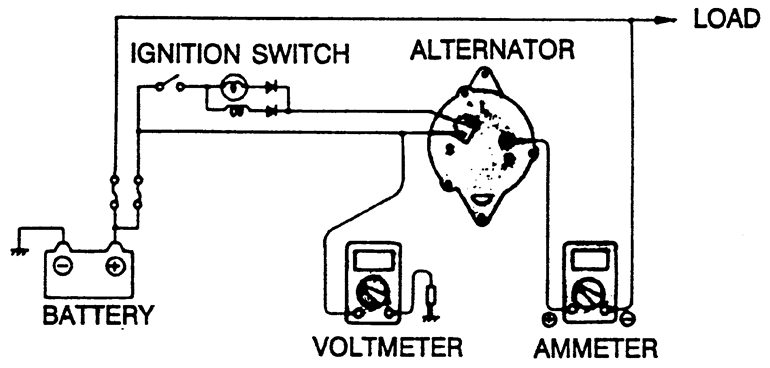
- Connect a digital voltmeter between the S terminal of the
alternator and the alternator. inserting from the wire side of the 2-way connector.
Connect the negative test lead to a sound ground or negative battery terminal.
- Disconnect the alternator output lead from the alternator B terminal.
- Connect the positive lead of an ammeter to the B terminal
and the negative lead to the disconnected output wire.
- Connect the battery ground cable.
- Leave the hood open.
- Turn the ignition switch ON. Check to see that the voltmeter
reads the same value as the battery voltage. If the voltmeter reads 0 volts,
an open circuit in the wire between the alternator S terminal
and the battery positive terminal or the fuse link is blown.
- Start the engine and keep all lights and accessories off.
- Run the engine at 2,500 rpm and read the voltmeter when the alternator output
current drops to 10A or less.
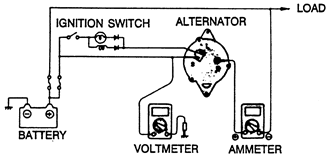
| Fig. 3: Regulated voltage test component positioning
|
- If the voltmeter readings agree with the desired readings listed below,
the voltage regulator is functioning properly. If the measured reading disagrees
with the desired value, the voltage regulator or the alternator is faulty.
The desired voltages are as follows:
- Voltage regulator ambient temperature at 68°F (20°C) — 13.9–14.9
volts
- Voltage regulator ambient temperature at 140°F (68°C) — 13.4–14.6
volts
- Voltage regulator ambient temperature at 176°F (80°C) — 13.1–14.5
volts
- Upon completion of test, set the engine speed at idle and turn the ignition
switch OFF.
- Disconnect the negative battery terminal.
- Disconnect all test meters installed for this test procedure.
- Connect the alternator output wire to the alternator B terminal.
- Connect the negative battery terminal.