Previous Next

Oil Pressure Switch

TESTING

Gauge Check
  1. Disconnect the oil pressure gauge unit electrical connector.
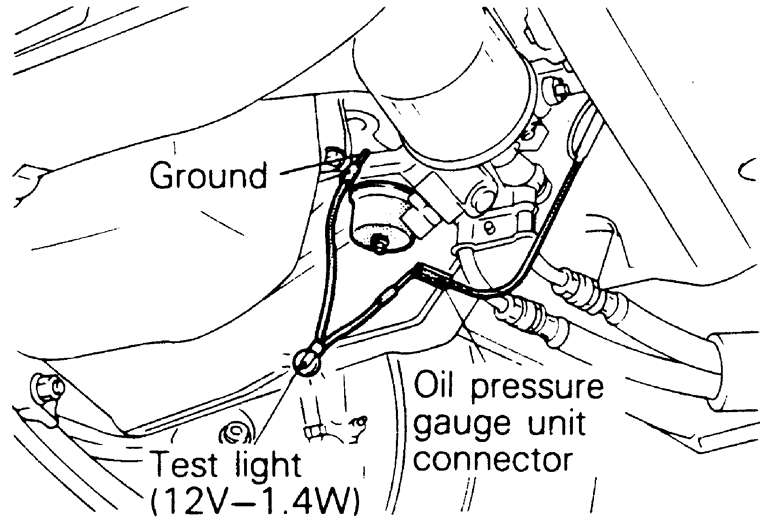
  2. Use a suitable test light (12V–3.4W) to ground the harness side connector.
  3. Turn the ignition to the ON position.
  4. Check the condition of the test light and gauge as follows:

    Fig. 1: Location of the oil pressure gauge unit connector — 1990–94 vehicles shown, others similar

    1. If all components are operating properly, the test light will flash or light steadily and the oil pressure gauge needle will move.
    2. If the test light flashes or lights steadily and but the gauge does not move, the gauge must be replaced.
    3. If neither the test light or the gauge operated, check the oil pressure gauge circuit and replace, if necessary.
Sender Check
  1. Remove the electrical harness connector from the switch and remove the switch from the oil filter head.
  2. Connect an ohmmeter between the terminal and the sensor body cavity and check for conductivity. If there is no conductivity, replace the switch.
  3. Next, insert a very thin wedge through the oil hole in the end of the sensor. Push the wedge in slightly and measure resistance. There should be no conductivity.
  4. If there is conductivity, even when wedge is pushed, replace the switch.
  5. If there is no conductivity when a 71 psi pressure is placed through the oil hole, the switch is operating properly.
  6. Check to see that there is no air pressure leakage through the switch. If there is air pressure leakage, the diaphragm is broken and the switch will require replacement.

Previous Next