Engine size, transaxle type, whether the joint is an inboard or outboard joint,
even which side of the vehicle is being serviced could make a difference in
joint type. Be sure to properly identify the joint before attempting joint or
boot replacement. Look for identification numbers at the large end of the boots
and/or on the end of the metal retainer bands.
The 2 types of joints used are the Birfield Joint, (B.J.) and the Tripod Joint
(T.J.). Special grease and clamps are used with these joints and is normally
supplied with the replacement joint and/or boot kit. Do not use regular chassis
grease.
NOTE: If the vehicle is going to be rolled while the halfshafts
are out of the vehicle, obtain 2 outer CV-joints or proper equivalent tools
and install to the hubs. If the vehicle is rolled without the proper torque
applied to the front wheel bearings, the bearings will no longer be usable.
- Disconnect the negative battery cable.
- Raise and safely support the vehicle. Remove the wheel and tire assemblies.
- Remove the cotter pin, halfshaft nut and washer. Discard the cotter pin.
- Raise the vehicle and support safely. If removing the right halfshaft, remove
the retainer bolt and the speedometer drive from the right extension housing.
- Remove the lower ball joint and the tie rod end from the steering knuckle.
- On halfshafts with an inner shaft (AWD vehicles), remove the center support
bearing bracket bolts and washers. Now remove the halfshaft by setting up
a puller on the outside wheel hub and pushing the halfshaft from the front
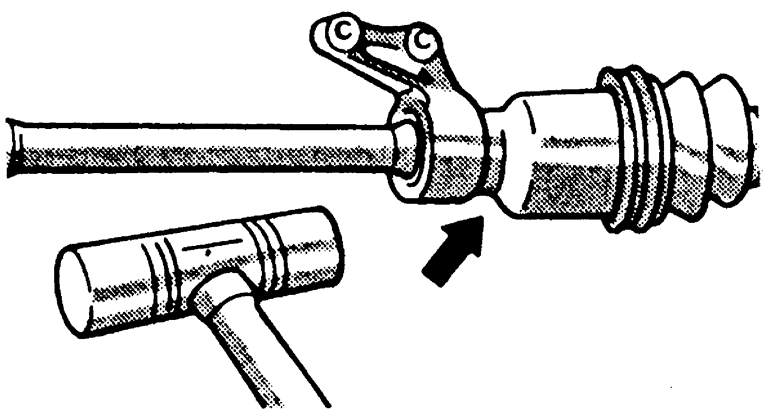
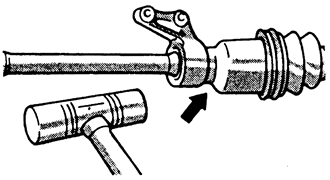
hub. Tap the shaft union at the joint case with a plastic hammer to remove
the halfshaft and inner shaft from the transaxle.
- On one piece halfshafts (FWD vehicles), remove the halfshaft from the hub/knuckle
by setting up a puller on the outside wheel hub and pushing the halfshaft
from the front hub. After pressing the outer shaft, insert a prybar between
the transaxle case and the halfshaft and pry the shaft from the transaxle.
WARNING
Do not pull on the shaft; doing so damages the inboard joint. Do not insert
the prybar too far or the oil seal in the case may be damaged.
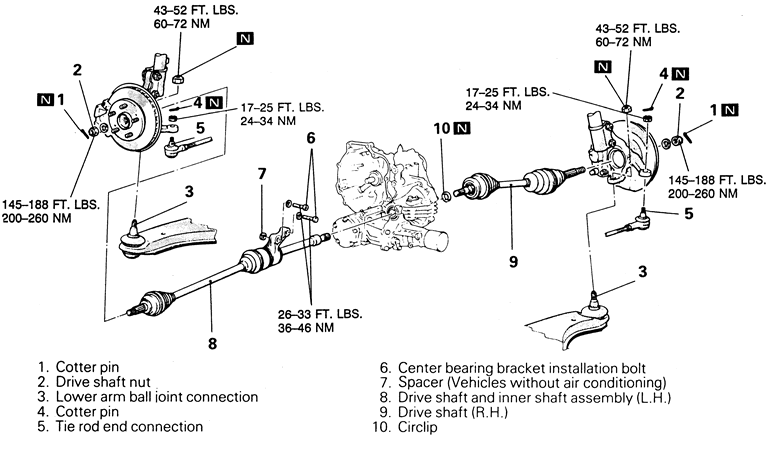
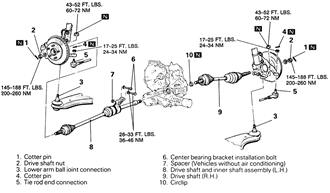
| Fig. 1: Exploded view of the front halfshaft assemblies — 1990–94
AWD vehicles shown, FWD similar
|
| Fig. 2: Remove the halfshaft from the transaxle assembly
by tapping the T.J. case with a plastic hammer — AWD
vehicle shown
|
To install:
- Inspect the halfshaft boot for damage or deterioration. Check the ball joints
and splines for wear.
- Replace the circlips on the ends of the halfshafts.
- Insert the halfshaft into the transaxle. Make sure it is fully seated.
- Pull the strut assembly outward and install the other end of the halfshaft
into the hub.
- Install the center bearing bracket bolts and tighten to 33 ft. lbs. (45
Nm), if equipped.
- Install the washer so the chamfered edge faces outward. Install the halfshaft
nut and tighten temporarily.
- Install the tie rod end and ball joint to the steering knuckle.
- Install the wheel and lower the vehicle to the floor. Tighten the axle nut
with the brakes applied. Tighten the nut to 145–188 ft. lbs. (200–260
Nm).
- Install a new cotter pin and bend to secure.
- Raise and safely support the vehicle.
- Remove the wheel and tire assemblies.
- Remove and discard the cotter pin, then remove the driveshaft nut.
- Separate the tie rod end from the steering knuckle.
- Detach the stabilizer link ball joint and damper fork connection.
- Remove the retainers, then remove the damper fork.
- Separate the lateral lower control arm ball joint from the steering knuckle.
- Disconnect the compression lower ball joint from the steering knuckle.
- For FWD vehicles, remove the halfshaft from the vehicle.
- For AWD vehicles, unfasten the halfshaft retaining bolt, then remove the
halfshaft and inner shaft (left side) or halfshaft (right side).
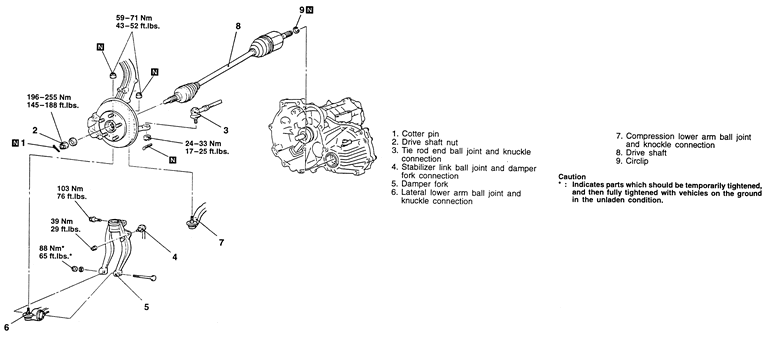
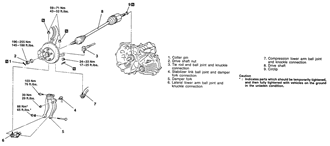
| Fig. 3: Exploded view of the driveshaft (halfshaft)
assembly — 1995–98 FWD vehicles
|
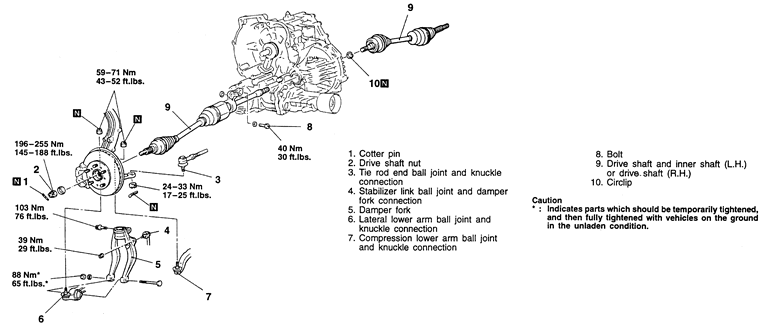
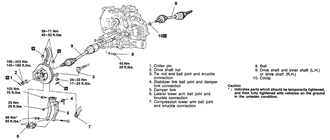
| Fig. 4: On AWD vehicles, the left side has a two-piece
halfshaft
|
- Remove the circlip from the end of the halfshaft.
To install:
- Install the circlip on the end of the halfshaft.
- Position the halfshaft assembly in the vehicle.
- For AWD vehicles, install the retaining bolt, and tighten to 30 ft. lbs.
(40 Nm).
- Install the compression lower ball joint and lateral lower ball joint into
the steering knuckle.
- Install the damper fork.
- Install the remaining components in the reverse order of removal. Tighten
the retainers to the specifications shown in the accompanying figures.