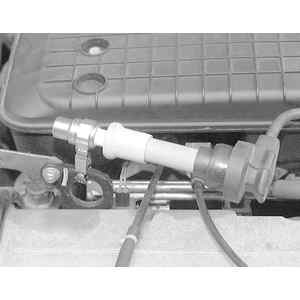
| Fig. 1: This spark tester looks just like a spark plug,
attach the clip to ground and crank the engine to check for spark
|
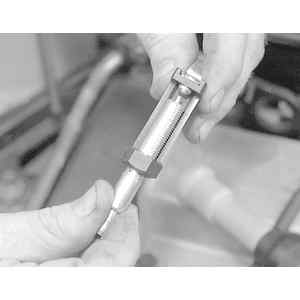
| Fig. 2: This spark tester has an adjustable air-gap for
measuring spark strength and testing different voltage ignition systems
|
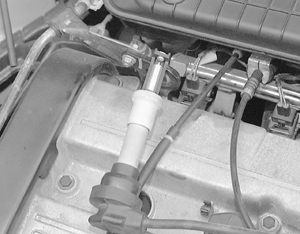
| Fig. 3: Attach the clip to ground and crank the engine
to check for spark
|
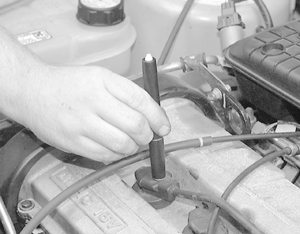
| Fig. 4: This spark tester is the easiest to use just
place it on a plug wire and the spark voltage is detected and the bulb
on the top will flash with each pulse
|
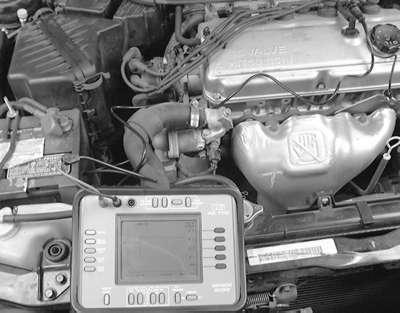
| Fig. 5: A tool used by many professionals to check the
secondary ignition pattern is an oscilloscope, similar to this one from
UEI
|
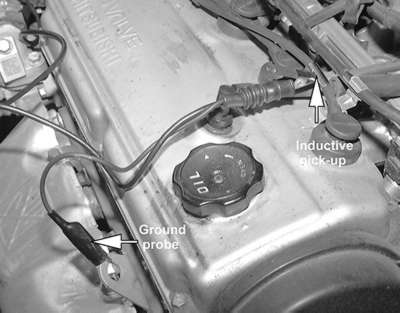
| Fig. 6: The setup of the oscilloscope is quite easy,
just connect the ground lead and place the inductive pick-up on one of
the plug wires
|
The best way to perform this procedure is to use a spark tester (available at most automotive parts stores). Three types of spark testers are commonly available. The Neon Bulb type is connected to the spark plug wire and flashes with each ignition pulse. The Air Gap type must be adjusted to the individual spark plug gap specified for the engine. The last type of spark plug tester looks like a spark plug with a grounding clip on the side, but there is no side electrode for the spark to jump to. The last two types of testers allows the user to not only detect the presence of spark, but also the intensity (orange/yellow is weak, blue is strong).