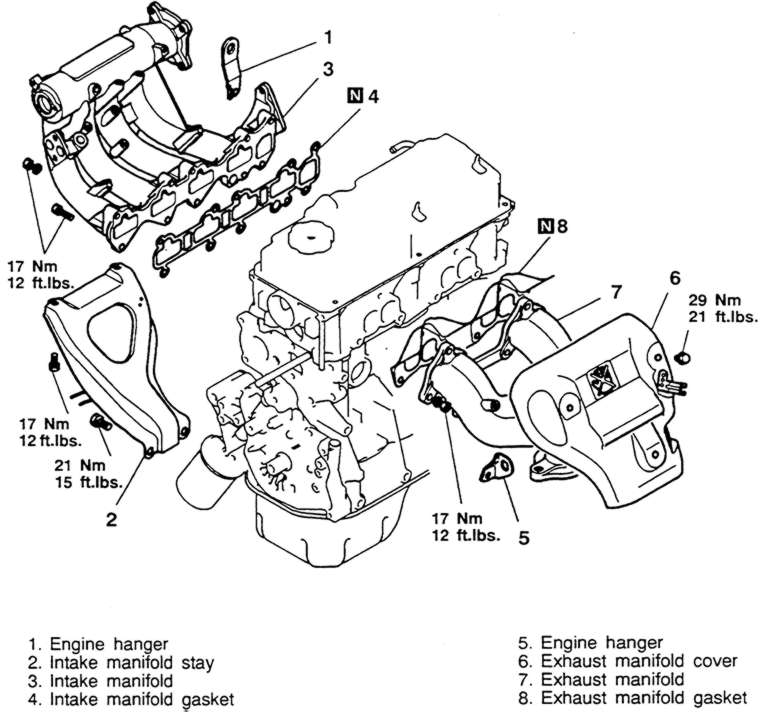
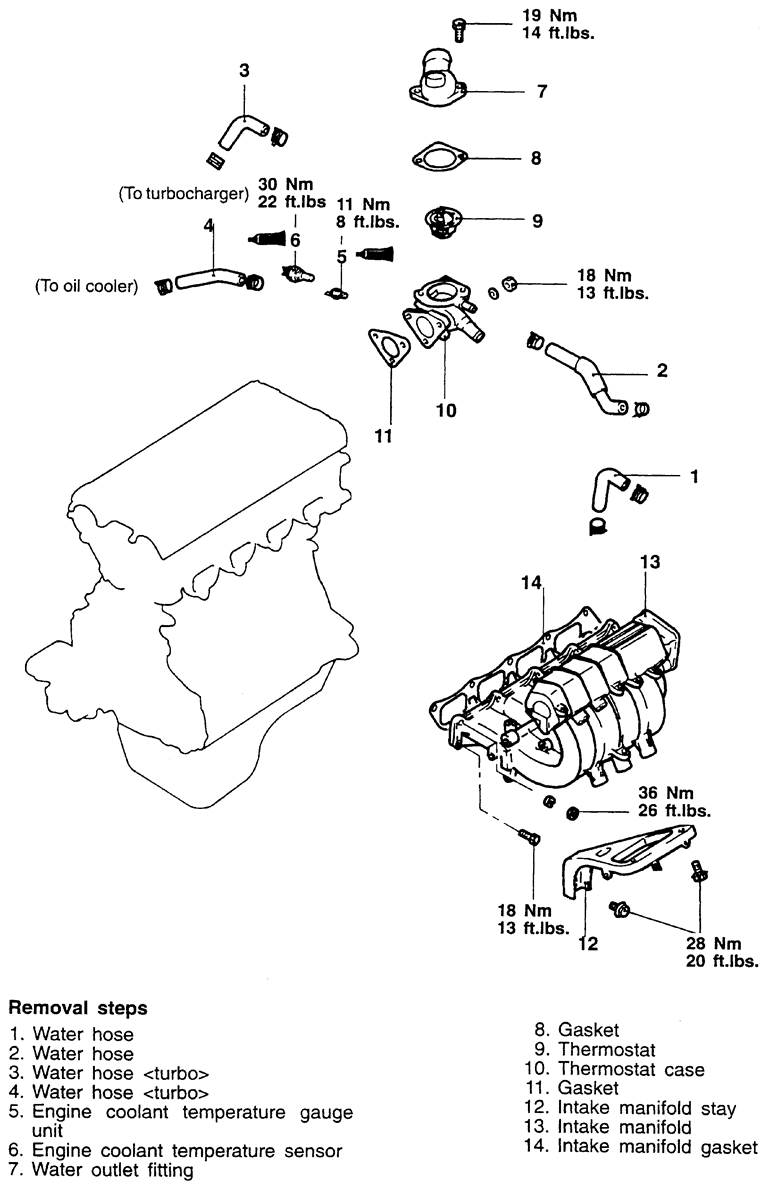
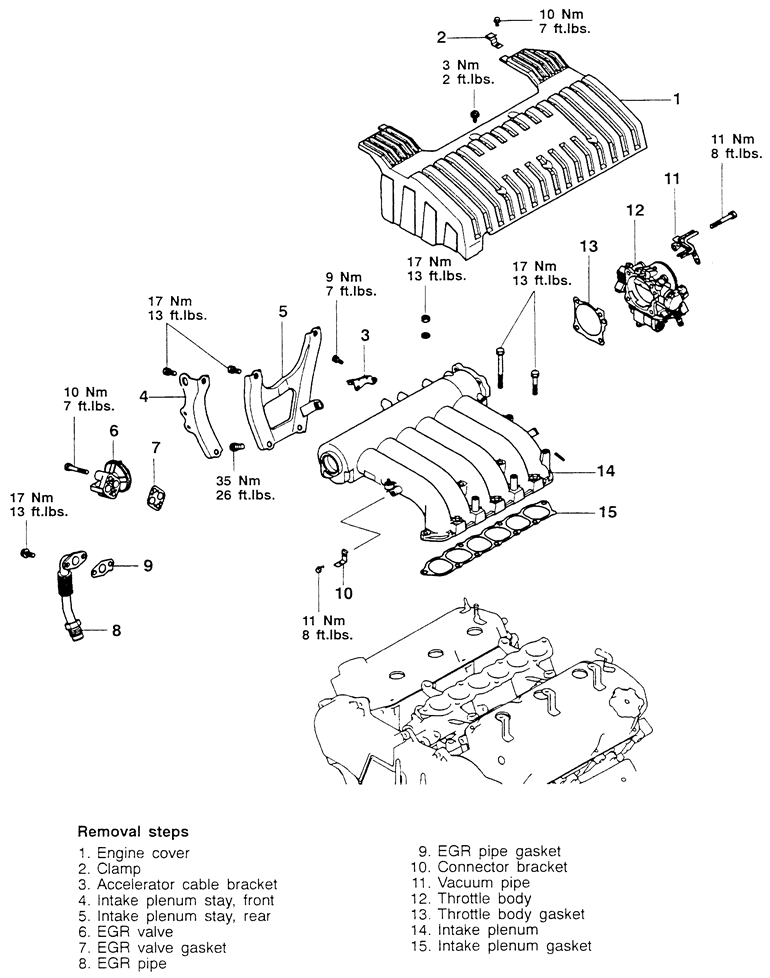
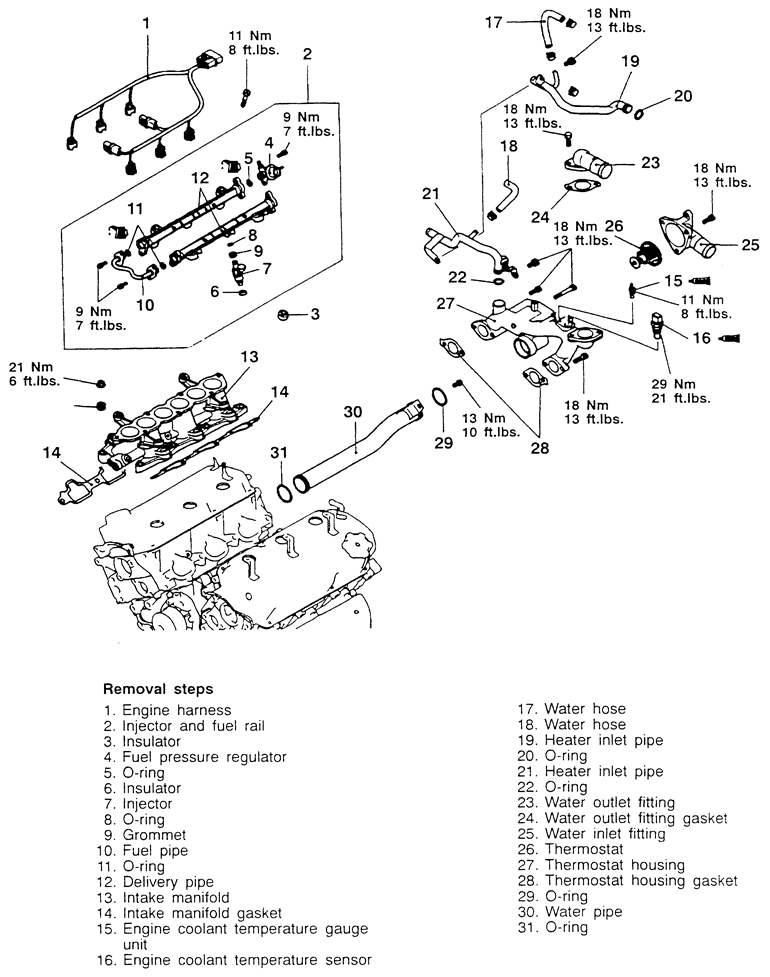
| Fig. 1: Exploded view of the intake and exhaust manifold
mounting — 1.5L (4G15) engine
|
CAUTION
Observe all applicable safety precautions when working around fuel. Whenever
servicing the fuel system, always work in a well ventilated area. Do not
allow fuel spray or vapors to come in contact with a spark or open flame.
Keep a dry chemical fire extinguisher near the work area. Always keep fuel
in a container specifically designed for fuel storage; also, always properly
seal fuel containers to avoid the possibility of fire or explosion.
CAUTION
Never open, service or drain the radiator or cooling system when hot; serious
burns can occur from the steam and hot coolant. Also, when draining engine
coolant, keep in mind that cats and dogs are attracted to ethylene glycol
antifreeze and could drink any that is left in an uncovered container or
in puddles on the ground. This will prove fatal in sufficient quantities.
Always drain coolant into a sealable container. Coolant should be reused
unless it is contaminated or is several years old.
To install:
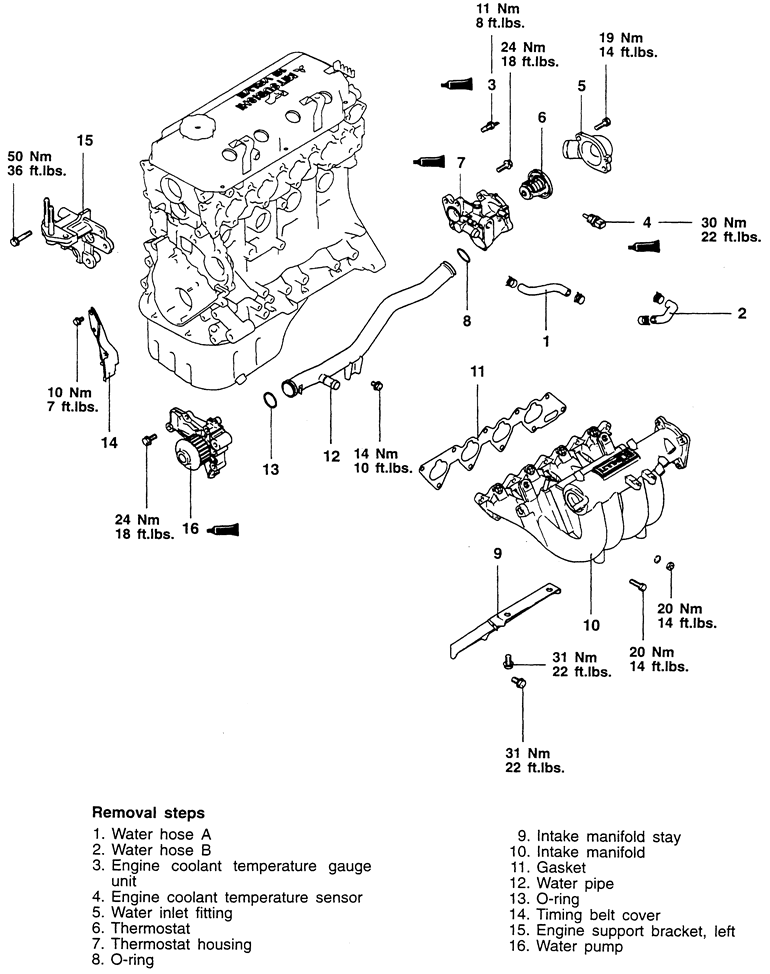
| Fig. 2: Exploded view of the intake manifold mounting — 1993
1.8L engine
|
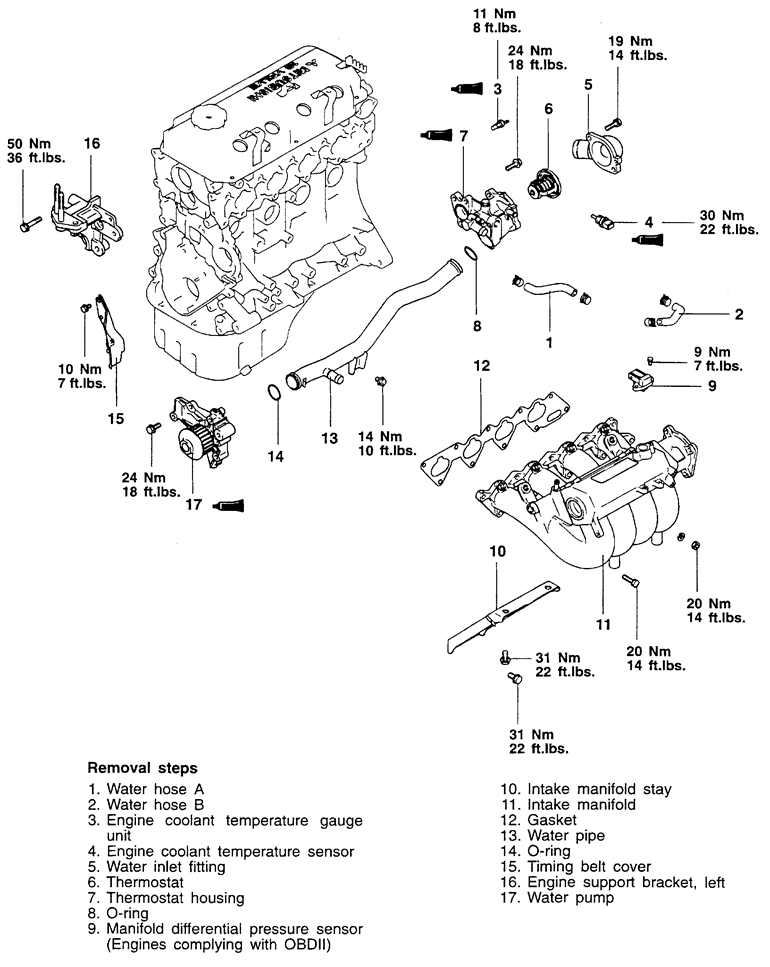
| Fig. 3: Exploded view of the intake manifold mounting — 1994–00
1.8L engine
|
CAUTION
Observe all applicable safety precautions when working around fuel. Whenever
servicing the fuel system, always work in a well ventilated area. Do not
allow fuel spray or vapors to come in contact with a spark or open flame.
Keep a dry chemical fire extinguisher near the work area. Always keep fuel
in a container specifically designed for fuel storage; also, always properly
seal fuel containers to avoid the possibility of fire or explosion.
CAUTION
Never open, service or drain the radiator or cooling system when hot; serious
burns can occur from the steam and hot coolant. Also, when draining engine
coolant, keep in mind that cats and dogs are attracted to ethylene glycol
antifreeze and could drink any that is left in an uncovered container or
in puddles on the ground. This will prove fatal in sufficient quantities.
Always drain coolant into a sealable container. Coolant should be reused
unless it is contaminated or is several years old.
To install:
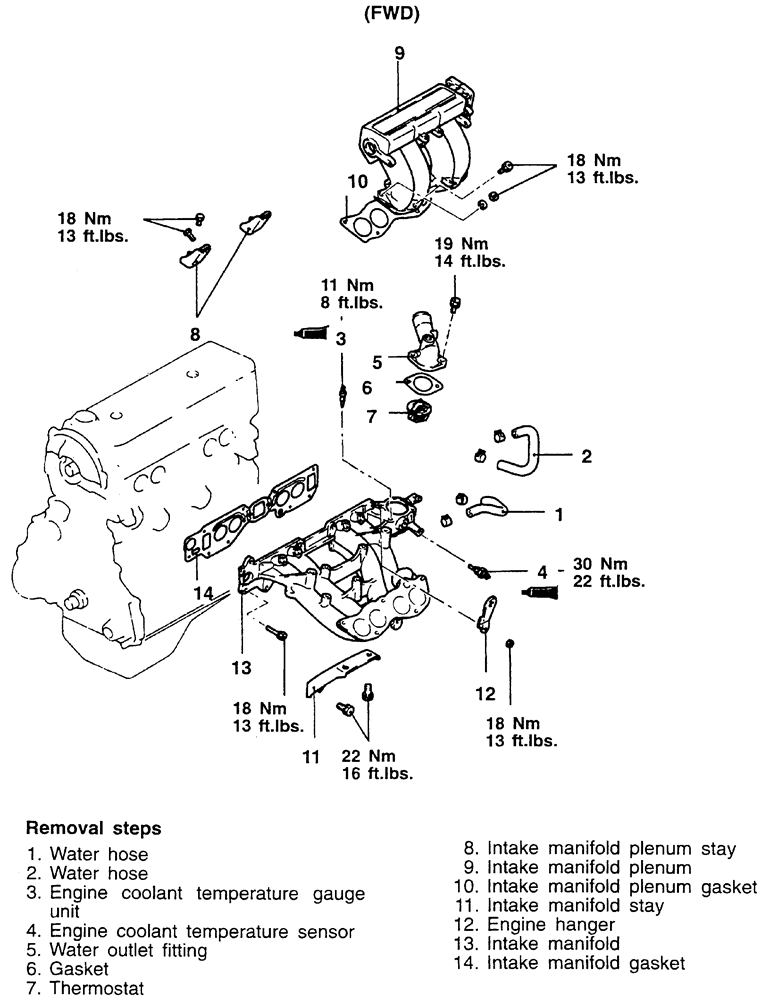
| Fig. 4: Exploded view of the intake manifold mounting — 2.0L
SOHC engine
|
CAUTION
Observe all applicable safety precautions when working around fuel. Whenever
servicing the fuel system, always work in a well ventilated area. Do not
allow fuel spray or vapors to come in contact with a spark or open flame.
Keep a dry chemical fire extinguisher near the work area. Always keep fuel
in a container specifically designed for fuel storage; also, always properly
seal fuel containers to avoid the possibility of fire or explosion.
CAUTION
Never open, service or drain the radiator or cooling system when hot; serious
burns can occur from the steam and hot coolant. Also, when draining engine
coolant, keep in mind that cats and dogs are attracted to ethylene glycol
antifreeze and could drink any that is left in an uncovered container or
in puddles on the ground. This will prove fatal in sufficient quantities.
Always drain coolant into a sealable container. Coolant should be reused
unless it is contaminated or is several years old.
To install:
| Fig. 5: Exploded view of the intake manifold and related
components — 1.6L and 2.0L DOHC engine
|
CAUTION
Observe all applicable safety precautions when working around fuel. Whenever
servicing the fuel system, always work in a well ventilated area. Do not
allow fuel spray or vapors to come in contact with a spark or open flame.
Keep a dry chemical fire extinguisher near the work area. Always keep fuel
in a container specifically designed for fuel storage; also, always properly
seal fuel containers to avoid the possibility of fire or explosion.
CAUTION
Never open, service or drain the radiator or cooling system when hot; serious
burns can occur from the steam and hot coolant. Also, when draining engine
coolant, keep in mind that cats and dogs are attracted to ethylene glycol
antifreeze and could drink any that is left in an uncovered container or
in puddles on the ground. This will prove fatal in sufficient quantities.
Always drain coolant into a sealable container. Coolant should be reused
unless it is contaminated or is several years old.
To install:
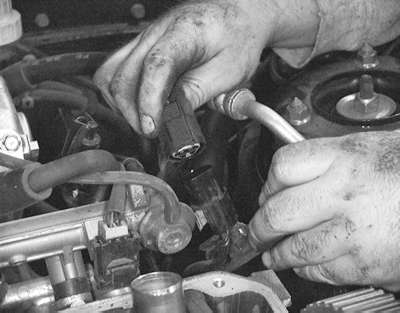
| Fig. 6: Detach the A/C temp electrical connector
|
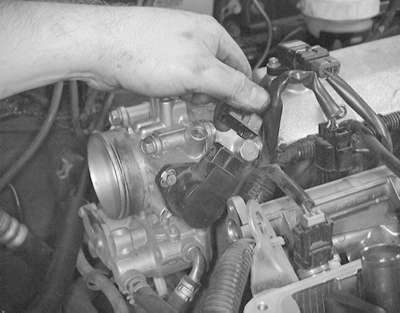
| Fig. 7: Unplug the connector from the Throttle Position
(TP) sensor
|
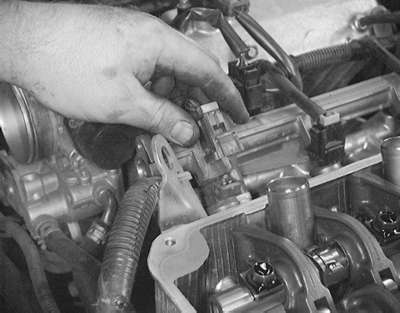
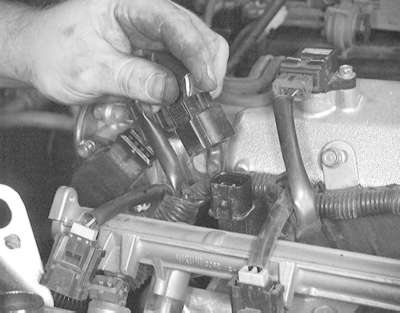
| Fig. 8: Detach the connectors from all of the fuel injectors
|
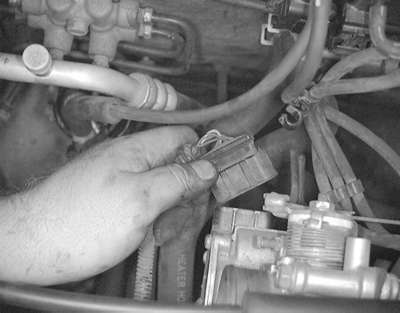
| Fig. 9: Unplug the main engine harness junction electrical
connector
|
| Fig. 10: Detach the Camshaft Position (CMP) sensor connector
|
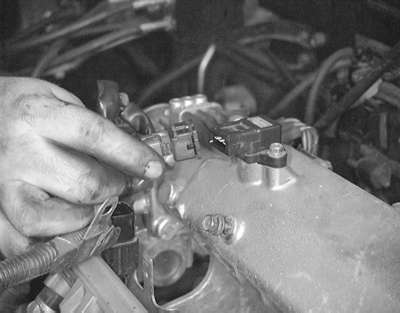
| Fig. 11: Unplug the connector from the Manifold Absolute
Pressure (MAP) sensor
|
| Fig. 12: Detach the connector for the Idle Air Control
(IAC) motor
|
| Fig. 13: Remove the engine harness retaining bracket
bolts, then move the harness out of the way
|
| Fig. 14: Remove the accelerator cable end from the throttle
lever
|
| Fig. 15: Remove the accelerator cable bracket retaining
bolts . . .
|
| Fig. 16: . . . then position the accelerator cable out
of the way
|
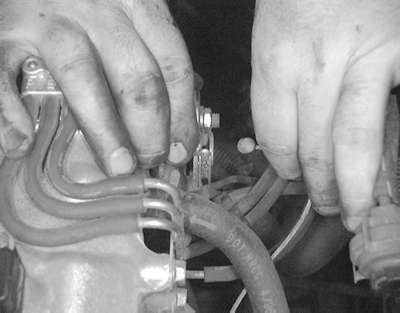
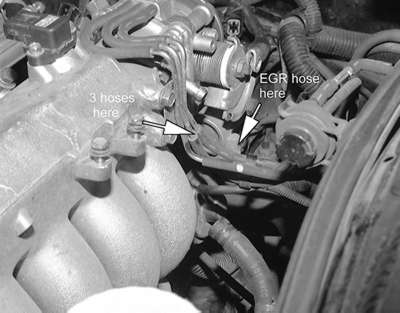
| Fig. 17: Disconnect the EGR hose and the three vacuum
hoses on the back of the intake manifold
|
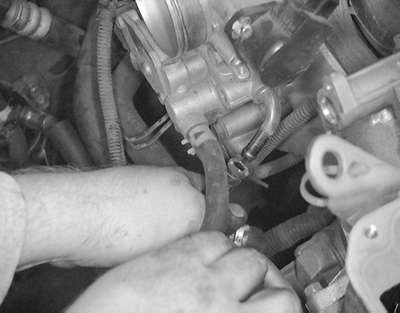
| Fig. 18: Remove the hose shown here from the throttle
body
|
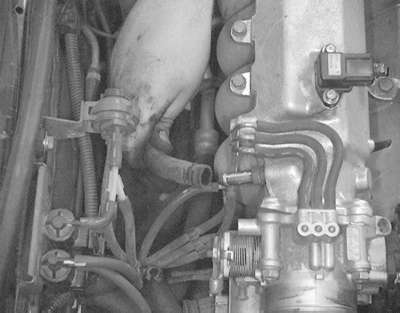
| Fig. 19: Remove the brake booster vacuum hose from the
back of the intake manifold
|
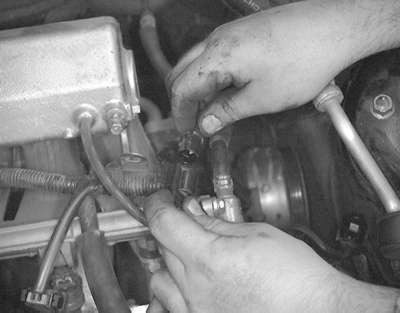
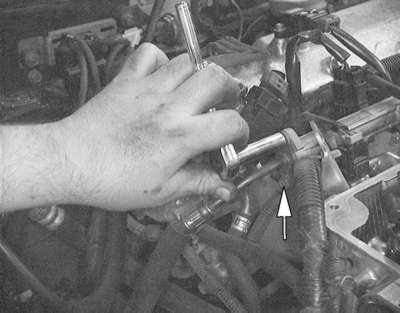
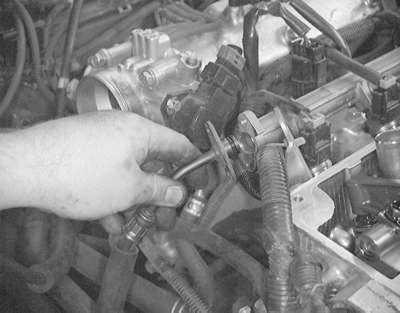
| Fig. 20: Remove the fuel feed line-to-fuel rail retaining
fitting bolts . . .
|
| Fig. 21: . . . then remove the fuel feed line from the
fuel injector rail
|
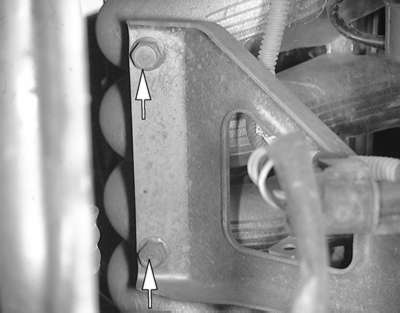
| Fig. 22: From underneath the vehicle, remove the two
intake manifold support bracket bolts
|
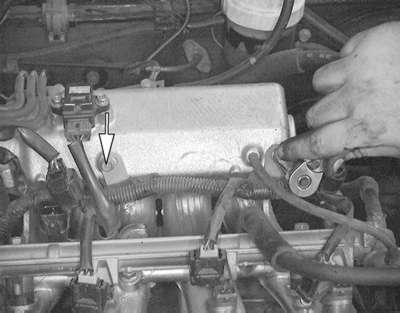
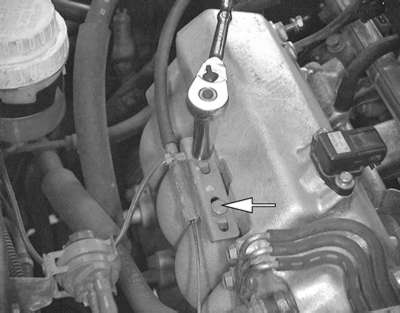
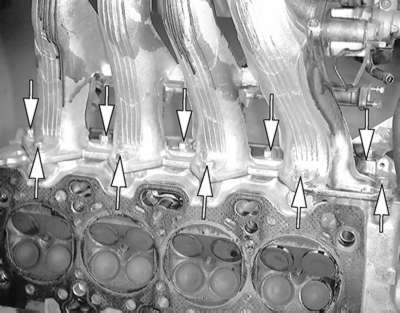
| Fig. 23: Remove the intake manifold retaining bolts .
. .
|
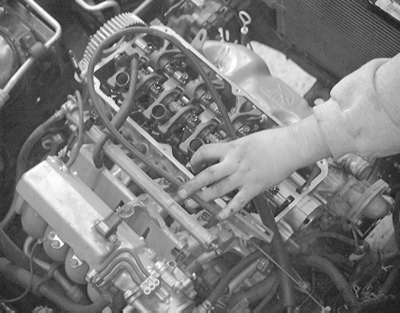
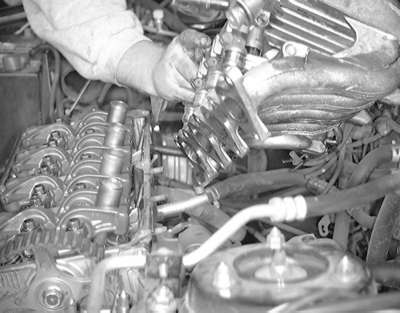
| Fig. 24: . . . then remove the manifold from the cylinder
head
|
CAUTION
Observe all applicable safety precautions when working around fuel. Whenever
servicing the fuel system, always work in a well ventilated area. Do not
allow fuel spray or vapors to come in contact with a spark or open flame.
Keep a dry chemical fire extinguisher near the work area. Always keep fuel
in a container specifically designed for fuel storage; also, always properly
seal fuel containers to avoid the possibility of fire or explosion.
CAUTION
Never open, service or drain the radiator or cooling system when hot; serious
burns can occur from the steam and hot coolant. Also, when draining engine
coolant, keep in mind that cats and dogs are attracted to ethylene glycol
antifreeze and could drink any that is left in an uncovered container or
in puddles on the ground. This will prove fatal in sufficient quantities.
Always drain coolant into a sealable container. Coolant should be reused
unless it is contaminated or is several years old.
CAUTION
Fuel injection systems remain under pressure after the engine has been turned
OFF. Properly relieve fuel pressure before disconnecting any fuel lines.
Failure to do so may result in fire or personal injury.
To install:
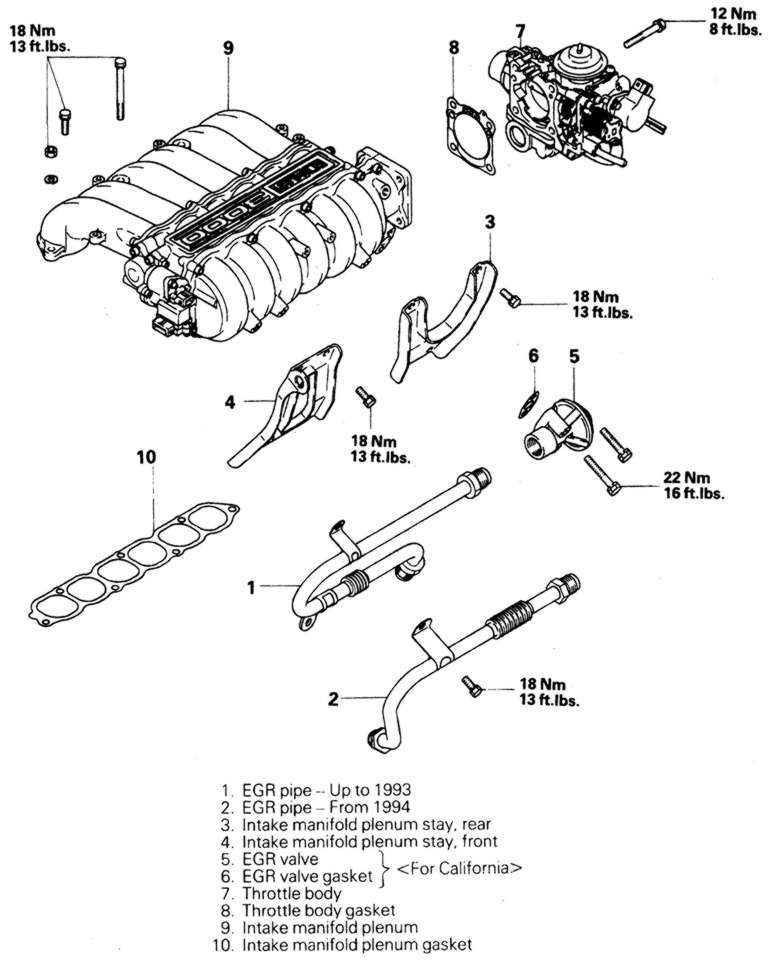
| Fig. 25: Exploded view of air intake plenum assembly — 3.0L
DOHC engine
|
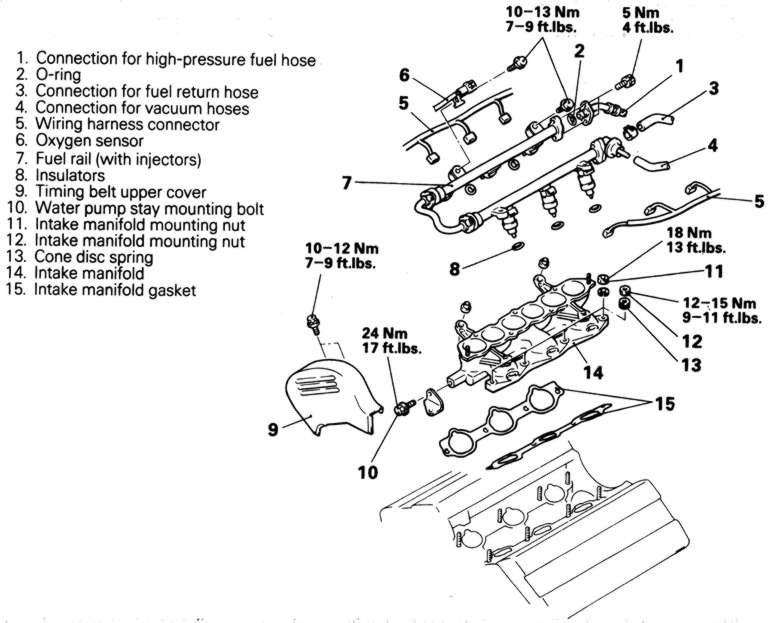
| Fig. 26: Intake manifold and related components — 3.0L
DOHC engine
|
| Fig. 27: Exploded view of air intake plenum assembly — 3.0L
SOHC engine
|
| Fig. 28: Exploded view of the intake manifold mounting — 3.0L
SOHC engine
|
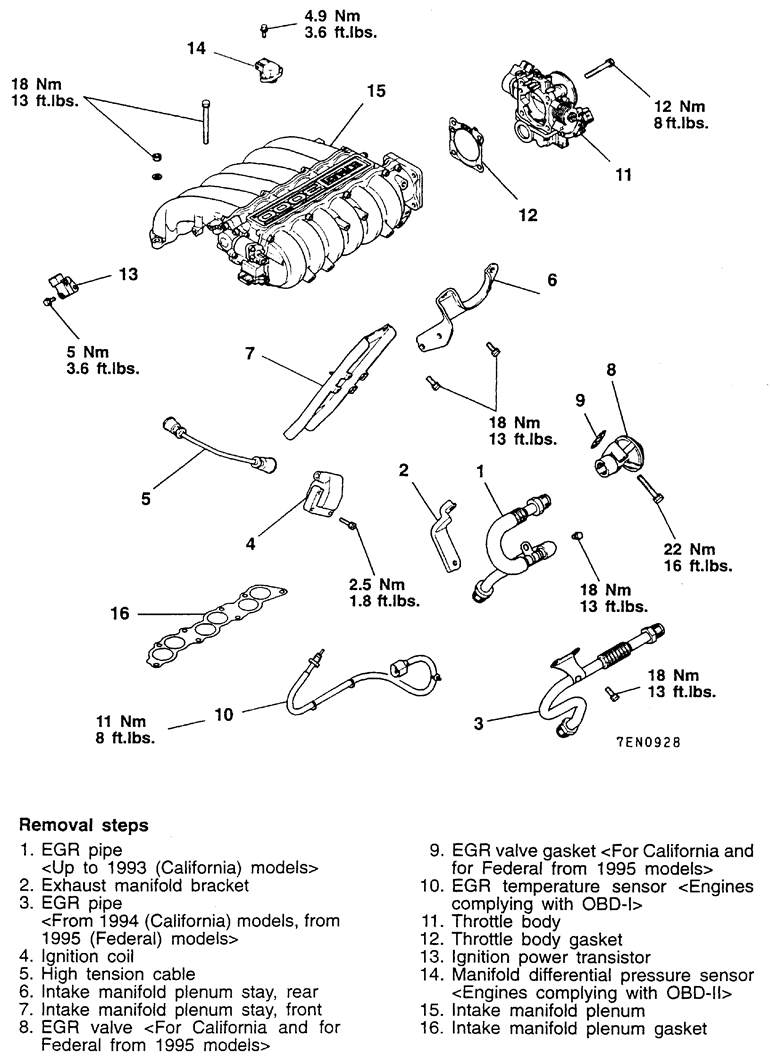
| Fig. 29: Exploded view of air intake plenum assembly — 3.5L
engine
|
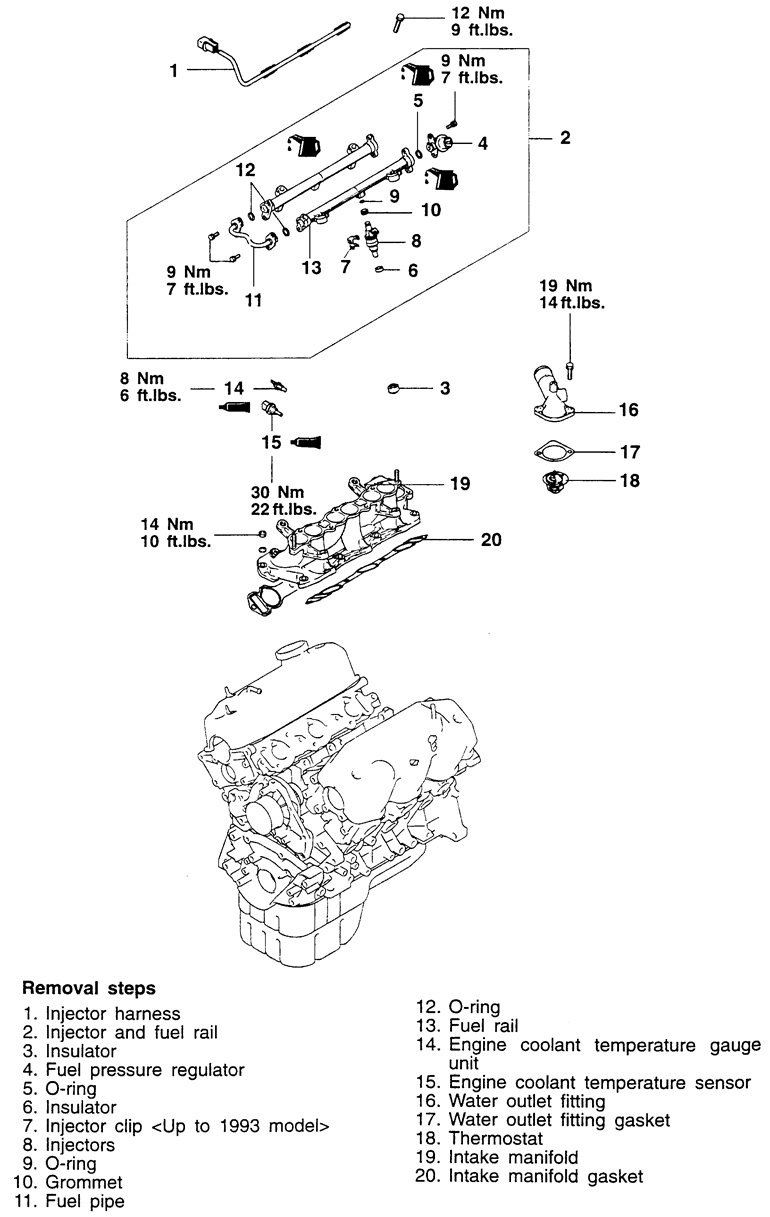
| Fig. 30: Exploded view of the intake manifold mounting — 3.5L
engine
|
CAUTION
Observe all applicable safety precautions when working around fuel. Whenever
servicing the fuel system, always work in a well ventilated area. Do not
allow fuel spray or vapors to come in contact with a spark or open flame.
Keep a dry chemical fire extinguisher near the work area. Always keep fuel
in a container specifically designed for fuel storage; also, always properly
seal fuel containers to avoid the possibility of fire or explosion.
CAUTION
Never open, service or drain the radiator or cooling system when hot; serious
burns can occur from the steam and hot coolant. Also, when draining engine
coolant, keep in mind that cats and dogs are attracted to ethylene glycol
antifreeze and could drink any that is left in an uncovered container or
in puddles on the ground. This will prove fatal in sufficient quantities.
Always drain coolant into a sealable container. Coolant should be reused
unless it is contaminated or is several years old.
NOTE: It is not necessary to remove the fuel injectors from the intake unless the manifold assembly is being replaced.
To install: