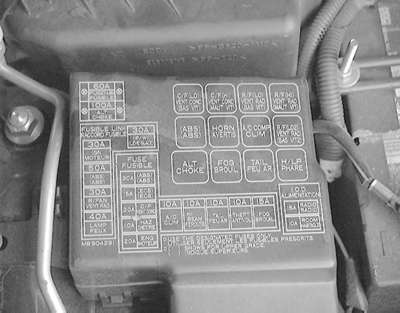
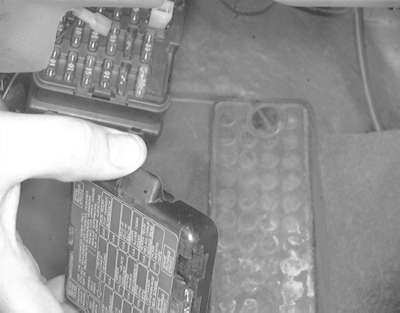
| Fig. 1: The engine compartment fuse box is typically
located adjacent to the battery
|
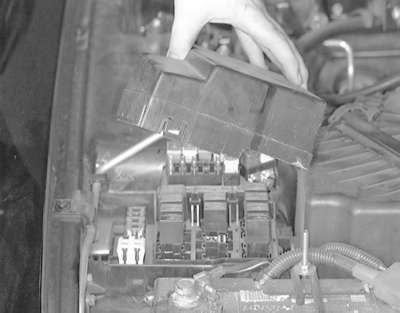
| Fig. 2: Grasp the engine compartment fuse box cover
and pull it straight up to remove it
|
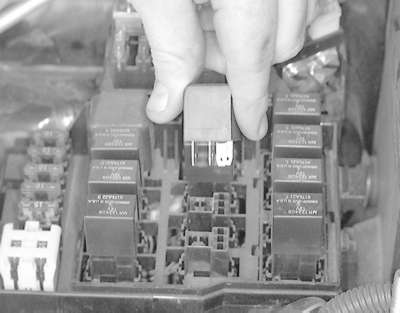
| Fig. 3: The engine compartment fuse box contains a
combination of fuses, maxi-fuses, relays, and diodes. Most can be removed
by simply pulling upward
|
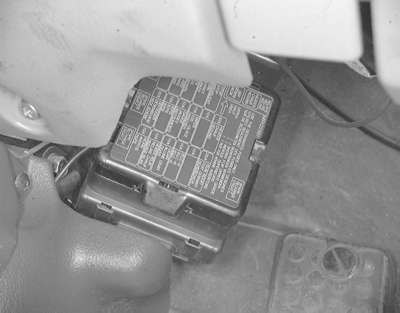
| Fig. 4: The interior fuse box is located under the
driver's side of the instrument panel
|
| Fig. 5: Grasp the interior fuse box cover, depress
the retaining tabs and lift up to remove
|
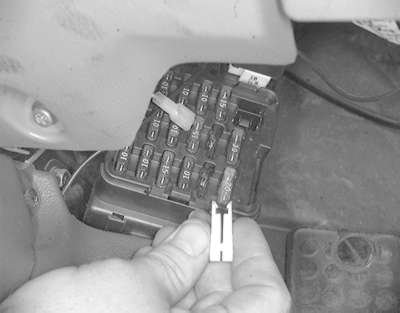
| Fig. 6: Typically a fuse removal tool is located in
the fuse box to aid in removing the fuses
|
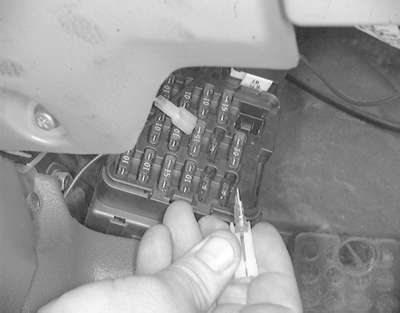
| Fig. 7: Grasp the fuse with the removal tool and pull
it straight out to remove it
|
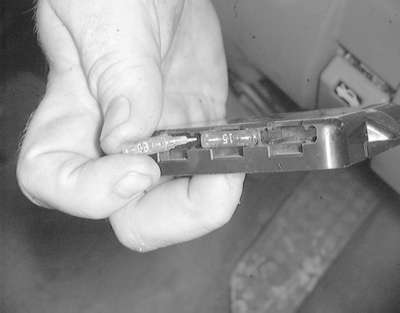
| Fig. 8: There are usually spare fuses located in the
interior fuse box cover
|
Fuses are located either in the engine compartment or passenger compartment fuse and relay panels. If a fuse blows, at least one, but possibly several components/circuits will not function properly.
WARNING
Never exceed the amperage rating of a blown fuse. If the replacement fuse
also blows, check for a problem in the circuit.