CAUTION
The clutch driven disc may contain asbestos, which has been determined to be
a cancer causing agent. Never clean clutch surfaces with compressed air! Avoid
inhaling any dust from any clutch surface! When cleaning clutch surfaces, use
a commercially available brake cleaning fluid.
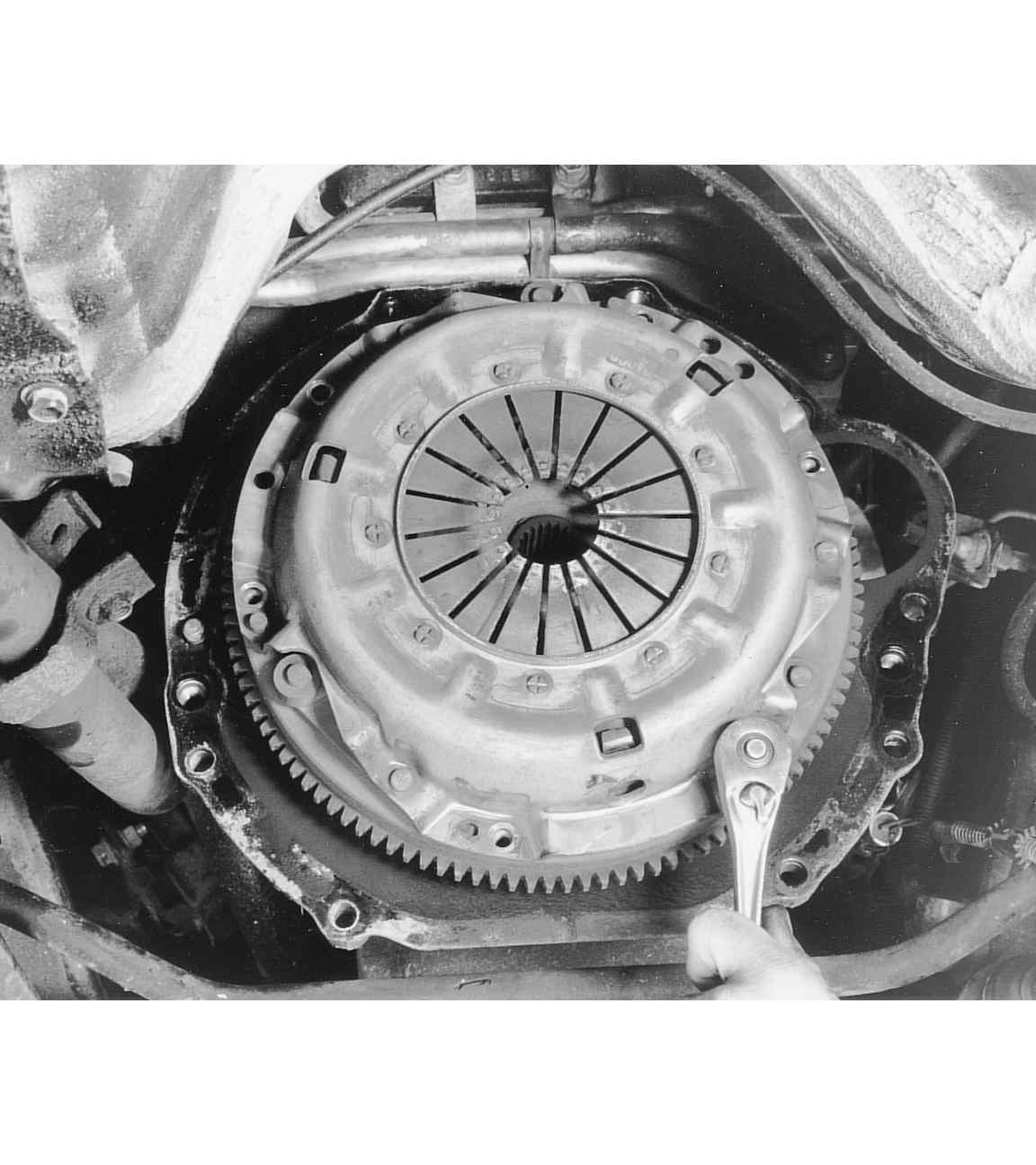
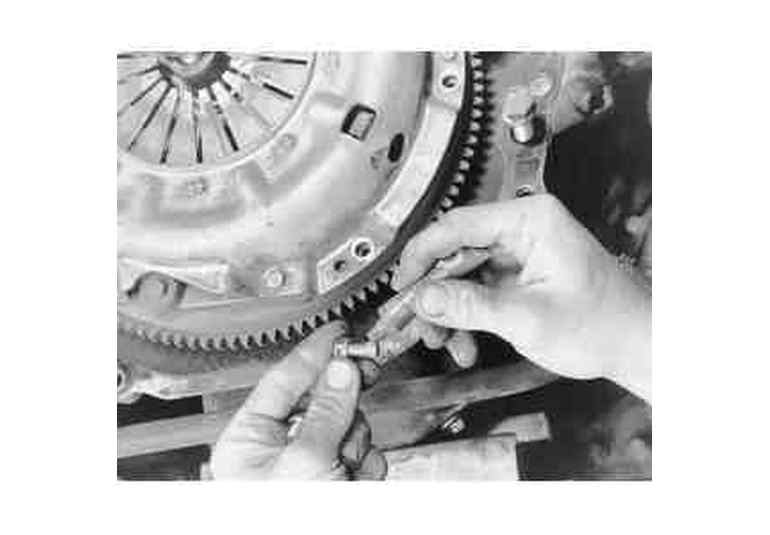
| Fig. 1: Loosen and remove the clutch and pressure plate
bolts evenly, a little at a time . . .
|
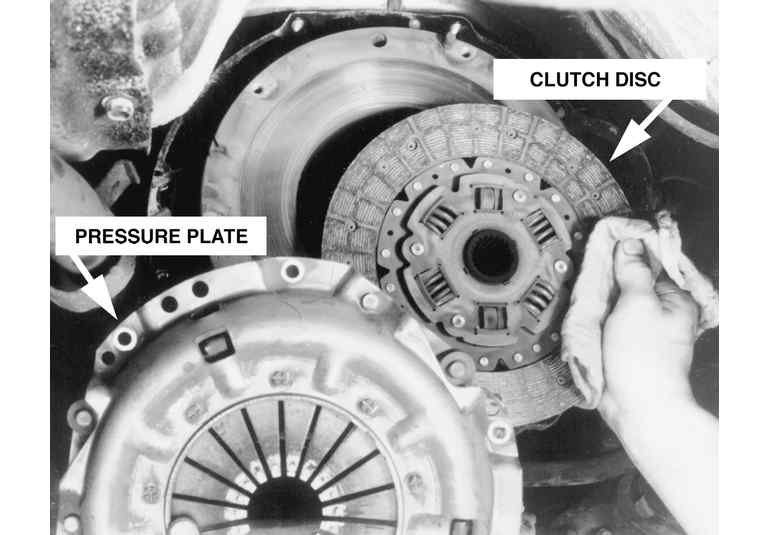
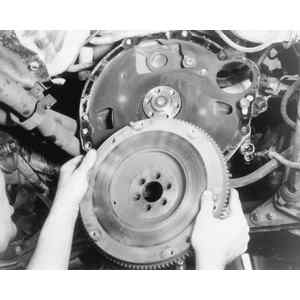
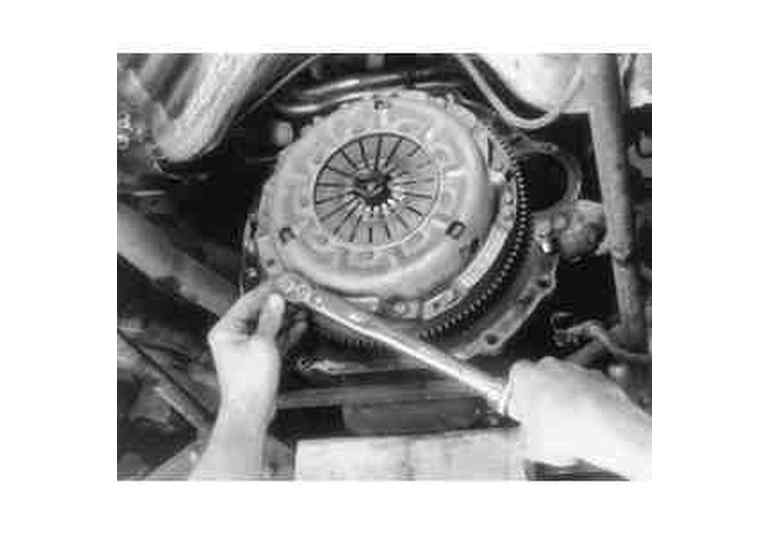
| Fig. 2: . . . then carefully removing the clutch and
pressure plate assembly from the flywheel
|
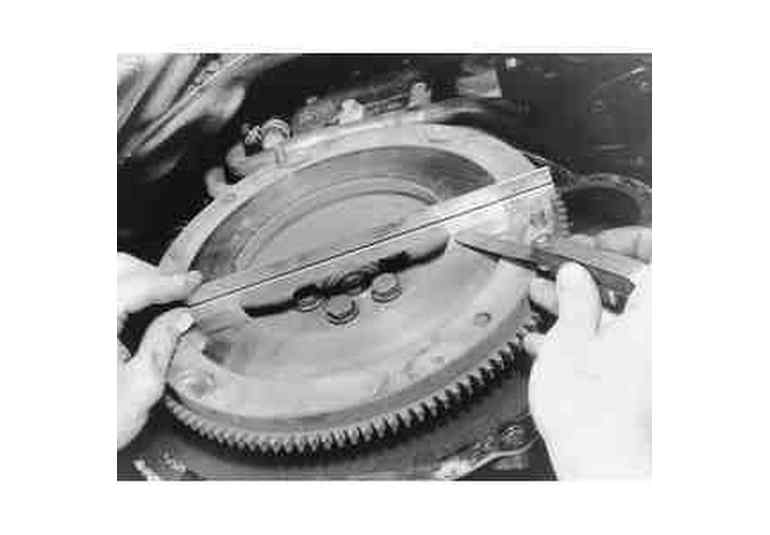
| Fig. 3: Check across the flywheel surface, it should
be flat
|
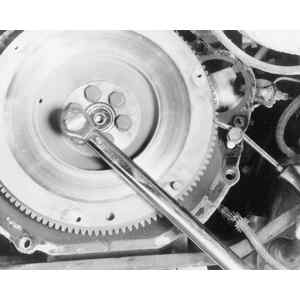
| Fig. 4: If necessary, lock the flywheel in place and
remove the retaining bolts . . .
|
| Fig. 5: . . . then remove the flywheel from the crankshaft
in order replace it or have it machined
|
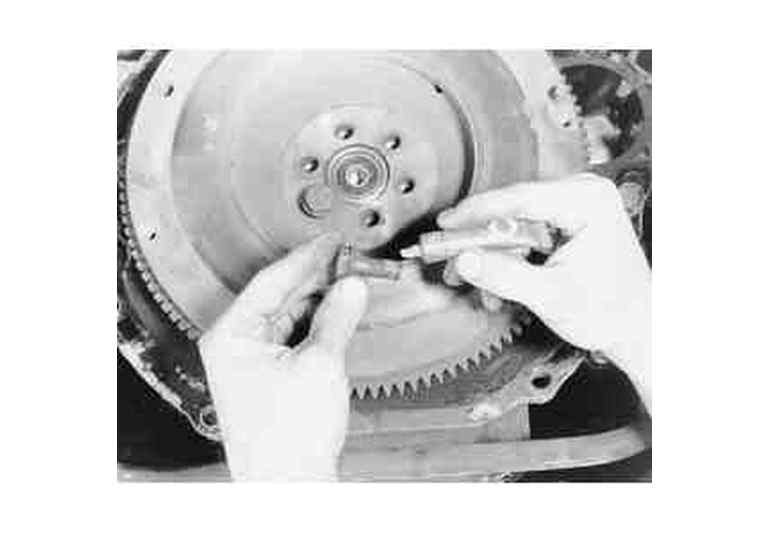
| Fig. 6: Upon installation, it is usually a good idea
to apply a threadlocking compound to the flywheel bolts
|
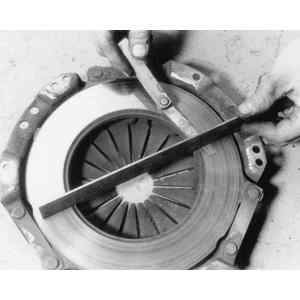
| Fig. 7: Check the pressure plate for excessive wear
|
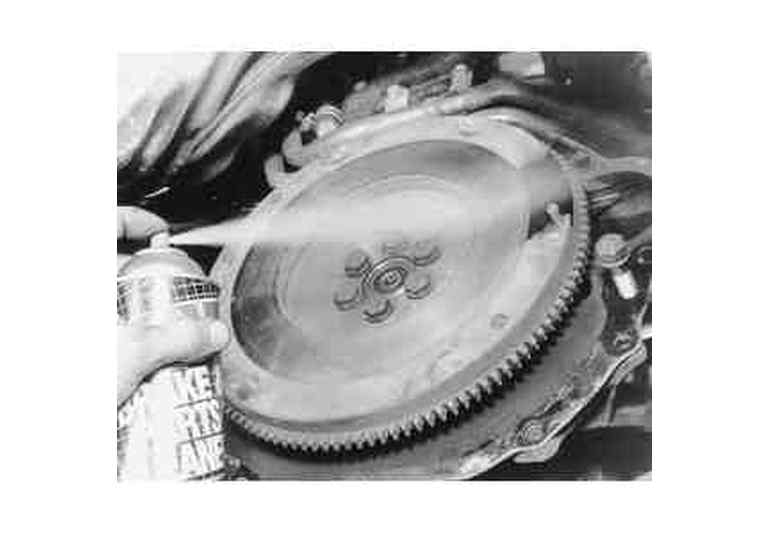
| Fig. 8: Be sure that the flywheel surface is clean, before
installing the clutch
|
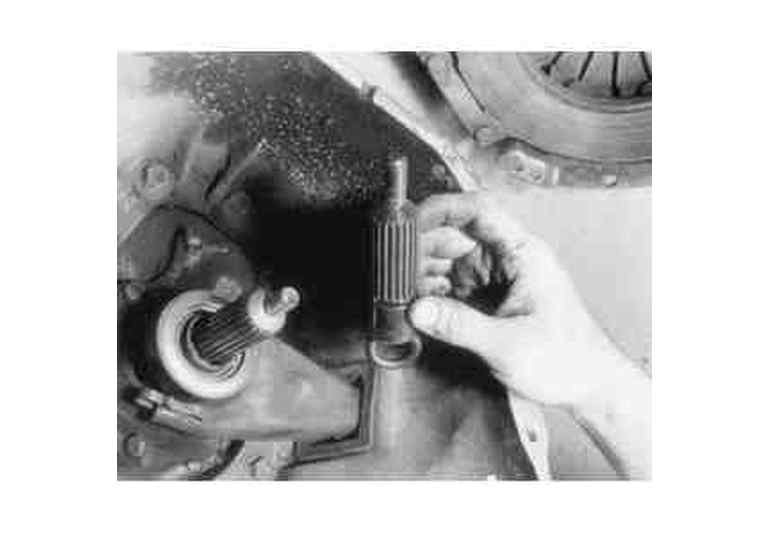
| Fig. 9: Typical clutch alignment tool, note how the splines
match the transaxle's input shaft
|
| Fig. 10: Use the alignment dowel to center the disc on
the flywheel — Mirage
|
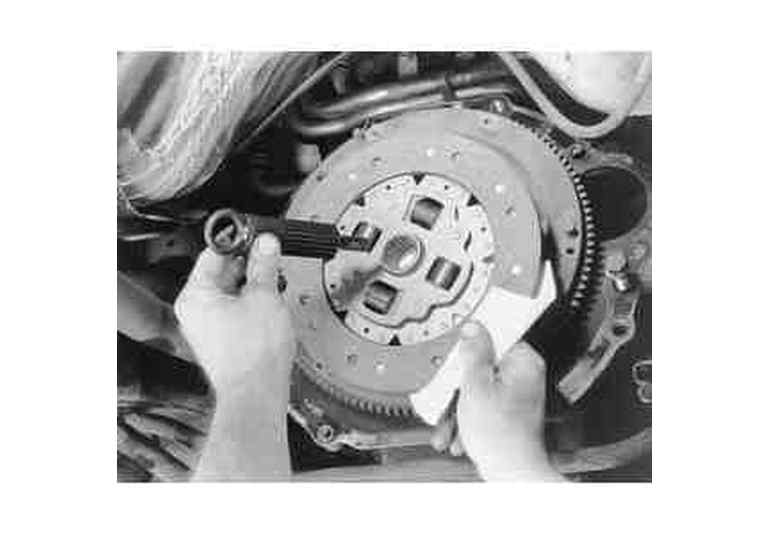
| Fig. 11: Use the clutch alignment tool to align the clutch
disc during assembly
|
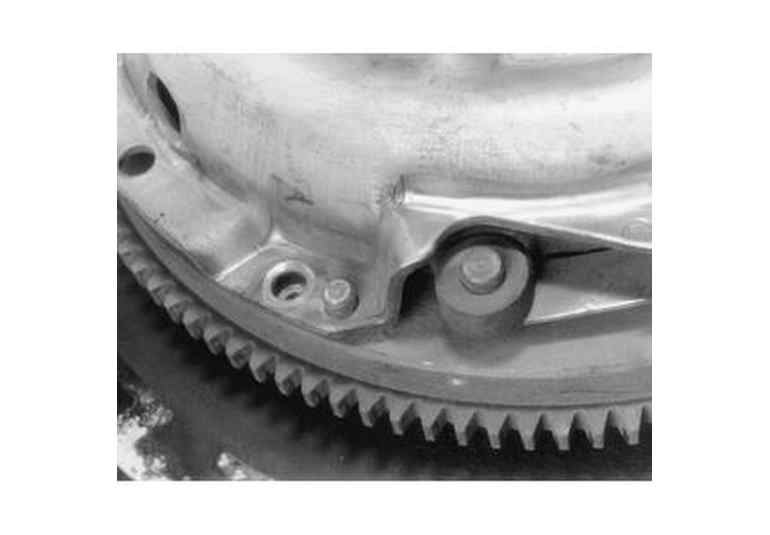
| Fig. 12: Pressure plate-to-flywheel bolt holes should
align
|
| Fig. 13: You may want to use a threadlocking compound
on the clutch assembly bolts
|
| Fig. 14: Be sure to use a torque wrench to tighten all
bolts
|
- Disconnect the negative battery cable.
- Raise and safely support the vehicle.
- Remove the transaxle assembly from the vehicle. Refer to the procedure earlier
in this section.
- Remove the pressure plate attaching bolts, pressure plate and clutch disc.
If the pressure plate is to be reused, loosen the bolts in a diagonal pattern,
1 or 2 turns at a time. This will prevent warping the clutch cover assembly.
- Remove the return clip and the pressure plate release bearing. Do not use
solvent to clean the bearing.
- Inspect the clutch release fork and fulcrum for damage or wear. If necessary,
remove the release fork and unthread the fulcrum from the transaxle.
- Carefully inspect the condition of the clutch components and replace any
worn or damaged parts.
To install:
- Inspect the flywheel for heat damage or cracks. Resurface or replace the
flywheel as required.
- Install the fulcrum and tighten to 25 ft. lbs. (35 Nm).
- Install the release fork.
- Apply a coating of multi-purpose grease to the point of contact with the
fulcrum and the point of contact with the release bearing.
- Apply a coating of multi-purpose grease to the end of the release cylinder
pushrod and the pushrod hole in the release fork.
- Apply multi-purpose grease to the clutch release bearing. Pack the bearing
inner surface and the groove with grease. Do not apply grease to the resin
portion of the bearing.
- Place the bearing in position and install the return clip.
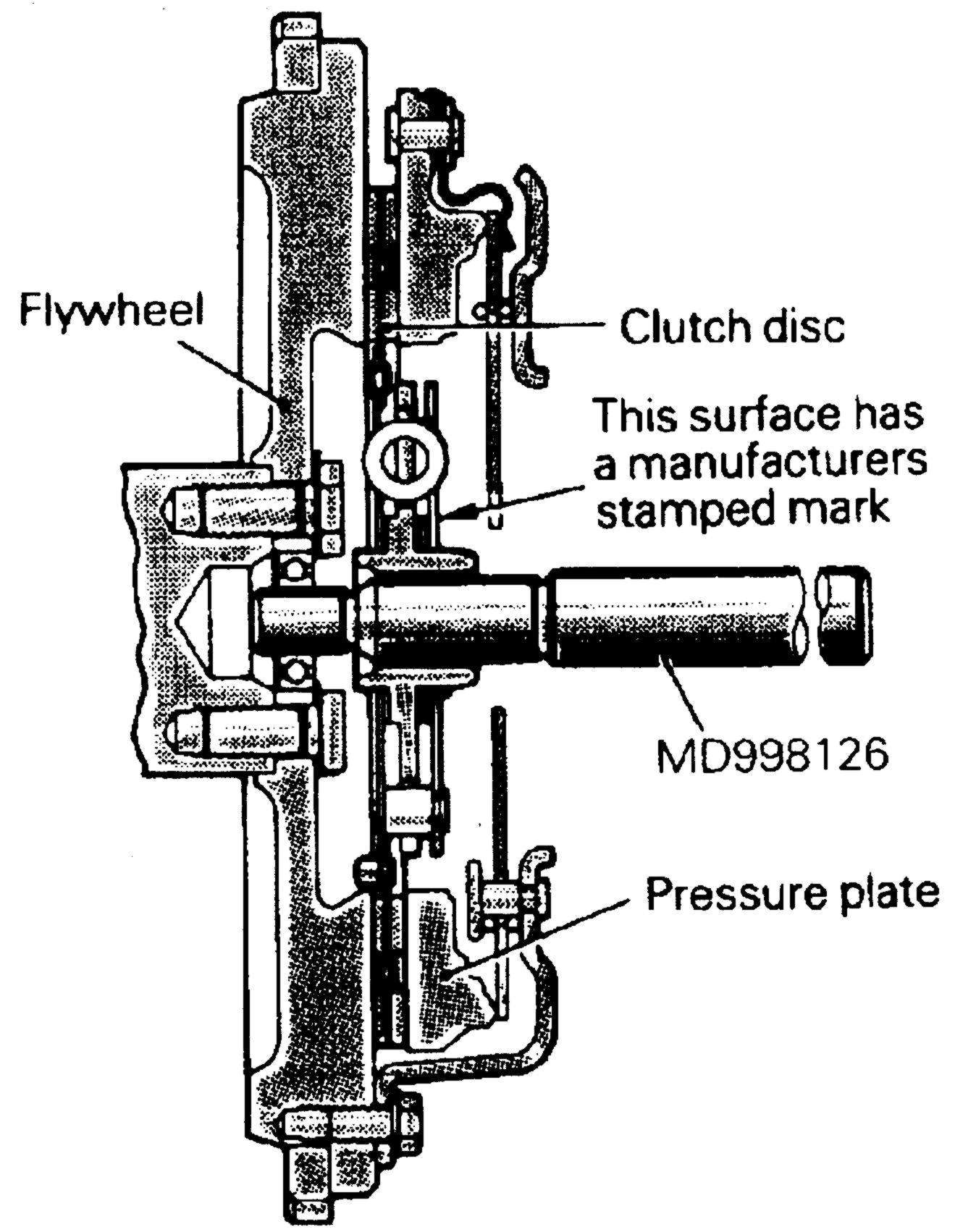
- Using the proper alignment tool, install the clutch disc to the flywheel.
- Install the pressure plate assembly.
- Install the retainer bolts and tighten a little at a time, in a diagonal
sequence. Tighten them to a final torque of 14 ft. lbs. (19 Nm) on 1994–98
Galant models and 16 ft. lbs. (22 Nm) on all other models. Remove the aligning
tool.
- Install the transaxle assembly.
- Check for proper clutch operation.