Before servicing the vehicle, refer to the precautions in the beginning
of this section.
Relieve fuel system pressure.
Remove or disconnect the following:
Negative battery cable
Hood assembly
Air cleaner assembly and all adjoining air intake duct work
Cruise control linkage and actuator assemblies
Drain the engine coolant.
Remove or disconnect the following:
Radiator assembly, coolant reservoir and intercooler
HO2S sensor connection at the front exhaust pipe
Front exhaust pipe assembly
Transaxle assembly
Accelerator cable, breather hose and heater hose connections from the
engine
Vacuum hoses, note locations
Fuel feed and return hoses
Solenoid valve assembly and disconnect the ground cable
Purge hose and EGR temperature sensor, if equipped
Air conditioning and power steering drive belts
Air conditioning compressor and the power steering pump assemblies
Harness connections for the ISC motor position sensor and P sensor
EGR temperature sensor (California)
For the turbocharger, disconnect the following:
Booster vacuum hose
Oil cooler lines
Wiring at the oil pressure switch and oil pressure gauge unit
Fuel injection wiring harness plug
Wiring from the knock sensor and the CKP sensor
ECT switch, sensor and gauge unit connections
Wiring to the ignition coil, condenser and the power transistor
Variable induction motor connection
Open the cover of the relay box and disconnect the alternator wiring.
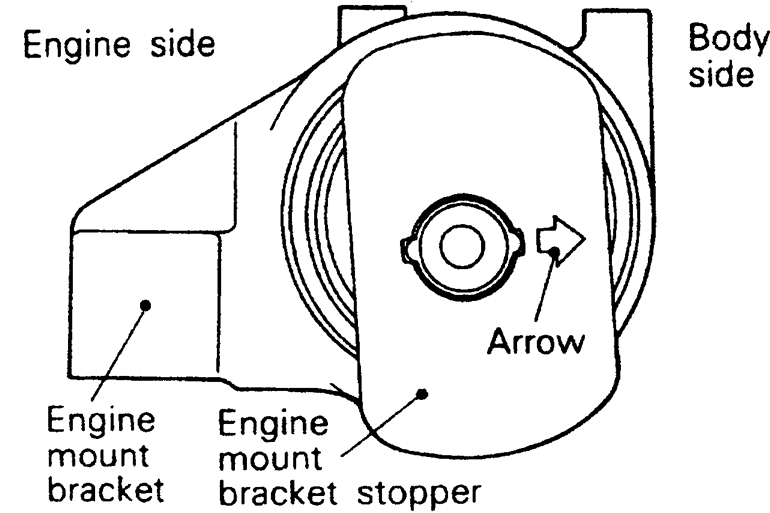
Attach a hoist to the engine and support the engine weight. Remove the engine
mount bracket.
Remove or disconnect the following:
Front and rear roll stopper bracket mounting bolts
Engine assembly from the vehicle
To install:
Install the engine and secure into position. Secure the engine mount bracket
to block and tighten bolts to 72–87 ft. lbs. (100–120 Nm). Install
through-bolt and tighten bolt to 51 ft. lbs. (70 Nm).
Install the front and rear roll stopper through-bolt and tighten to 36–43
ft. lbs. (50–60 Nm).
Open the cover of the relay box and connect alternator wiring.
Install or connect the following:
Variable induction motor connection
Fuel feed and return hoses, using a new sealing ring. Tighten pressure
hose connection to 48 inch lbs. (5 Nm).
Wiring to the ignition coil, condenser and power transistor
ECT switch, sensor and gauge unit connections
Wiring from the knock sensor and the CKP sensor
Fuel injection wiring harness plug
Wiring at the oil pressure switch and oil pressure gauge unit
Connect the following for the turbocharger:
Booster vacuum hose
Oil cooler lines
EGR temperature sensor (California)
Harness connections for the ISC motor position sensor and TP sensor
Install or connect the following:
Air conditioning compressor and the power steering pump assemblies
Engine drive belts
Purge hose and the EGR temperature sensor, if equipped
Solenoid valve assembly and connect ground cable to engine block
Vacuum hoses to the engine
Accelerator cable, breather hose and heater hose connections to the
engine
Transaxle assembly
Front exhaust pipe assembly, using new gaskets. Tighten manifold mounting
bolts to 36 ft. lbs. (50 Nm).
HO2S sensor connection at the front exhaust pipe
Replace the radiator assembly, coolant reservoir and intercooler. Refill
the cooling system.
Install or connect the following:
Cruise control linkage and the actuator assemblies
Hood assembly, air cleaner assembly and all adjoining air intake duct
work
Before servicing the vehicle, refer to the precautions in the beginning
of this section.
Relieve the fuel system pressure.
Remove or disconnect the following:
Negative battery cable
Hood
Intake air duct
Drain the engine coolant.
Remove or disconnect the following:
Radiator
Engine undercover
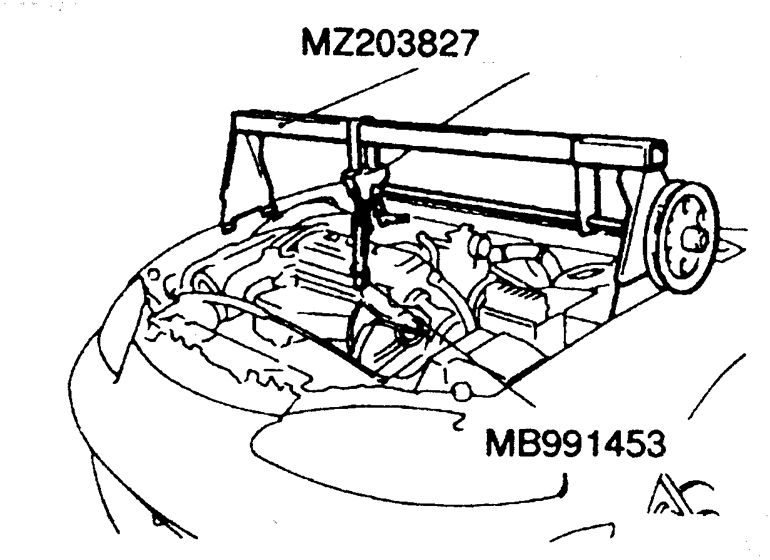
Attach an engine lifting fixture to the engine and remove the transaxle
assembly.
Fig. 2: Common method of supporting the engine using
a fixture specifically designed for that purpose
Power steering pressure switch, oil pressure switch, oil pressure gauge
sender and the alternator wiring connectors
Alternator
Power steering pump from the bracket and position the pump out of the way
Air conditioning compressor from the bracket and position it out of the
way. Do not disconnect the hoses.
Accelerator cable from the throttle body and mounting bracket
Disconnect the following connectors:
IAC motor
Knock sensor
HO2S sensor
ECT gauge sender
ECT sensor
Ignition module (power transistor)
TP sensor
Condenser
MAP sensor
Injectors
Ignition coil
CMP sensor
CKP sensor
air conditioning compressor connector
Engine control wiring harness
Remove or disconnect the following:
Brake booster vacuum hose
Fuel lines from the fuel supply rail
The A and B water hose connections
Vacuum hoses, label
Front exhaust pipe from the turbocharger
Support the engine under the oil pan with a floor jack and a piece of wood.
Remove the engine support fixture and replace it with a hoist. Lift up the
engine to take the weight off of the engine mount bracket.
Remove the engine mount bracket.
Lift the engine up slowly out of the engine compartment.
To install:
Slowly lower the engine assembly into the vehicle.
Position the floor jack under the oil pan with a piece of wood in between.
Use the floor jack to adjust the height of the engine while installing the
engine mount bracket.
Remove the chain hoist and install the engine support fixture.
Install or connect the following:
Front exhaust pipe to the turbocharger
Vacuum hoses
The A and B water hoses
New O-ring on the high pressure fuel line. Apply a small amount of clean
engine oil to the O-ring and connect the fuel lines to the fuel supply
rail.
Brake booster vacuum hose
Connect the following connectors:
IAC motor
Knock sensor
HO2S sensor
ECT gauge sender
ECT sensor
Ignition module (power transistor)
TP sensor
Condenser
MAP sensor
Injectors
Ignition coil
CMP sensor
CKP sensor
air conditioning compressor connector
Engine control wiring harness
Install or connect the following:
Air conditioning compressor and the power steering pump in their brackets
Alternator
Oil pressure gauge sender, oil pressure switch and the power steering
pressure switch connectors
Transaxle assembly and remove the engine support fixture
Before servicing the vehicle, refer to the precautions in the beginning
of this section.
Relieve the fuel system pressure.
Remove or disconnect the following:
Negative battery cable
Hood
Intake air duct
Drain the engine coolant.
Remove or disconnect the following:
Hoses and remove the radiator
Engine undercover
Attach an engine lifting fixture to the engine and remove the transaxle
assembly.
Disconnect the following connectors:
air conditioning compressor
Power steering pressure switch
HO2S sensor
ECT gauge sender
ECT sensor
MAP sensor
IAT sensor
Remove or disconnect the following:
Power steering pump from the bracket and position the pump out of the
way
Air conditioning compressor from the bracket and position it out of
the way. Do not disconnect the hoses.
Accelerator cable from the throttle body and mounting bracket
Disconnect the following connectors:
IAC motor
Knock sensor
Ignition module (power transistor)
EGR solenoid
Oil pressure switch
TP sensor
Condenser
Injectors
Ignition coil
CMP sensor
CKP sensor
Engine control wiring harness
Remove or disconnect the following:
Heater hoses from the engine
Fuel lines from the fuel supply rail
Purge air hose and the brake booster vacuum hose
Front exhaust pipe from the manifold
Place a floor jack against the oil pan with a piece of wood in between to
protect the oil pan.
Raise the engine with the jack and remove the engine support fixture.
Install a chain hoist to the top of the engine.
Remove the engine mount bracket.
Lift the engine up slowly out of the engine compartment.
To install:
Slowly lower the engine assembly into the vehicle
Position the floor jack under the oil pan with a piece of wood in between.
Use the floor jack to adjust the height of the engine while installing the
engine mount bracket.
Remove the chain hoist and install the engine support fixture.
Install or connect the following:
Front exhaust pipe to the manifold
Brake booster vacuum hose
New O-ring on the high pressure fuel line. Apply a small amount of clean
engine oil to the O-ring and connect the fuel lines to the fuel supply
rail.
Connect the following connectors:
IAC motor
Knock sensor
Ignition module (power transistor)
EGR solenoid
Oil pressure switch
TP sensor
Condenser
Injectors
Ignition coil
CMP sensor
CKP sensor
Engine control wiring harness
Install or connect the following:
Accelerator cable, adjust
Air conditioning compressor and the power steering pump in their brackets
IAT sensor, MAP sensor, ECT sensor and gauge sender, HO2S sensor, power
steering pressure switch and the air conditioning compressor harness connectors
Radiator and hoses
Transaxle and remove the engine support fixture
Engine undercovers
Intake air duct
Negative battery cable
Hood
Refill the engine with the proper amount of coolant.
Before servicing the vehicle, refer to the precautions in the beginning
of this section.
Relieve fuel system pressure.
Remove or disconnect the following:
Negative battery cable
Undercover, if equipped
Hood assembly
Air cleaner assembly and all adjoining air intake duct work
Drain the engine coolant.
Remove or disconnect the following:
Radiator assembly and coolant reservoir
Transaxle assembly
Ground cable, accelerator cable, breather hose and heater hose connections
from the engine
Note locations and remove vacuum hoses from engine.
Remove or disconnect the following:
Fuel feed and return hoses
CKP and CMP sensor wiring, for 1997–01 engines
HO2S sensor, ECT gauge and ECT sensor connections
Oil pressure switch
Thermo switch, with automatic transmissions
Harness connections for the ISC motor and TP sensor
IAT sensor
EGR temperature sensor (California)
Injector harness plugs
Power transistor and the ignition coil connections
Alternator and power steering switch wiring
Air conditioning compressor and hang it out of the way–Do not
allow the compressor to hang by the hoses.
Power steering pump and hang it out of the way–Do not allow the
pump to hang by the hoses.
Starter and alternator harness clamp, for 1.8L engines
Exhaust manifold to head pipe nuts
Attach a hoist to the engine and support the engine weight. Remove the engine
mount bracket. Remove any torque control brackets (roll stoppers).
Remove the engine assembly from the vehicle.
To install:
Install the engine and secure in position. The front lower mount through-bolt
nut should not be tightened until the full weight of the engine is on the
mount. Tighten through-bolt to 72 ft. lbs. (100 Nm) and bracket mounting bolts
to 42 ft. lbs. (58 Nm). Tighten bracket mounting nut to 38 ft. lbs. (53 Nm).
Using a new gasket, position exhaust pipe onto the manifold and tighten
the flange nuts to 36 ft. lbs. (50 Nm).
Install or connect the following:
Power steering pump, alternator and air conditioning compressor
Accessory drive belts
Alternator and power steering wiring
Alternator and starter harness clamp for 1.8L engines
Ignition coil and power transistor connections
Fuel injector harness connections
EGR temperature sensor plug–California models
IAT sensor
IAC and TPS connectors
Thermo switch, automatic transmission
Oil pressure switch wiring
HO2S sensor, ECT gauge and ECT sensor
CKP and CMP sensors, 1997–01 engines
Fuel feed hose and tighten bolts to 44 inch lbs. (5 Nm), using new O-rings
Fuel return hose, using a new hose clamp
Vacuum hoses and the brake booster vacuum supply
Breather hose, heater hoses, accelerator cable and ground cables. Inspect
accelerator cable for proper adjustment.