Previous Next

Removal & Installation

MITSUBISHI

1.5L and 1.8L Engines
  1. Remove the timing belt upper and lower covers.
  2. Make a mark on the back of the timing belt indicating the direction of rotation so it may be reassembled in the same direction if it is to be reused. Loosen the timing belt tensioner and move the tensioner to provide slack to the timing belt. Tighten the tensioner in this position.
  3. Remove the timing belt.

    WARNING
    Coolant and engine oil will damage the rubber in the timing belt, drastically reducing its life. Do not allow engine oil or coolant to contact the timing belt, the sprockets or tensioner assembly.

  4. If defective, replace the tensioner spacer, tensioner spring and tensioner assembly.

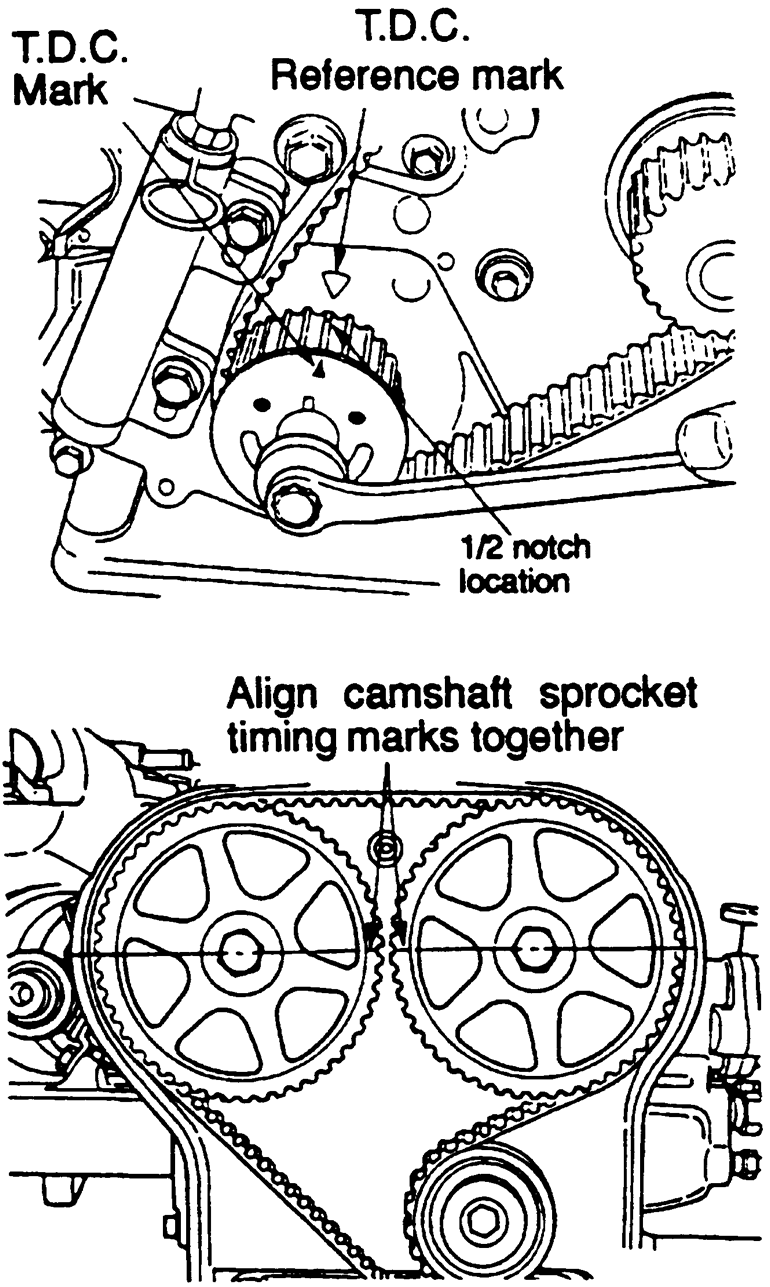
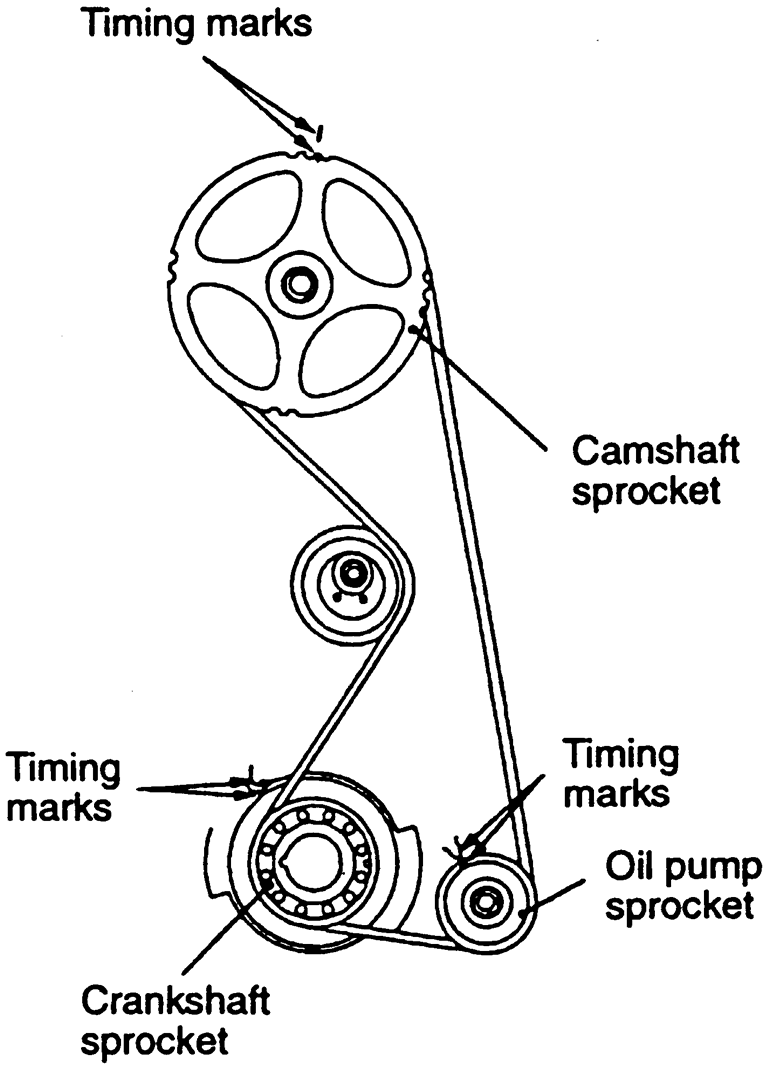
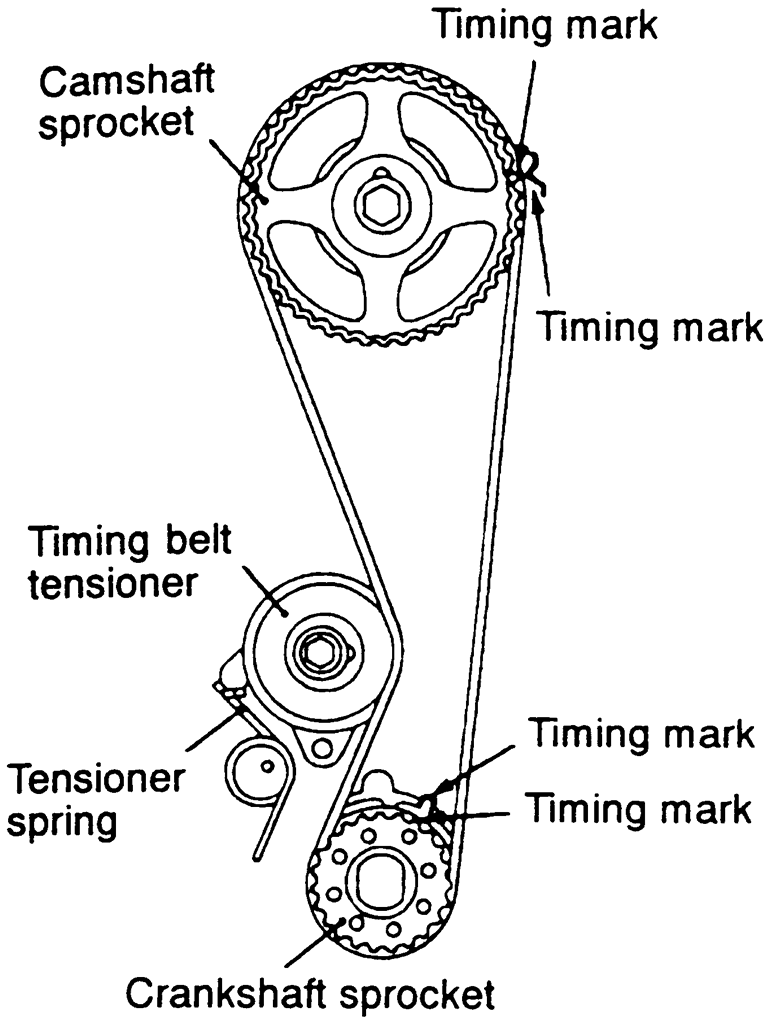
    Fig. 1: Timing mark locations with engine at Top Dead Center (TDC) of compression stroke — Mitsubishi 1.5L (4G15) engine

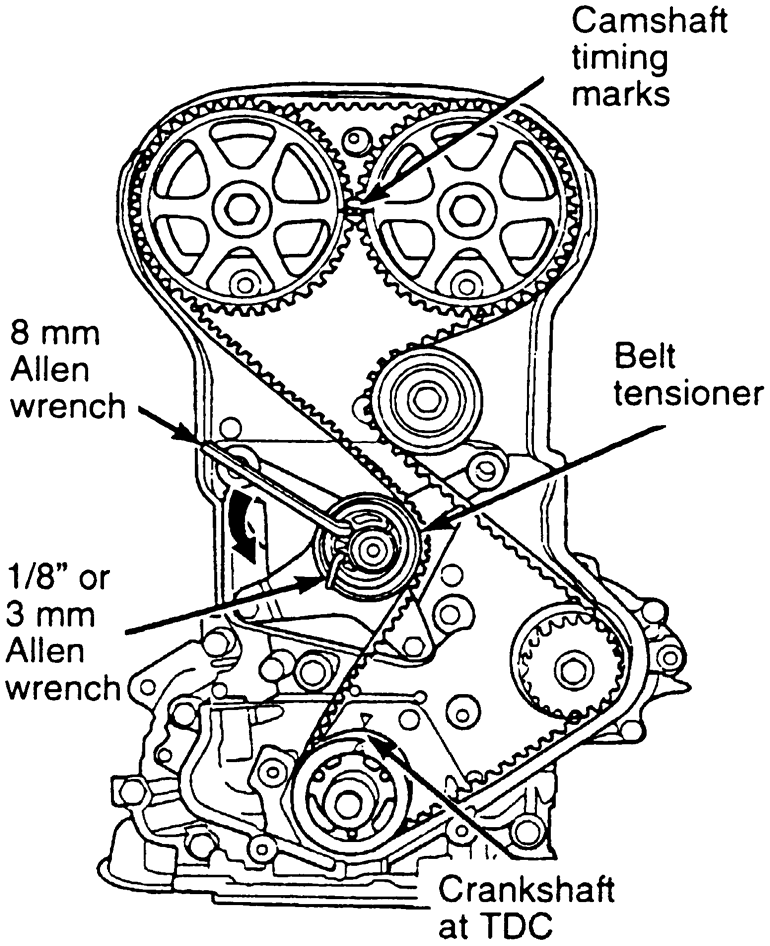
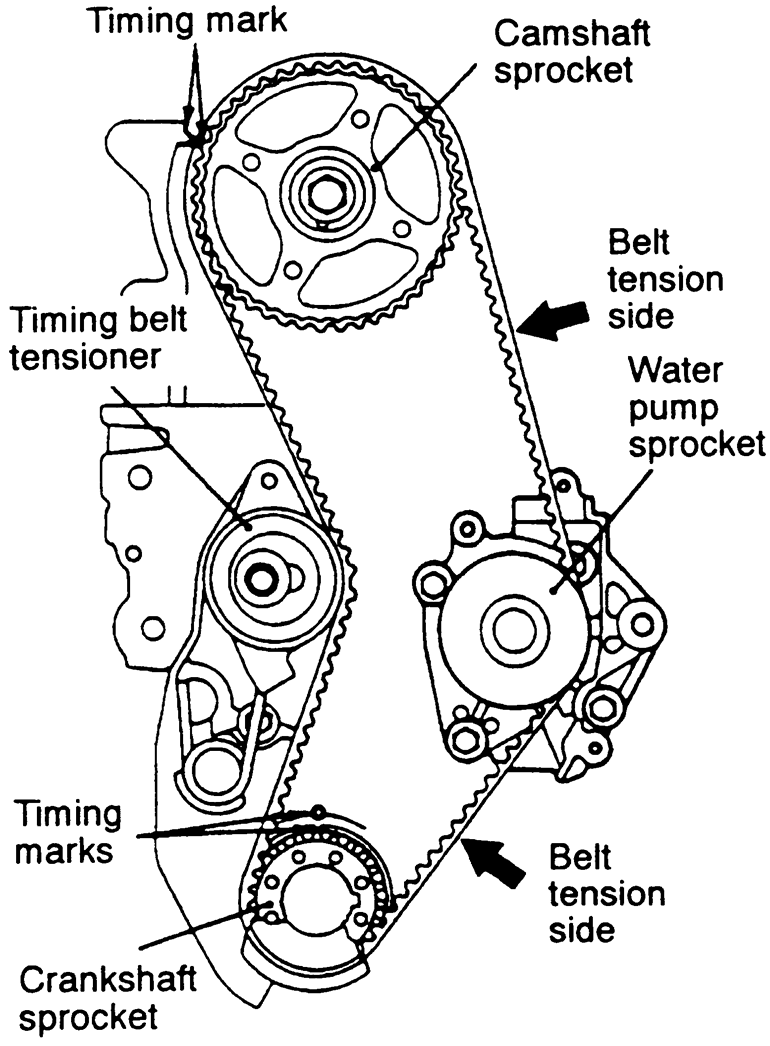
    Fig. 2: Timing mark locations with engine at Top Dead Center (TDC) of compression stroke — Mitsubishi 1.8L (4G93) engine

    To install:

  5. Position the tensioner, tensioner spring and tensioner spacer on engine block.
  6. Align the timing marks on the camshaft sprocket and crankshaft sprocket. This will position No. 1 piston on Top Dead Center (TDC) on the compression stroke.
  7. Position the timing belt on the crankshaft sprocket and keeping the tension side of the belt tight, set it on the camshaft sprocket, then the tensioner.
  8. Apply slight counterclockwise force to the camshaft sprocket to give tension to the belt and be sure all timing marks are aligned.
  9. Loosen the pivot side tensioner bolt and the slot side bolt. Allow the spring to remove the slack.
  10. Tighten the slot side tensioner bolt, then the pivot side bolt. If the pivot side bolt is tightened first, the tensioner could turn with bolt, causing over tension.
  11. For 1.5L engines, turn the crankshaft clockwise. Loosen the pivot side tensioner bolt, then the slot side bolt to allow the spring to take up any remaining slack. Tighten the slot bolt, then the pivot side bolt to 17 ft. lbs. (24 Nm).
  12. For 1.8L engines, turn the crankshaft clockwise two rotations and tighten the adjuster bolt to 18 ft. lbs. (24 Nm) and the pivot (spring) bolt to 35 ft. lbs. (45 Nm).
  13. Install the timing belt covers and tighten the cover bolts to 84–96 inch lbs. (10–11 Nm). Install all other applicable components.
2.0L Non-Turbo Engine
  1. Remove the front timing belt cover.

    NOTE: If the timing belt is going to be reused, mark the direction of rotation on the belt with an arrow. Install the belt in the same direction.

  2. Rotate the crankshaft sprocket clockwise until the timing marks are aligned.
  3. For 1997 models, loosen the timing belt tensioner and remove the timing belt.
  4. For 1998–01 models, place 8mm Allen wrench into the belt tensioner, then using the long end of a 18 in. (3mm) Allen wrench, rotate the tensioner counterclockwise until it slides into the locking hole.
  5. Remove the belt.

    WARNING
    Do not rotate the crankshaft or the camshafts while the belt is removed.

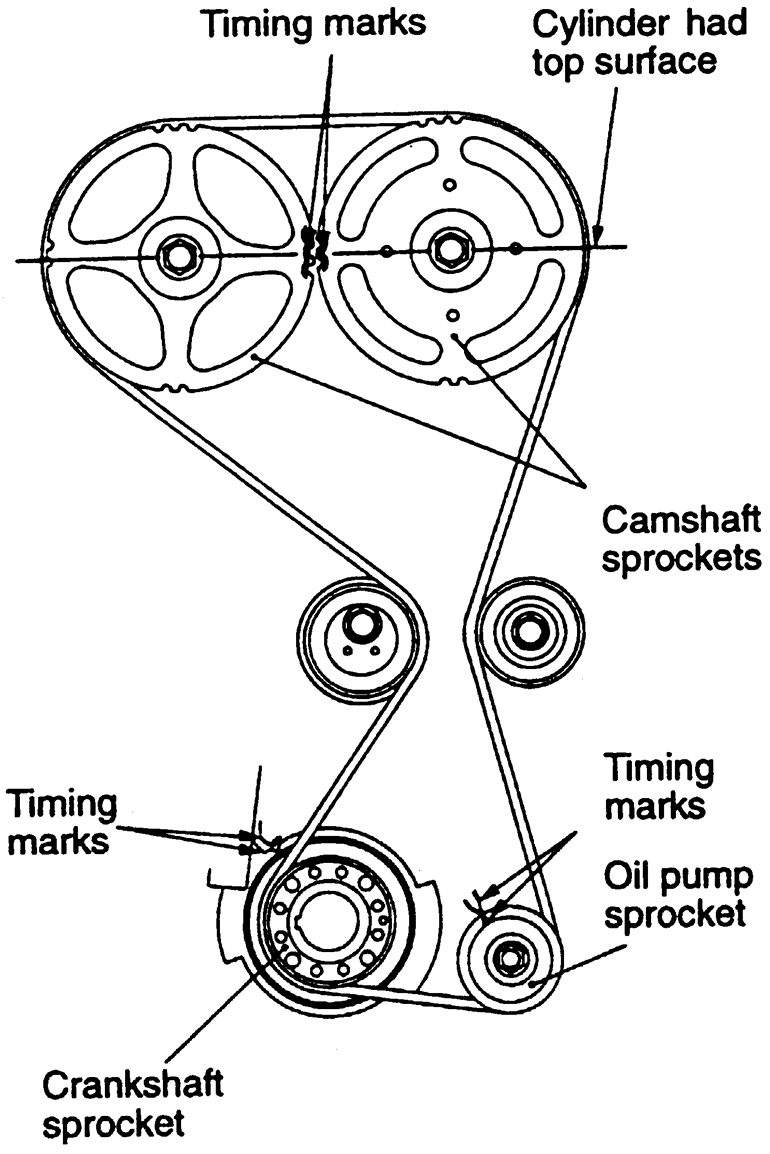
    Fig. 3: Camshaft and crankshaft timing belt sprocket TDC alignment mark positioning for timing belt removal and installation — Mitsubishi 1997 2.0L non-turbo engine

    Fig. 4: Timing belt sprocket mark alignment for belt service — Mitsubishi 1998–99 2.0L non-turbo engines

    To install:

  6. Using a vise, slowly compress the plunger into the body of the tensioner and install a pin through the body of the tensioner to retain the plunger.
  7. Be sure the timing marks are still aligned, if not, align the camshaft sprocket timing marks facing each other. Align the crankshaft sprocket timing mark with the mark on the oil pump housing, then turn the crankshaft sprocket backward 12 notch.
  8. Install the timing belt, starting at the crankshaft, then around the water pump sprocket, idler pulley, camshaft sprockets and the tensioner pulley.
  9. Turn the crankshaft sprocket 12 notch to Top Dead Center (TDC) to take up the slack in the belt.
  10. Install the tensioner on the engine, but do not tighten the bolts.
  11. Place a torque wrench on the tensioner pulley and apply 21 ft. lbs. (28 Nm) of torque in the direction of the water pump. Push the tensioner up against the tensioner pulley and tighten the mounting bolts to 23 ft. lbs. (31 Nm).
  12. Pull the pin out of the tensioner. Belt tension is correct when the pin can be removed and installed.
  13. Rotate the crankshaft two revolutions and check the timing marks for alignment. Repeat the previous steps, if necessary.
  14. Install the timing belt cover and all other applicable components.
2.0L Turbo Engine
  1. Remove all necessary components for access to the timing belt covers.
  2. Remove the stud bolt from the engine support bracket and remove the timing belt covers.
  3. Rotate the crankshaft clockwise to align the camshaft timing marks. Always turn the crankshaft in the normal direction of rotation only.
  4. Loosen the tension pulley center bolt.

    NOTE: If the timing belt is to be reused, mark the direction of rotation on the flat side of the belt with an arrow.

  5. Move the tension pulley towards the water pump and remove the timing belt.
  6. Remove the crankshaft sprocket center bolt using special tool MB990767 to hold the crankshaft sprocket while removing the center bolt. Then, use MB998778 puller to remove the sprocket.
  7. Mark the direction of rotation on the timing belt "B" with an arrow.
  8. Loosen the center bolt on the tensioner and remove the belt.

    WARNING
    Do not rotate the camshafts or the crankshaft while the timing belt is removed.

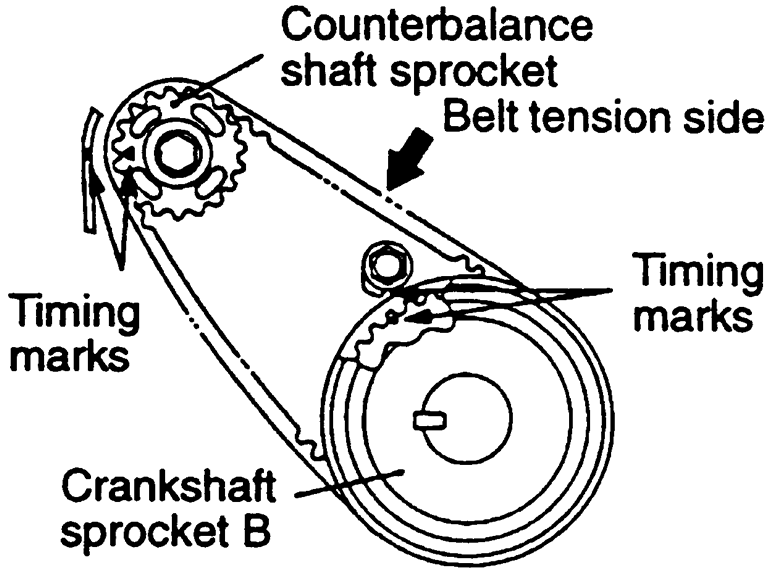
    Fig. 5: Camshaft and crankshaft timing belt sprocket TDC alignment mark positioning for timing belt removal and installation — Mitsubishi 2.0L turbo engine

    To install:

  9. Place the crankshaft sprocket on the crankshaft. Use tool MB990767 to hold the crankshaft sprocket while tightening the center bolt. Tighten the center bolt to 80–94 ft. lbs. (108–127 Nm).
  10. Align the timing marks on the crankshaft sprocket "B" and the balance shaft.
  11. Install timing belt "B" on the sprockets. Position the center of the tensioner pulley to the left and above the center of the mounting bolt.
  12. Push the pulley clockwise toward the crankshaft to apply tension to the belt and tighten the mounting bolt to 14 ft. lbs. (19 Nm). Do not let the pulley turn when tightening the bolt because it will cause excessive tension on the belt. The belt should deflect 0.20–0.28 in. (5–7mm) when finger pressure is applied between the pulleys.
  13. Install the crankshaft sensing blade and the crankshaft sprocket. Apply engine oil to the mounting bolt and tighten the bolt to 80–94 ft. lbs. (108–127 Nm).
  14. Use a press or vise to compress the auto-tensioner pushrod. Insert a set pin when the holes are lined up.

    WARNING
    Do not compress the pushrod too quickly, damage to the pushrod can occur.

  15. Install the auto-tensioner on the engine.
  16. Align the timing marks on the camshaft sprocket, crankshaft sprocket and the oil pump sprocket.
  17. After aligning the mark on the oil pump sprocket, remove the cylinder block plug and insert a prytool in the hole to check the position of the counterbalance shaft. The prytool should go in at least 2.36 in. (60mm) or more, if not, rotate the oil pump sprocket once and realign the timing mark so the prytool goes in. Do not remove the prytool until the timing belt is installed.
  18. Install the timing belt on the intake camshaft and secure it with a clip.
  19. Install the timing belt on the exhaust camshaft. Align the timing marks with the cylinder head top surface using two wrenches. Secure the belt with another clip.
  20. Install the belt around the idler pulley, oil pump sprocket, crankshaft sprocket and the tensioner pulley.
  21. Turn the tensioner pulley so the pinholes are at the bottom. Press the pulley lightly against the timing belt.
  22. Screw the special tool into the left engine support bracket until it contacts the tensioner arm, then screw the tool in a little more and remove the pushrod pin from the auto-tensioner. Remove the special tool and tighten the center bolt to 35 ft. lbs. (48 Nm).
  23. Turn the crankshaft 14 turn counterclockwise, then clockwise until the timing marks are aligned.
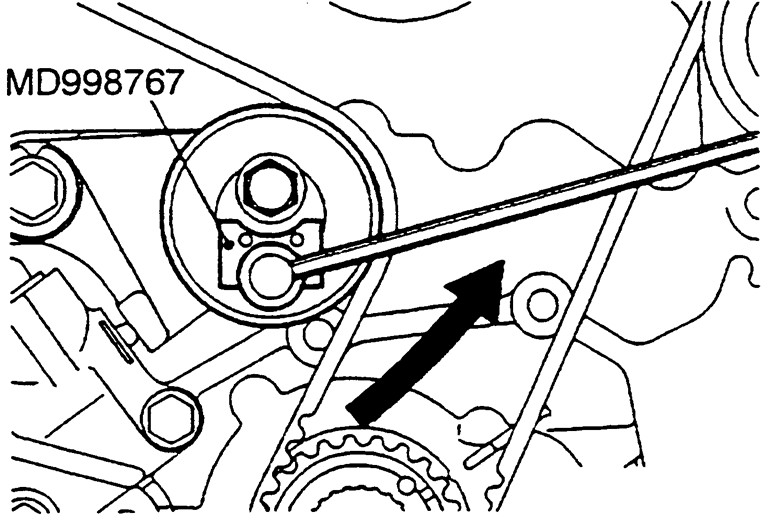
  24. Loosen the center bolt. Install Mitsubishi Special tool MD998767 on the tensioner pulley. Turn the tensioner pulley counterclockwise with a torque of 2.6 ft. lbs. (3.5 Nm) and tighten the center bolt to 35 ft. lbs. (48 Nm). Do not let the tensioner pulley turn when tightening the bolt.
  25. Turn the crankshaft clockwise two revolutions and align the timing marks. After 15 minutes, measure the protrusion of the pushrod on the auto-tensioner. The standard measurement is 0.150–0.177 in (3.8–4.5mm). If the protrusion is out of specification, loosen the tensioner pulley, apply the proper torque to the belt and retighten the center bolt.
  26. Install the timing belt covers and all applicable components.

    Fig. 6: Timing belt "B" installation mark alignment — Mitsubishi 2.0L turbo and 2.4L engines

2.4L Engine
  1. Position the engine so that the No. 1 piston is at Top Dead Center (TDC).
  2. Remove the timing belt covers.

    NOTE: If the timing belts are going to be reused, mark the direction of rotation on the belt. This will ensure the belt is reinstalled in same direction, extending belt life.

  3. To loosen the timing (outer) belt tensioner, install Mitsubishi Special tool MD998738 to the slot and screw inward to move the tensioner toward the water pump. Once the tension has been relieved, remove the outer timing belt.
  4. If tensioner replacement is required, align the pin hole in the tensioner rod to the hole in the tensioner cylinder. Insert a 0.055 in. (1.4mm) wire in the hole and remove the special tool from the slot. With the cylinder tension relieved, remove the auto-tensioner cylinder assembly two mounting bolts.
  5. Remove the outer crankshaft sprocket and flange.
  6. Loosen the silent shaft (inner) belt tensioner and remove the belt.

    Fig. 7: Proper alignment of the timing belt sprocket marks for belt service — Mitsubishi 2.4L engines

    To install:

    WARNING
    Do not spray or immerse the sprockets or tensioners in cleaning solvent. The sprocket may absorb the solvent and transfer it to the belt. The tensioners are internally lubricated and the solvent will dilute or dissolve the lubricant.

  7. Align the timing marks of the silent shaft sprockets and the crankshaft sprocket with the timing marks on the front case. Route the timing belt around the sprockets so there is no slack in the upper span of the belt and the timing marks are still aligned.
  8. Install the tensioner pulley and move the pulley by hand so the long side of the belt deflects approximately 14 in. (6mm).
  9. Hold the pulley tightly so the pulley cannot rotate when the bolt is tightened. Tighten the bolt to 14 ft. lbs. (19 Nm) and recheck the deflection.
  10. Align the timing marks of the camshaft, crankshaft and oil pump sprockets with their corresponding marks on the front case or rear cover.

    NOTE: There is a possibility to align all timing marks and have the oil pump sprocket and silent shaft out of time, causing an engine vibration during operation. If the following step is not followed exactly, there is a 50 percent chance that the silent shaft alignment will be 180 degrees ( 12 turn) off.

  11. Before installing the timing belt, ensure that the left side (rear) silent shaft (oil pump sprocket) is in the correct position as follows:
    1. Remove the plug from the rear side of the block and insert a tool with shaft diameter of 0.31 in. (8mm) into the hole.
    2. With the timing marks still aligned, the shaft of the tool must be able to go in at least 2 12 in. (63.5mm). If the tool can only go in approximately 1 in. (25mm), the shaft is not in the correct orientation and will cause a vibration during engine operation. Remove the tool from the hole and turn the oil pump sprocket one complete revolution. Realign the timing marks and insert the tool. The shaft of the tool must go in at least 2 14 in. (63.5mm).
    3. Recheck and realign the timing marks.
    4. Leave the tool in place to hold the silent shaft while continuing.
  12. If the camshaft belt tensioner was removed, use a vise to carefully push the auto-tensioner rod in until the set hole in the rod is aligned with the hole in the cylinder. Place a wire into the hole to retain the rod. Mount the tensioner to the engine block and tighten the mounting bolt to 17 ft. lbs. (23 Nm).
  13. Install the belt to the crankshaft sprocket, oil pump sprocket, then camshaft sprocket, in that order. While doing so, be sure there is no slack between the sprocket except where the tensioner is installed.
  14. To adjust the timing (outer) belt perform the following steps:
    1. Turn the crankshaft 14 turn counterclockwise, then turn it clockwise to move No. 1 cylinder to TDC.
    2. Loosen the center bolt. Using tool MD998752 and a torque wrench, apply a torque of 2.6 ft. lbs. (3.6 Nm) to the tensioner. Tighten the center bolt.
    3. Screw the special tool into the engine left support bracket until its end makes contact with the tensioner arm. At this point, screw the special tool in some more and remove the set wire attached to the auto-tensioner, if the wire was not previously removed. Then, remove the special tool.
    4. Rotate the crankshaft two complete turns clockwise and let it sit for approximately 15 minutes. Then, measure the auto-tensioner protrusion (the distance between the tensioner arm and auto-tensioner body) to ensure that it is within 0.15–0.18 in. (3.8–4.5mm). If out of specification, repeat substeps a through d until the specified value is obtained.

      NOTE: Do not manually overtighten the belt or it will howl.

  15. Install the upper and lower timing belt covers.
3.0L (6G72) SOHC Engine
  1. Position the engine so the No. 1 cylinder is at Top Dead Center (TDC) of its compression stroke.

    CAUTION
    Wait at least 90 seconds after the negative battery cable is disconnected to prevent possible deployment of the air bag.

  2. Remove all necessary components for access to the timing belt covers, then remove the covers from the engine.
  3. If the same timing belt will be reused, mark the direction of the timing belt's rotation for installation in the same direction. Be sure the engine is positioned so the No. 1 cylinder is at the TDC of its compression stroke and the timing marks are aligned with the engine's timing mark indicators.
  4. Loosen the timing belt tensioner bolt and remove the belt. If the tensioner is not being removed, position it as far away from the center of the engine as possible and tighten the bolt.
  5. If the tensioner is being removed, mark the outside of the spring to ensure that it is not installed backwards. Unbolt the tensioner and remove it along with the spring.

    WARNING
    Do not rotate the camshafts when the timing belt is removed from the engine. Turning the camshaft when the timing belt is removed could cause the valves to interfere with the pistons thus causing severe internal engine damage.

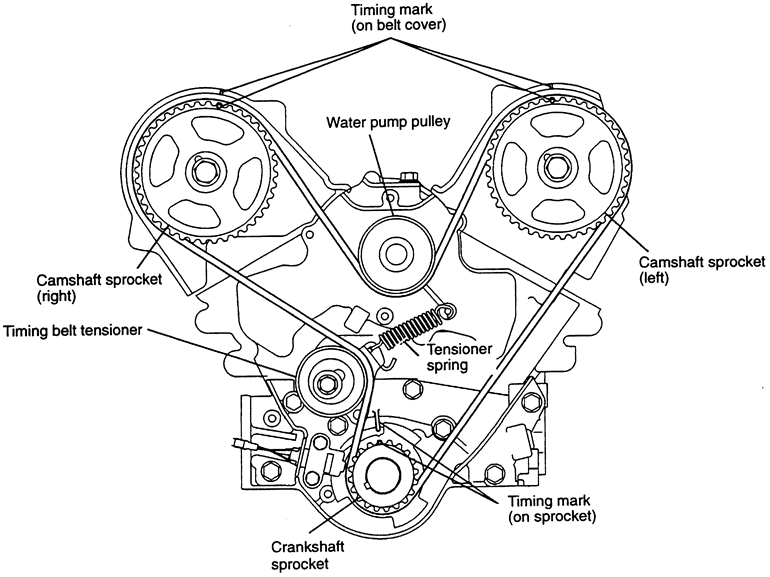
    Fig. 8: Align the sprockets properly before removing or installing the timing belt — Mitsubishi 3000 GT and Diamante with the 3.0L (6G72) SOHC engine

    To install:

  6. Install the tensioner, if removed, and hook the upper end of the spring to the water pump pin and the lower end to the tensioner in exactly the same position as originally installed.
  7. Ensure both camshafts are still positioned so the timing marks align with those on the rear timing covers. Rotate the crankshaft so the timing mark aligns with the mark on the front cover.
  8. Install the timing belt on the crankshaft sprocket and while keeping the belt tight on the tension side, install the belt on the front (left) camshaft sprocket.
  9. Install the belt on the water pump pulley, then the rear (right) camshaft sprocket and the tensioner.
  10. Loosen the bolt that secures the adjustment of the tensioner and lightly press the tensioner against the timing belt.
  11. Check that the timing marks are in alignment.
  12. Rotate the crankshaft 2 full turns in the clockwise direction only, then realign the timing marks.
  13. Tighten the bolt that secures the tensioner to 19 ft. lbs. (26 Nm).
  14. Install the lower and the upper timing belt covers, along with all other applicable components.
3.0L (6G72) DOHC Engine
  1. Position the engine so the No. 1 cylinder is at Top Dead Center (TDC) of its compression stroke.
  2. Remove all necessary components for access to the timing belt covers, then remove the covers from the engine.

    CAUTION
    Be sure to disconnect the negative battery cable. Wait at least 90 seconds after the negative battery cable is disconnected to prevent possible deployment of the air bag.

  3. If the same timing belt will be reused, mark the direction of the timing belt's rotation for installation in the same direction. Be sure the engine is positioned so the No. 1 cylinder is at the TDC of its compression stroke and the timing marks are aligned with the engine's timing mark indicators on the rear timing covers.
  4. Remove the timing belt.

    WARNING
    Turning the camshaft sprocket when the timing belt is removed could cause the valves to contact with the pistons, resulting in severe engine damage.

  5. Remove the bolts that secure the auto-tensioner to the engine block and remove the tensioner.

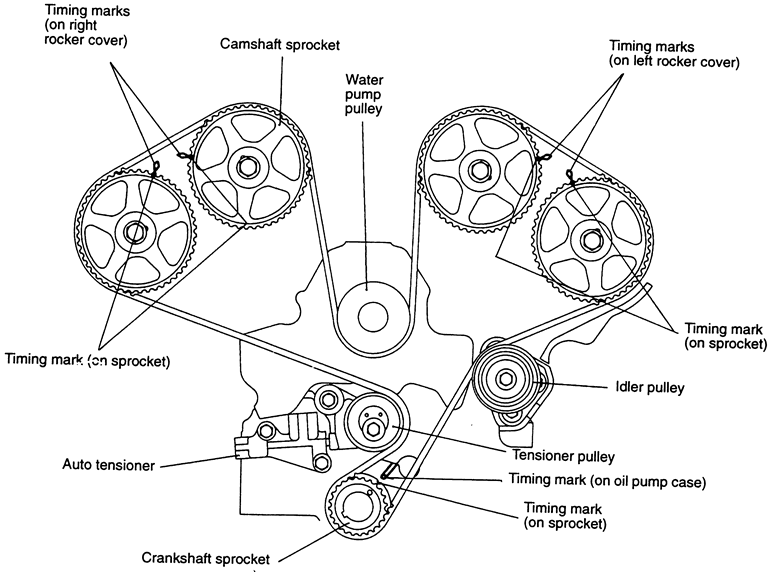
    Fig. 9: Sprocket alignment for timing belt installation — Mitsubishi 3000 GT and Diamante with the 3.0L (6G72) DOHC engine

    To install:

    NOTE: The auto-tensioner assembly must be reset to correctly adjust belt tension.

  6. Loosen the center bolt of tensioner pulley to provide timing belt slack. Remove the timing belt assembly.
  7. Position the auto-tensioner into a vise with soft jaws. The plug at the rear of tensioner protrudes, be sure to use a washer as a spacer to protect the plug from contacting vise jaws.
  8. Slowly push the rod into the tensioner until the set hole in rod is aligned with set hole in the auto-tensioner.
  9. Insert a 0.055 in. (1.4mm) wire into the aligned set holes. Unclamp the tensioner from the vise and install it on the engine. Tighten tensioner mounting bolts to 17 ft. lbs. (24 Nm).

    WARNING
    DO NOT rotate or turn the camshafts when removing the sprockets or severe engine damage will result from internal component interference.

  10. Align the mark on the crankshaft sprocket with the mark on the front case. Then, move the crankshaft sprocket 1 tooth counterclockwise.
  11. Align the timing marks of the camshafts with the marks on the rear covers.
  12. Using large paper clips to secure the timing belt to the sprockets, install the timing belt in the following order. Be sure camshafts-to-cylinder heads and crankshaft-to-front cover timing marks are aligned. Install the timing belt around the pulleys in the following order:
    1. Exhaust camshaft sprocket (front bank).
    2. Intake camshaft sprocket (front bank).
    3. Water pump pulley.
    4. Intake camshaft sprocket (rear bank).
    5. Exhaust camshaft sprocket (rear bank).
    6. Tensioner pulley.
    7. Crankshaft pulley.
    8. Idler pulley.

      NOTE: Since the camshaft sprockets turn easily, secure them with box wrenches when installing the timing belt.

  13. Align all timing mark on the crankshaft and raise tensioner pulley against belt to remove slack, snug tensioner bolt.
  14. Check the alignment of all the timing marks and remove the clips that secure the timing belt to the camshaft sprockets.
  15. Rotate the engine 14 turn counterclockwise, then rotate the engine clockwise to align the timing marks. Check that all the timing marks are in alignment.
  16. Loosen the center bolt on the tensioner pulley. Using tool MD998752 and a torque wrench, apply 84 inch lbs. (10 Nm) to the tool on the tensioner. Tighten the tensioner bolt to 35 ft. lbs. (49 Nm) and be sure the tensioner does not rotate with the bolt.
  17. Rotate the crankshaft two complete turns clockwise and let it sit for approximately five minutes. Then, check that the set pin can easily be inserted and removed from the hole in the auto-tensioner.
  18. Remove the set wire attached to the auto-tensioner.
  19. Measure the auto-tensioner protrusion (the distance between the tensioner arm and auto-tensioner body) to ensure that it is within 0.15–0.18 in. (3.8–4.5mm). If out of specification, repeat adjustment procedure until the specified value is obtained.
  20. Check again that the timing marks on all sprockets are in proper alignment.
  21. Install the timing belt covers and all other applicable components.
3.5L (6G74) SOHC Engine
  1. Position the engine so the No. 1 cylinder is at Top Dead Center (TDC) of its compression stroke.
  2. Remove all necessary components for access to the timing belt covers, then remove the covers from the engine.

    CAUTION
    Be sure to disconnect the negative battery cable. Wait at least 90 seconds after the negative battery cable is disconnected to prevent possible deployment of the air bag.

  3. If the same timing belt will be reused, mark the direction of the timing belt's rotation for installation in the same direction. Be sure the engine is positioned so the No. 1 cylinder is at the TDC of its compression stroke and the timing marks are aligned with the engine's timing mark indicators on the rear timing covers.
  4. Remove the timing belt.

    WARNING
    Turning the camshaft sprocket when the timing belt is removed could cause the valves to contact with the pistons, resulting in severe engine damage.

  5. Remove the bolts that secure the auto-tensioner to the engine block and remove the tensioner.

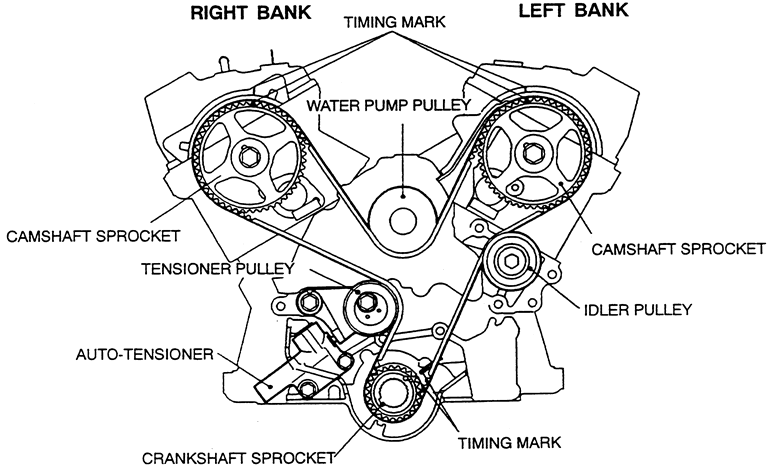
    Fig. 10: Sprocket alignment for timing belt installation — Mitsubishi Diamante with 3.5L (6G74) SOHC engine

    Fig. 11: Special tool used for tightening timing belt — Mitsubishi Diamante with 3.5L (6G74) SOHC engine

    Fig. 12: Measuring the standard value of the timing belt tensioner — Mitsubishi Diamante with 3.5L (6G74) SOHC engine

    To install:

    NOTE: The auto-tensioner assembly must be reset to correctly adjust belt tension.

  6. Loosen the center bolt of tensioner pulley to provide timing belt slack. Remove the timing belt tensioner assembly.
  7. Position the auto-tensioner into a vise with soft jaws. The plug at the rear of tensioner protrudes, be sure to use a washer as a spacer to protect the plug from contacting vise jaws.
  8. Slowly push the rod into the tensioner until the set hole in rod is aligned with set hole in the auto-tensioner.
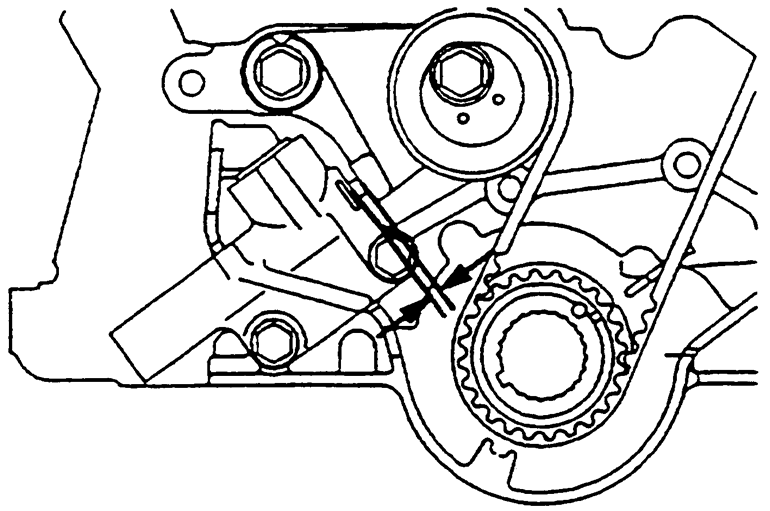
  9. Insert a 0.055 in. (1.4mm) wire into the aligned set holes. Unclamp the tensioner from the vise and install it on the engine. Tighten tensioner mounting bolts to 17 ft. lbs. (24 Nm).

    WARNING
    DO NOT rotate or turn the camshafts when removing the sprockets or severe engine damage will result from internal component interference.

  10. Align the mark on the crankshaft sprocket with the mark on the front case. Then, move the crankshaft sprocket 3 teeth counterclockwise.
  11. Align the timing marks of the camshafts with the marks on the rear covers.
  12. Realign the crankshaft pulley with timing mark on the housing.

    NOTE: Be sure camshafts-to-cylinder heads and crankshaft-to-front cover timing marks are aligned.

  13. Install the timing belt around the pulleys in the following order:
    1. Crankshaft pulley.
    2. Idler pulley.
    3. Left camshaft sprocket.
    4. Water pump pulley.
    5. Right camshaft sprocket.
    6. Tensioner pulley.

      NOTE: Since the camshaft sprockets turn easily because of spring action, be careful not to get your fingers caught.
  14. Align all timing mark on the crankshaft and raise tensioner pulley against belt to remove slack, snug tensioner bolt.
  15. Check the alignment of all the timing.
  16. Using special tool MD998769, rotate the crankshaft 14 turn counterclockwise, then rotate the crankshaft clockwise to align the timing marks. Check that all the timing marks are in alignment.
  17. Loosen the center bolt on the tensioner pulley. Using tool MD998767 and a torque wrench, apply 3.3 ft. lbs. (4.4 Nm) to the tool on the tensioner. Tighten the tensioner bolt to 33 ft. lbs. (44 Nm) and be sure the tensioner does not rotate with the bolt.
  18. Rotate the crankshaft two complete turns clockwise and let it sit for approximately five minutes. Then, check that the set pin can easily be inserted and removed from the hole in the auto-tensioner.
  19. Remove the set wire attached to the auto-tensioner.
  20. Measure the auto-tensioner protrusion (the distance between the tensioner arm and auto-tensioner body) to ensure that it is within 0.150–0.196 in. (3.8–5.0mm). If out of specification, repeat adjustment procedure until the specified value is obtained.
  21. Check again that the timing marks on all sprockets are in proper alignment.
  22. Install the timing belt covers and all other applicable components.

Previous Next