Previous Next

Disc Brake Pads

Removal & Installation

Front

To Remove:

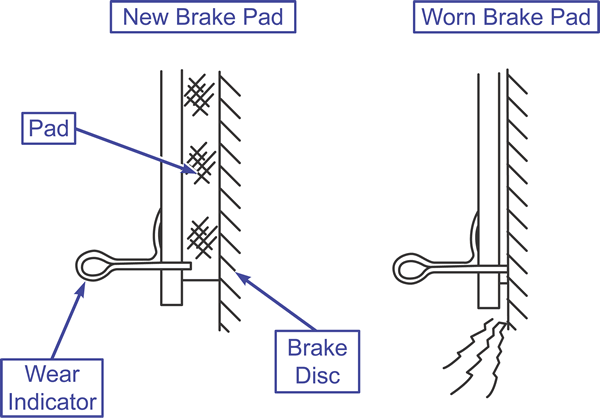
NOTE: The wear indicators on the brake pads contact the Brake Disc when the brake pad thickness becomes .08 in (2 mm). When the pads need to be replaced, the wear indicators make a squealing sound to alert the driver. The brake system should also be checked.

  1. Check the thickness of the brake pad through the caliper body check port. The standard value is .39 in (10 mm). The limit is .08 in (2.0 mm).

    CAUTION
    The brake pads on both sides must be replaced as a set once the limit is exceeded. If the difference in the thickness of the pads on both sides is significantly different, check the sliding condition of the piston, guide pin, and lock pin.

  2. Remove the guide pin, and then lift the caliper assembly up and support it with wires.

    CAUTION
    Make sure not to contaminate or wipe off the grease that is on the guide pin.

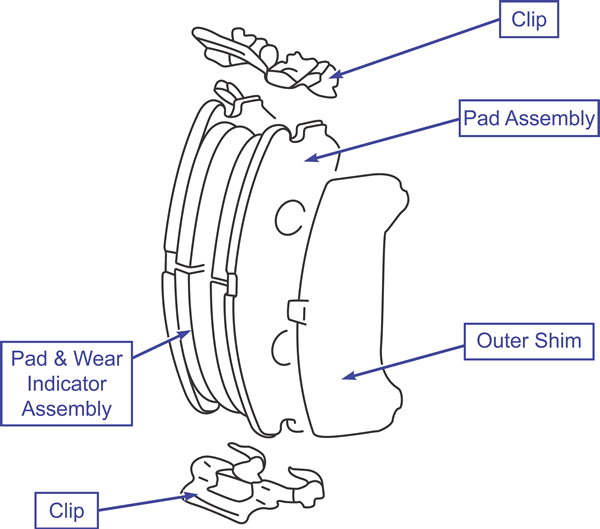
  3. Remove the parts below from the caliper support.
  4. Remove the drive shaft.

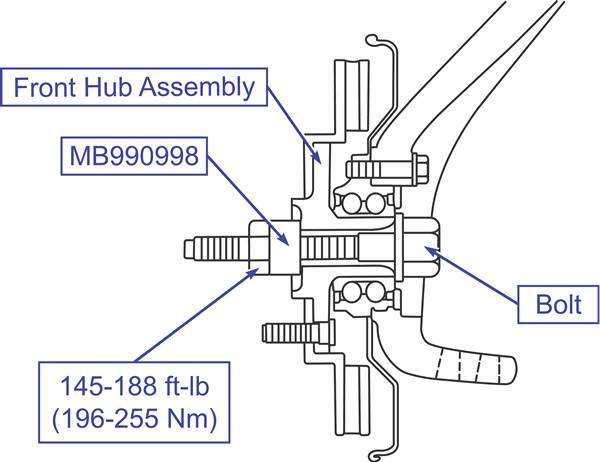
  5. Set the special tool (MB990998) to the front hub assembly as illustrated.
  6. Measure the hub torque with pads removed to measure brake drag torque. The torque value will be used later to calculate the brake drag force with the pads installed.

    NOTE: Tighten the nuts in order to fasten the disc to the hub.

  7. Fasten the pad clip and pads to the caliper support.

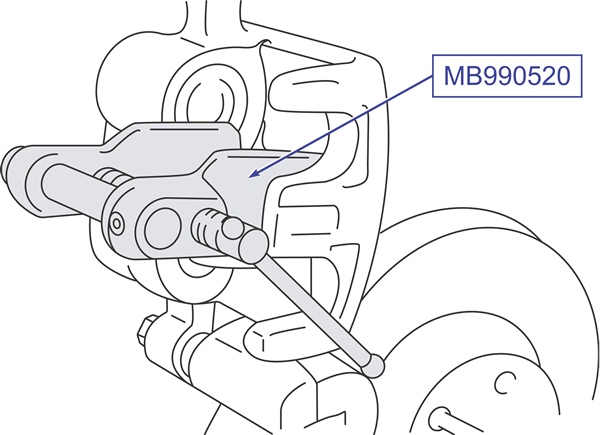
  8. Clean the pistons and push into cylinder (caliper) with special tool (MB990520).
  9. Make sure that the piston boot does not catch and tear when the caliper assembly and lock pin are installed.
  10. Check the brake drag torque as follows:
  11. If the difference between brake drag torque and hub torque exceeds the standard value, disassemble piston and clean the piston. Check for corrosion or worn piston seal, and check the sliding condition of the lock pin and guide pin.
  12. Install the drive shaft.

To Install:

  1. Remove the drive shaft.
  2. Make sure that the piston boot does not catch and tear when the caliper assembly and lock pin are removed.
  3. Fit the pad clip and pads to the caliper support.

  4. Install the drive shaft.

  5. Install the parts below to the caliper support.

    CAUTION
    Make sure not to contaminate or wipe off the grease that is on the guide pin.

  6. Push the caliper assembly downward and install the guide pin.

    CAUTION
    The brake pads on both sides must be replaced as a set once the limit is exceeded. If the difference in the thickness of the pads on both sides is significantly different, check the sliding condition of the piston, guide pin, and lock pin.

  7. Check the thickness of the brake pad through the caliper body check port. The standard value is .39 in (10 mm). The limit is .08 in (2.0 mm).
Rear

To Remove:

  1. Check the brake pad thickness through caliper body check port. Standard value: (.39 in) 10 mm. Limit: .04 in (1.0 mm).

    CAUTION
    Once the limit has been exceeded, the brake pads on both the right and left wheels must be replaced as a set.

    CAUTION
    If there is a significant difference in the thickness of the pads on the right and left sides, check the sliding condition of the piston, lock pin sleeve, and guide pin sleeve.
  2. Remove the lower guide pin caliper bolt. Lift caliper assembly and retain with wire.

    CAUTION
    Make sure not to contaminate or wipe off the grease that is on the guide pin.

  3. Remove the brake pads parts from the caliper support.
  4. Measure the hub torque (write down this first measurement) with the pads removed to measure the brake drag torque. The torque value will be used later to calculate brake drag force with the pads installed.
  5. To fasten the disc to the hub, tighten the nuts.
  6. Clean the piston, then use the special tool (MB990520) to push the piston into the cylinder/caliper.
  7. Be careful that the piston boot does not catch and tear as the caliper assembly and guide pin locking bolts are installed.
  8. Check brake drag torque as follows:
  9. If the difference between the brake drag torque and hub torque exceeds the standard value, disassemble the piston and clean it. Check for corrosion or worn piston seal, and check the sliding condition of the lock pin and guide pin.

To Install:

  1. Check for corrosion or worn piston seal, and check the sliding condition of the lock pin and guide pin.
  2. Be careful that the piston boot does not catch and tear as the caliper assembly and guide pin locking bolts are removed.
  3. To remove the disc from the hub, loosen the nuts.

    CAUTION
    Make sure not to contaminate or wipe off the grease that is on the guide pin.

  4. Install the brake pads parts to the caliper support.

    CAUTION
    Once the limit has been exceeded, the brake pads on both the right and left wheels must be replaced as a set.

    CAUTION
    If there is a significant difference in the thickness of the pads on the right and left sides, check the sliding condition of the piston, lock pin sleeve, and guide pin sleeve.
  5. Install the lower guide pin caliper bolt.
  6. Check the brake pad thickness through caliper body check port. Standard value: (.39 in) 10 mm. Limit: .04 in (1.0 mm).

Previous Next