The wheel bearings are not replaceable. If defective, the hub/bearing assembly
must be replaced.
- Before servicing the vehicle, refer to the precautions in the beginning
of this section.
- Loosen the wheel lug nuts only 1⁄2 a
turn.
- Remove or disconnect the following:
- Wheel(s) from the vehicle
- Loosen the bleeder valve on the right rear caliper and drain the brake fluid
into a container.
- Remove or disconnect the following:
- Rear brake hose from the hard line on the frame
- Rear brake caliper
- Rear disc off of the rear axle
- Parking cable attaching bolt and cable end from the brake assembly
- Parking brake assembly from the end of the axle
- Speed sensor, on vehicles with Anti-lock Brakes (ABS)
- Rear axle shaft out of the axle housing. If the rear axle shaft is difficult
to remove, use a slide hammer (impact puller) to remove it.
WARNING
Do not damage the oil seal during removal.
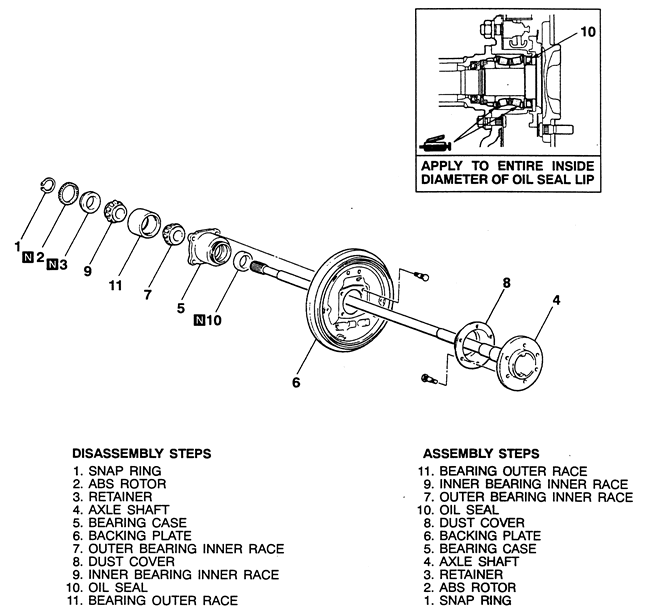
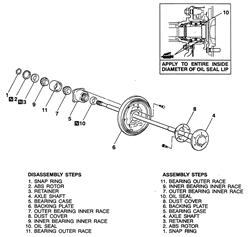
| Fig. 4: Exploded view of the typical rear axle shaft,
bearings and races
|
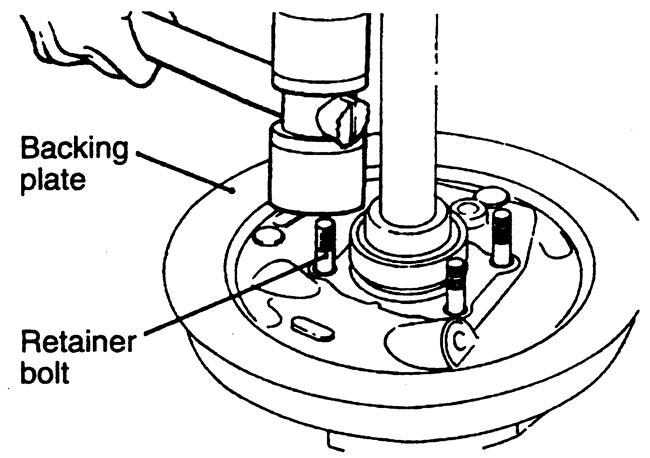
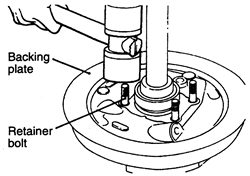
| Fig. 5: Remove one of the rear axle studs before
attempting to grind down the retainer
|
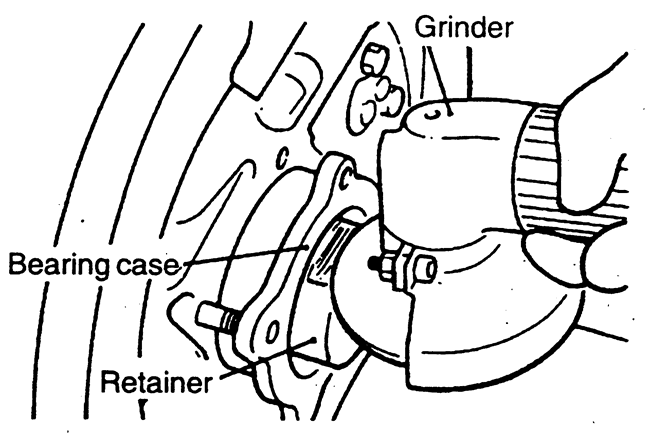
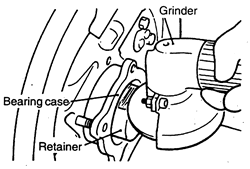
| Fig. 6: Using a grinder, grind the retainer, on one
side, down to 1-2mm (0.04-0.08 in.) thickness
|
- Snapring from the inside end of the axle shaft. Remove 1 retainer bolt from
the backing plate with a plastic mallet. Apply cloth tape around the edge
of the bearing case for protection. Position the axle shaft in a vise or with
a similar method. Using a grinder, grind down the retainer flat, on one side,
until the thickness of the retainer is only 0.04-0.08 in. (1-2mm). That is
that the retainer is ground down toward the axle shaft, not toward the flange.
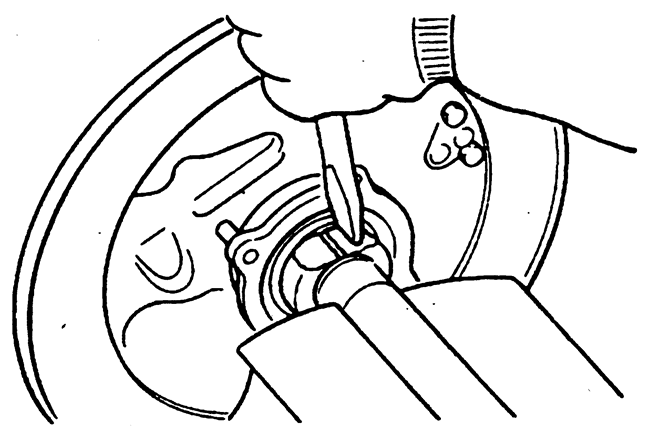
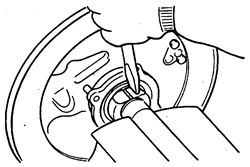
Cut, with a chisel, the place where the retainer ring has been shaven down
and remove the retainer.
CAUTION
Be careful not to damage the bearing case and the axle shaft.
NOTE: Only the retainer ring is to be ground down, NOT
the axle shaft, the axle flange, the bearing or any other component.
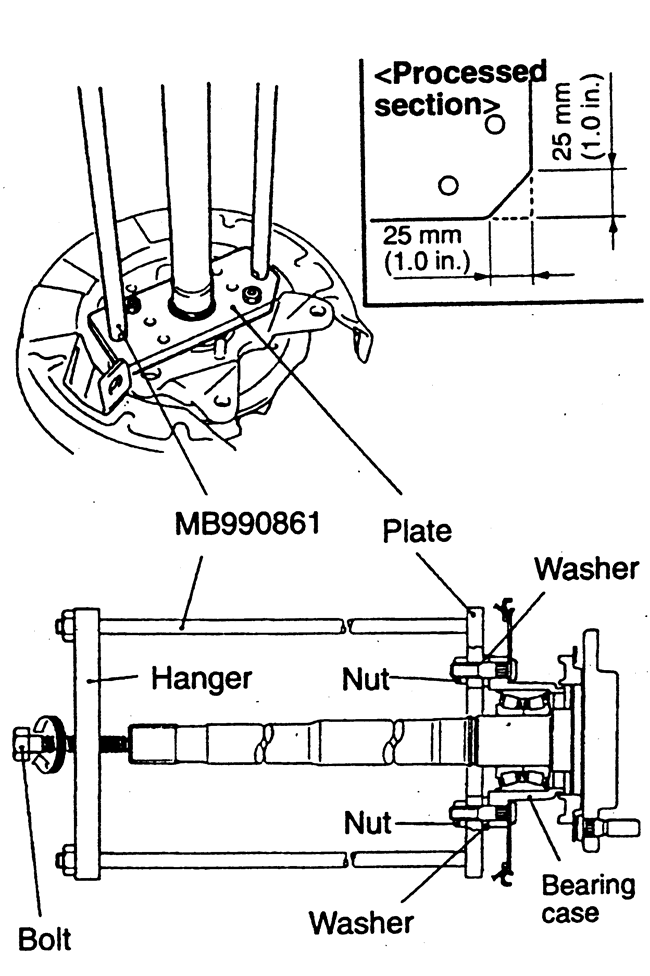
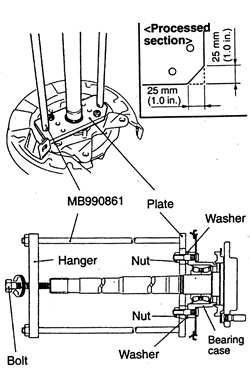
- Grind the plate of special tool MB990861 with a grinder (see illustration)
so that there will be no interference between the plate and the bearing case.
While adjusting the height of the hanger, secure the washers, plate and nuts
in order so that the processed plate is as shown in the illustration.
NOTE: The washers are used to eliminate the difference
in height of the bearing case so that the plate and the bearing case are
parallel.
Place the end of the bolt against the center of the axle shaft, then tighten
the nuts to remove the axle shaft from the bearing case assembly.
NOTE: The hanger and plate must be placed so that they
are parallel.
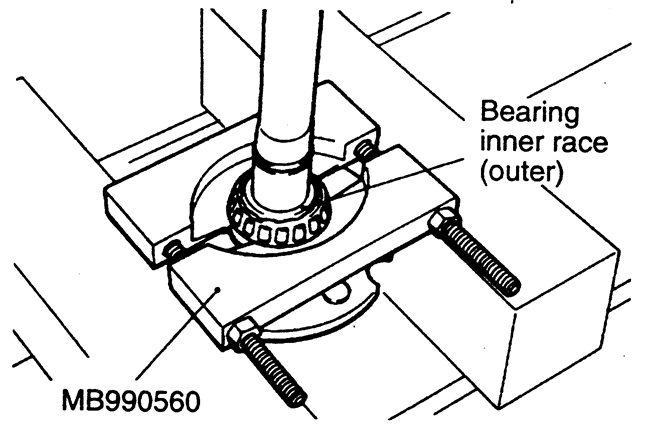
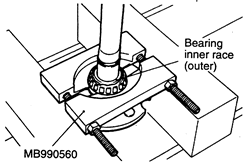
- Remove the bearing inner race and the bearing outer race. To remove the
races, install the tool MB990560 and use a press to remove the bearing race
from the axle shaft.
- Remove the oil seal and the dust cover on vehicles without ABS.
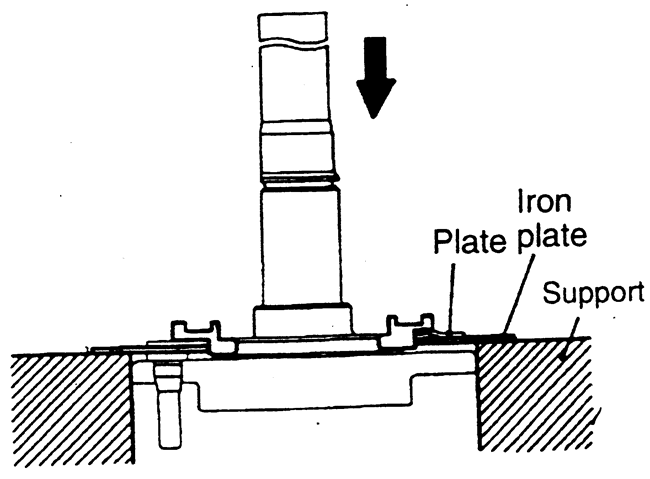
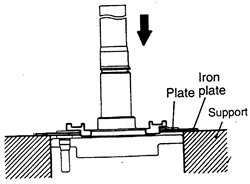
- On vehicles without ABS, insert an iron plate of approximately 0.04 in.
(1mm) thickness between the rotor assembly and the axle shaft, then use a
press to remove the rotor assembly.
WARNING
In order not to bend the rotor assembly plate, place the support in contact
with the axle shaft when using the press.
| Fig. 7: Use a chisel on the ground-down spot on the
rear axle bearing retainer to split the retainer, then remove it
|
| Fig. 8: Use the special tool MB990861 to remove the
rear axle shaft from the bearing case
|
| Fig. 9: Use an iron plate and supports to remove
the rotor assembly
|
- Remove or disconnect the following:
- Axle shaft from the remaining bearings and components
- Backing plate
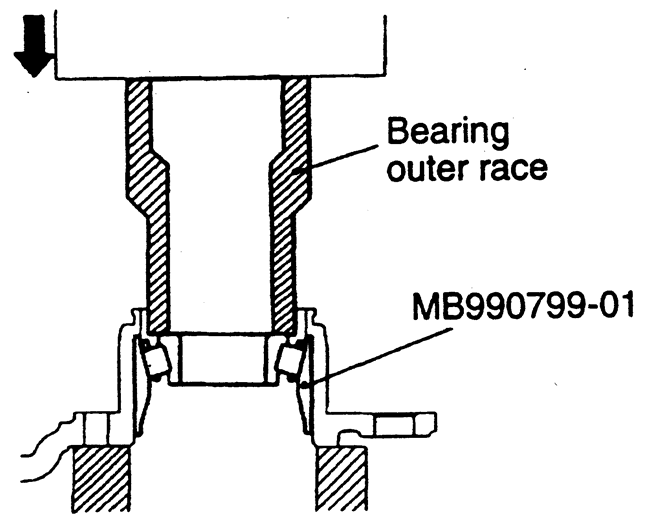
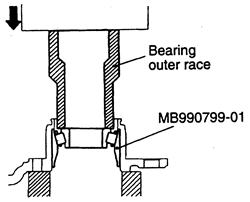
- Reinstall the bearing inner race that was removed previously, then use the
tool MB990799-01 and press to remove the bearing outer race.
- Remove or disconnect the following:
- Bearing case
- O-ring from the end of the axle housing tube
- Oil seal from the end of the rear axle housing using the tool MB990211-01
(slide hammer with a hooked end), if necessary
- Check the dust cover for deformation or damage. Check the oil seal for damage.
Check the inner and outer bearings for seizure, discoloration and rough raceway
surface. Check the axle shaft for cracks, wear and damage. For there are any
of these indications, replace the part with a new one. The retainer, the bearing
inner (inner and outer) and outer races and the oil seal need to be replaced
with new components upon reassembly. After all of this work, it is probably
a good idea to replace the bearings and the axle housing tube oil seals.
To install:
- Install or connect the following:
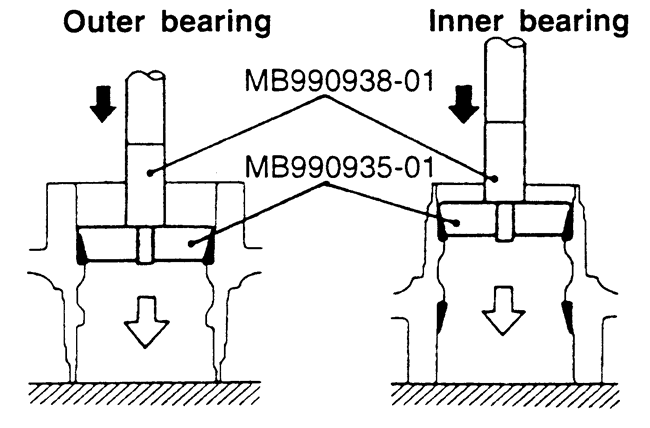
- New oil seal into the end of the rear axle housing using the tools MB990932-01
and MB990938-01, if necessary.
- New O-ring into the axle tube
- Apply multi-purpose grease to the external surface of the bearing out race.
Press-fit the bearing outer race into the bearing case by using the tool MB990890-01.
- Install or connect the following:
- Speed sensor bracket to the back of the backing plate
- Rotor assembly to the axle shaft by press-fitting (plastic mallet will
also work) it on using the special tool MB991388
- Backing plate onto the axle shaft
- Dust cover to the backing plate if the vehicle is equipped with ABS.
- Bearing inner race (outer) to the bearing case
- Oil seal to the front end of the bearing case. To do this, apply multi-purpose
grease to the outside of the oil seal. Use the special tools MB990936-01
and MB990938-01 to press-fit the oil seal until it is flush with the end
of the bearing case. Apply multi-purpose grease to the lip of the oil
seal.
- Axle shaft through the bearing inner race, the bearing case and the
second bearing inner race in that order. Use the special tool MB990799
to press-fit the bearing inner race to the axle shaft.
WARNING
Both bearing inner race sets should be press-fitted together. The left and
right lengths of the axle shaft are different in vehicles with rear differential
locks. The right side is longer; be careful when installing it.
| Fig. 10: Use the tool MB990799-01 to install and
remove the rear axle bearing races
|
| Fig. 11: Use the MB990560 tool to hold the bearing
inner race (outer), then use a plastic hammer to drive the axle out
of the race-do not let the axle fall onto a hard floor
|
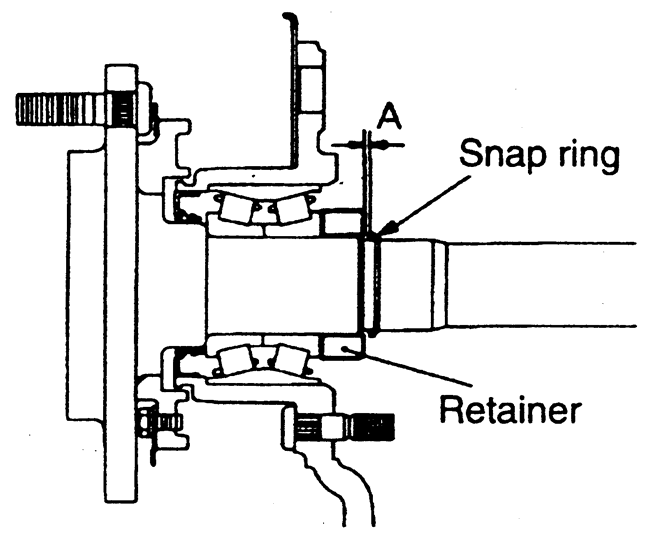
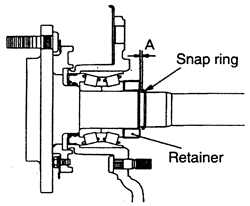
| Fig. 12: Measure the clearance (A) between the snapring
and the retainer edge
|
- Use the tool MB990799-01 to press-fit the retainer onto the axle shaft,
while checking that the press-fitting force is at the following values:
- Initial press-fitting force: 11,016 lbs. (5000 kg) or more.
- Final press-fitting force: 22,031-24,280 lbs. (98,000-108,000 N).
- If the initial press-fitting force is less than the standard value, replace
the axle shaft.
- After installing the snapring, measure the clearance between the snapring
and the retainer with a thickness gauge, and check that it is within the standard
values. The standard value is 0.0065 in. (0.166mm) or less. If the clearance
exceeds the standard value, change the snapring so that the clearance is at
the standard value. Use the following adjusting snapring thicknesses:
- 0.0854 in. (2.17mm): no color.
- 0.0791 in. (2.01mm): yellow.
- 0.0728 in. (1.85mm): blue.
- 0.0665 in. (1.69mm): purple.
- 0.0602 in. (1.53mm): red.
- Install or connect the following:
- Axle assembly into the axle housing. Be sure that the grooves on the
end of the axle shaft line up in the differential. Use a plastic or rubber
mallet to help drive the axle shaft into the differential unit. Tighten
the 4 retaining bolts for the axle shafts to 36-43 ft. lbs. (49-59 Nm).
- Speed sensor
- Parking brake assembly components to the axle flange.
- Parking brake cable to the parking brake assembly, then secure it in
place with the cable bracket.
- Brake rotor onto the axle shaft, and the brake caliper. Torque the caliper
bolts to 65 ft. lbs. (88 Nm).
- Brake hose to the frame brake line. Torque the flare nut to 11 ft. lbs.
(15 Nm).
- Wheels. Torque the lug nuts as tight as possible with the vehicle not
on the ground.
- Bleed the brake system.
- Lower the vehicle until the wheels are touching the ground, then finish
tightening the lug nuts. Lower the vehicle the rest of the way to the ground.
- Road test the vehicle and check for leaks.