It's best to drain the cooling system when the engine is warm (but has cooled
to well below operating temperature for safety) to assist in complete removal
of old coolant and any suspended material. Follow the procedure below to help
ensure you will not be burned by hot coolant.
- Loosen the drain cock or remove the drain plug located on the bottom of
the radiator tank. This will begin the draining process and relieve pressure.
DON'T START OUT BY REMOVING THE CAP! Just make sure you are well away from
the direction the coolant flow will take when you remove the plug, and then
remove it.
CAUTION
Draining hot water can cause painful burns. Be careful when doing this.
- Once coolant flow out of the bottom of the radiator has slowed, remove
the radiator cap to vent the system. Then, remove the coolant drain plug
from the side of the engine block.
- When all the coolant has drained, replace the plugs. If the hoses need
attention, this is an ideal time to replace them. Slowly fill the system
with water until the water level reaches the top of the radiator tank. Start
the engine and run it at idle. When the thermostat opens and water begins
to flow through the top of the radiator, add more water as necessary until
the engine is full. Shut the engine OFF and again carefully
remove both drain plugs. Repeat the process of filling the system with water
and draining it until drained water is clear.
NOTE: If the system cannot be cleaned out effectively
this way, you may want to buy a reverse flushing kit at your local parts
store and use it. An alternative is the use of a chemical cleaner; if
you need to use one of these, just make sure it is compatible with the
use of aluminum engine parts and that you follow the directions on the
can carefully to ensure that you do not damage your engine.
- Coat both drain plugs with sealer and install them snugly. Look up the
coolant capacity in the Capacities Chart, later in this section. See the
chart on the side of the antifreeze container in order to calculate just
how much antifreeze is required to protect the system down to the lowest
expected temperature in your area. Pour the antifreeze in first. Then, follow
up with clean water until the level reaches the top of the radiator tank.
You can also pre-mix the antifreeze and water before filling the system.
Finally, follow the steps at the end of the preceding procedure for filling
the system with coolant after checking the level.
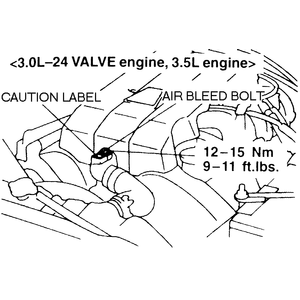
NOTE: If equipped, always open the air relief plug or
bolt before filling the cooling system. This service procedure is for
bleeding the trapped air in the cooling system. Only when the cooling
system is bled properly can the correct amount of coolant be added to
the system. The 3.0L (24 valve) and 3.5L engines have a caution label
near the air bleed bolt or plug.